


Madonna has always had a special connection to New York. She lived here, she created here, and her story as the Queen of Pop started here.
In 1978, Madonna left college and moved to New York City, settling in the Alphabet City area of the East Village. By the time 1982 had rolled around, she had caught the eye of DJ/Producer Mark Kamins at Danceteria. Mark took an interest in Madonna’s music (and began a romance with her).
This duel interest eventually led to him arranging a meeting with the president of Sire Records, which resulted in Madonna signing a two-single deal.
Kamins produced her debut single, the dance track Everybody. It was released in October 1982 and promoted with both television spots and club performances. Her follow-up, the double A-side Burning Up/Physical Attraction, was released in early Spring of 1983. Both singles became Top 5 hits on the Billboard Hot Dance Club Songs chart (both peaking at #3). The rest as they say is history.
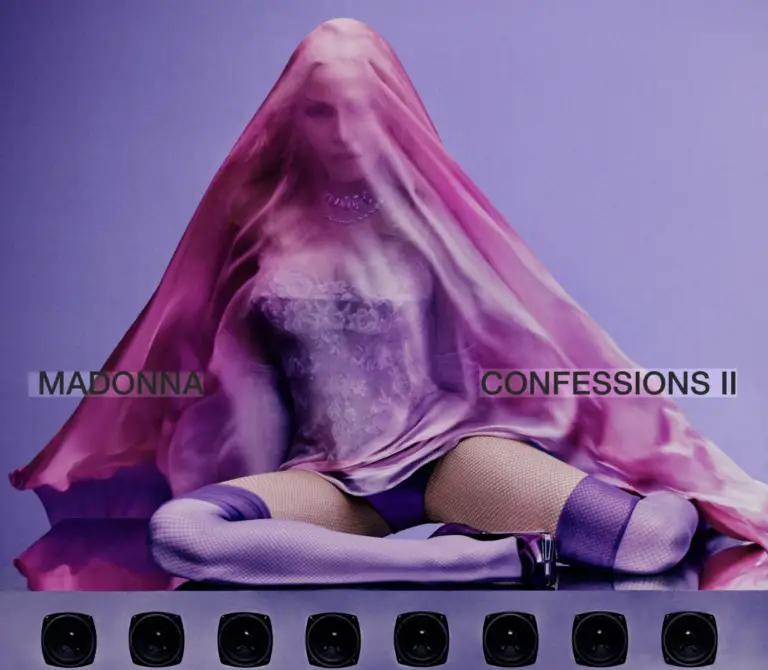
Given, that Madonna’s career began in New York, it was only fitting that the city would once again play a major role in the launch of her latest offering Confessions II.
Madonna officially kicked off the Confessions II era in her signature grand fashion, by transforming the heart of New York City into a veritable dance floor. This was achieved with a surprise performance in Times Square on June 4th of this year. The 15-minute set served as the public launch of the new album campaign, featuring the live debut of new single Love Sensation. The performance was timed to coincide with the start of Pride Month, and generated massive media attention. Thus, helping to establish Confessions II as one of the year’s biggest pop releases. Therefore, New York, once again proved to be a key ingredient in Madonna’s success.
The album which came out on July 3rd hit #1 on album charts around the world, including the US, UK, and Canada. But commercial success aside, how does Confessions II hold up artistically and sonically?
Well, Madonna fans will tell you it is her best work in years. While over-enthusiastic fans can often be biased, there is some truth to this claim.
The album is definitely one of her strongest efforts in ages. Sonically, Confessions II often feels like a sweet meeting point between several defining eras of Madonna’s career. It carries the sensual, underground atmosphere of Erotica, the euphoric disco-house pulse that made the first Confessions on a Dance Floor such a landmark, and the introspective, spiritual electronic textures that characterized Ray of Light. This is especially evident on tracks like One Step Away and Love Sensation.
Throughout the songs, the record blends elements from these different eras into something that feels familiar without being a complete retread of the past. It is a nice balance of nostalgia and freshness.
Said freshness allows Confessions II to feel less like a stark attempt to recreate the original Confessions and more like a natural celebration of Madonna’s lifelong relationship with dance music. The production is very polished, immersive, and deeply rooted in house. The spoken word elements harken back to Eddie Amador’s 1997 single House Music. This is important, as the pulsing rhythms, rich synth textures, and club-ready grooves never feel forced.
Madonna is making the music she genuinely loves, a reminder that dance floors and clubs have always been central to her artistic identity and career.
Of course, Confessions II isn’t without its weaker moments. A handful of tracks feel underdeveloped, coming across more as filler than essential listening. Danceteria, for example is so ridiculous it borders on cringe (Vogue it most certainly is not). Some hardcore fans will undoubtedly hail this as Madonna’s greatest work. This of course would be an overstatement!
Even so, the shortcomings do little to overshadow the album’s strengths. Confessions II remains a solid and enjoyable release from an artist who has continued to soldier on across five decades. As such, it is definitely worth a listen!
Perhaps most importantly though is the fact that Madonna sounds like she’s creating music because she genuinely wants to. In an era where so much mainstream pop can feel disposable, grossly vapid, and devoid of personality, Confessions II stands out as the work of an artist following her own creative instincts. For that alone, Madonna deserves considerable respect.

Comments are closed.