


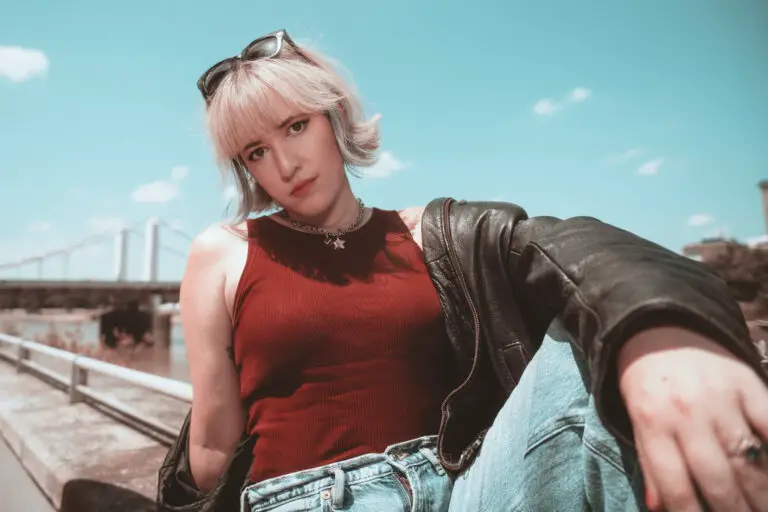
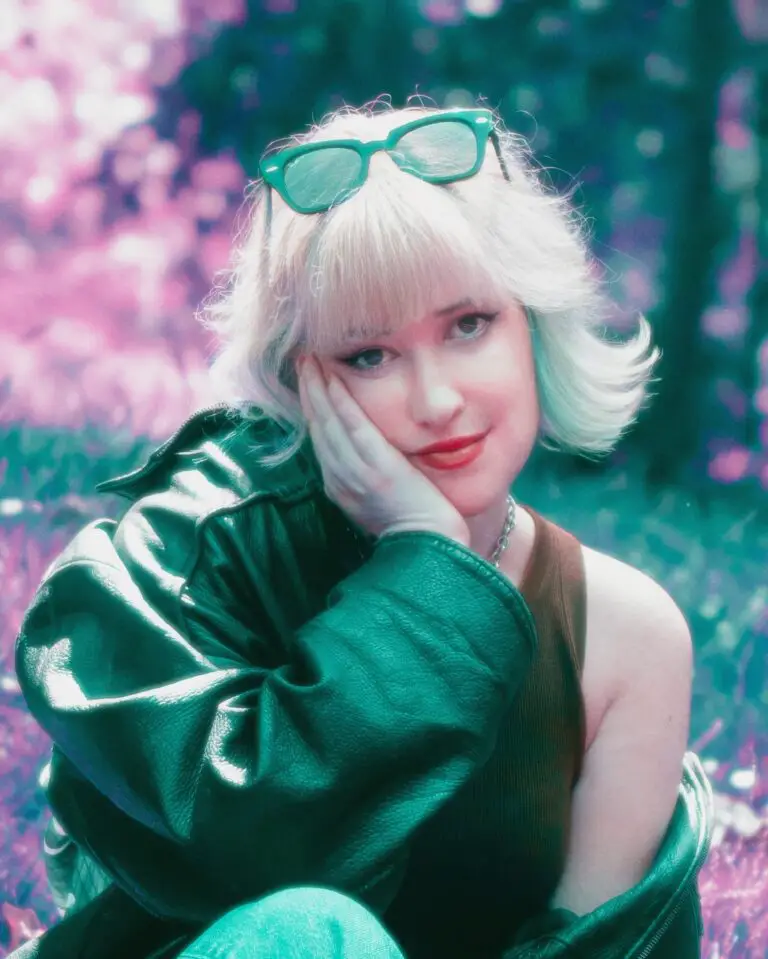
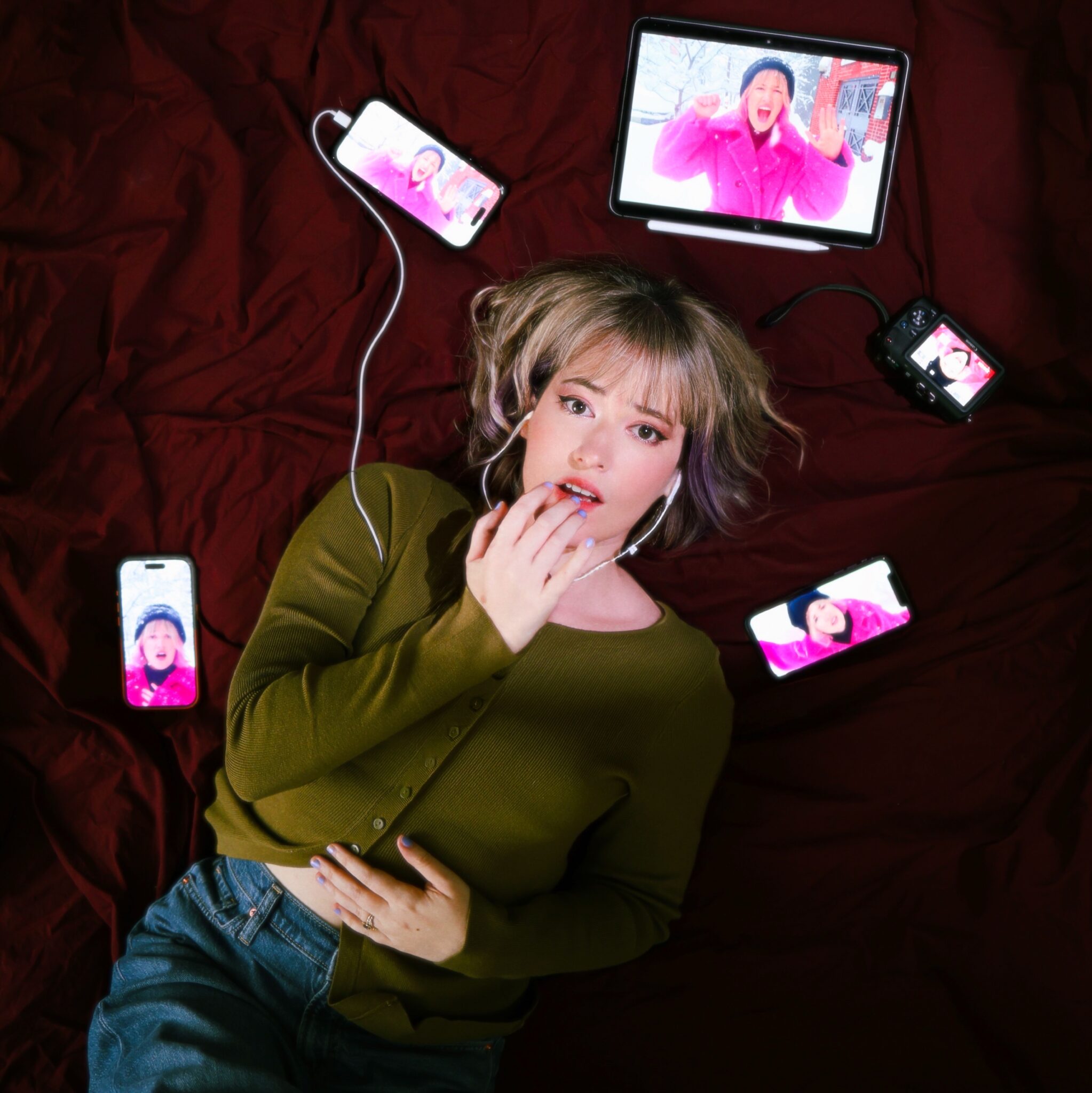
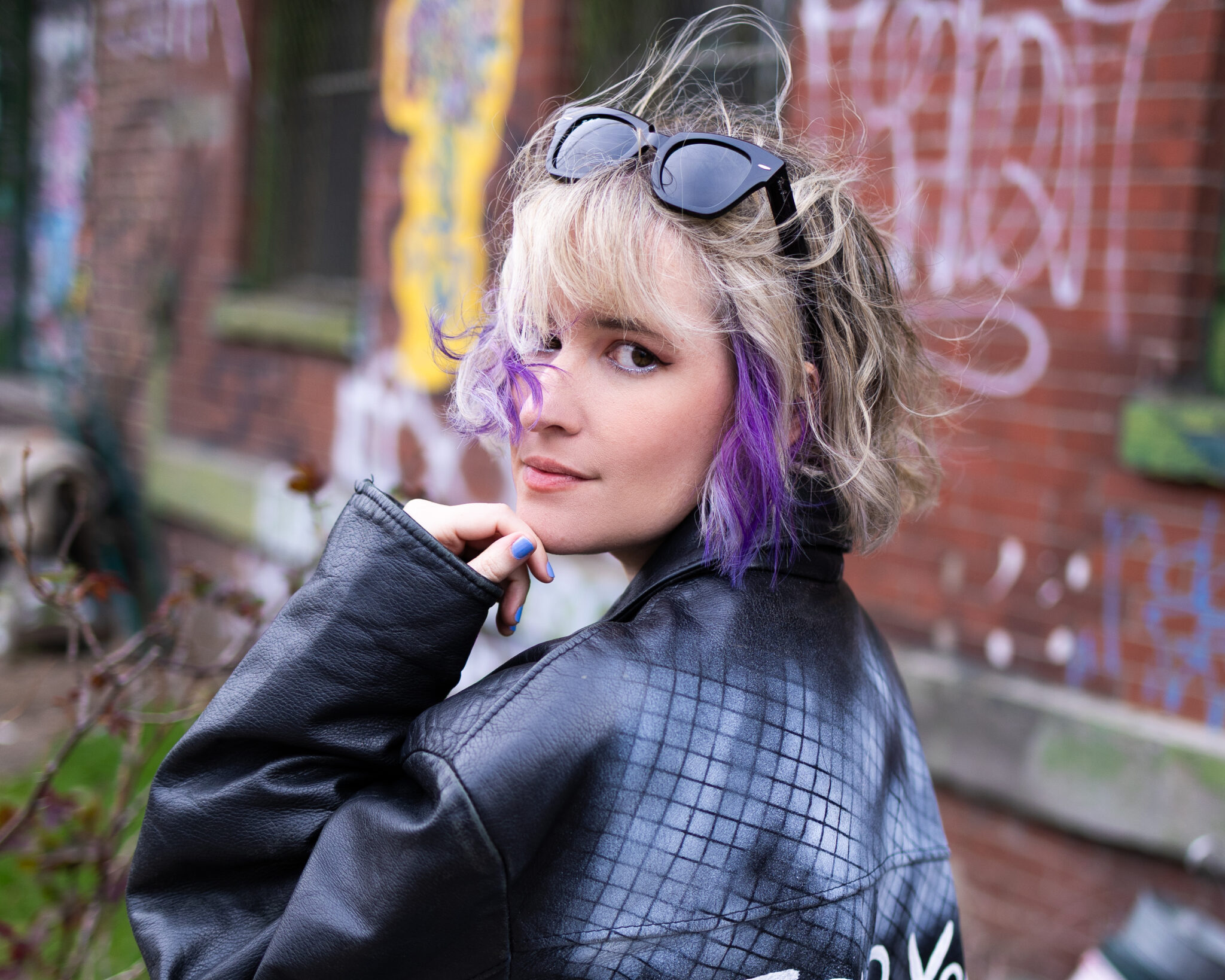
New York/New Jersey-based artist Best Ex is set to release her sophomore album Good Girl on November 6. Though it’s only her second album, the mind behind Best Ex, Mariel Loveland, is no stranger to the music scene. Originally of the Warped Tour-era band Candy Hearts, Loveland is venturing out to find her own voice, explore new topics, and discover what it really means to figure out life as an adult.
The album begins with the title track “Good Girl,” a dynamic opener that sets the stage for the commentary and slight existentialism that is to follow. Songs like “Eurydice” and “Boring” lean into the fear of impending doom within a relationship, a theme lightly explored through other signs as well.
The album also serves as an honest memoir of self esteem, with singles like “Losing Streak” and “Sick of Myself” describing the feelings of being at odds with yourself, your circumstances, and your actions. The former is written more as a cautiously optimistic track, with the latter being more self-reflective.
Loveland also uses some of the tracks on this album as a vehicle to provide commentary on pressing social issues. The political climate is described in songs like “Is This It?” detailing the reality of watching human rights get stripped away in real time. Similarly, “Papercut” offers a tongue-in-cheek point of view of patriarchy, pulling from demeaning internet trends like the phrase “just a girl.”
Mariel Loveland took some time to interview with NYS Music, providing some more insight on the inspirations, themes, and thought processes that contributed to the creation of the album.
NYS Music: One theme that runs through a lot of the tracks on this album is the idea of being in your thirties but still not totally knowing what you’re doing with your life. (I myself am in my early twenties, so I relate to that last part quite a bit.) Why is that an important message for you to share? In what ways do you hope that your audience can relate?
Loveland: I think it’s less about not totally knowing what you’re doing with your life and more about how life doesn’t always turn out the way we planned. I think it’s important to really learn to be ok with what life throws at you. You can plan all you want, picture a certain future, but things happen. Maybe your goals change, maybe your universe changes, maybe you genuinely don’t know the right move.
You can’t find true contentment until you learn how to sit with uncertainty and accept the things that are outside of your control—and that is something I am colossally bad at. I sing about it because I want to remind myself, and I hope others don’t relate to that anxious struggle for their own sake (but I know, realistically, probably most of us do).
NYS Music: How would you say you’ve progressed as an artist since forming Candy Hearts in 2009, and now branching off to pursue Best Ex? What are some of the biggest things you’ve learned on your journey thus far?
Loveland: I think I’ve transitioned into someone who’s more intentional with my craft. In the beginning, it was all about getting out my raw emotions and throwing as much as I can at a wall and seeing what sticks. I was trying to be everywhere and do everything all the time. Now, I find myself slowing down a bit and asking: does this song need to be written? Has someone else said it better than I could? Is this a story that feels like I, specifically, should tell?
There’s SO much music out there, especially in this digital world that encourages people to flood an algorithm or get left behind. Artists are expected to release a new song every 6 to 8 weeks. I don’t just want to write a song with the pressure to trigger an algorithm. I want to make music because I have something to say. And if I don’t, I’m ok with being quiet for a little bit.
NYS Music: Can you explain a little bit of the process of creating this album, and why you chose “Good Girl” to be the opening and title track?
Loveland: When I started recording songs for the album, I really was just making singles and seeing where things went. “Good Girl” was…I think the third or fourth song I recorded? It was the one where I said, oh, this is it! This is what my music should sound like for the next era. “Good Girl” became the North Star for every other song I recorded on the album. It’s the one that made me say, ok, let me do a real body of work.
I think also thematically, it fits the overall message very well. I liked opening the album with the line “and I’m still exactly how you left me here.” My fans haven’t heard from me really in three years. A lot could change, and it did with the world and my family, but it didn’t really with me.
I still feel like the same girl dancing on a digital trapeze trying to get people to notice her, trying to be this version of a woman people would want. And I think a good part of “Good Girl” is about being fed up with the societal expectations of that. I don’t feel like the archetype of a good girl, and I’m not sure it’s actually something attainable to really anyone when it comes down to it.
NYS Music: “Is This It?” is quite a politically charged song. As an artist, why do you feel it’s important to utilize your platform to speak about political and social issues?
Loveland: For me, personally, it’s a no brainer. When I see things about the world that bother me, I write about them. It could be stuff in my own world, like my relationships, but when politics are as colossally awful as they currently are, it’s really hard to write about anything else. Everything else just seems trivial. How can I write a song about being happy and in love when I’m watching people be ripped from their homes? When I’m watching people die in real time?
I will say, I do look at these artists who curate this world of escapism, where they’re non-political outwardly. The world is so awful, it’s nice to have a space where we don’t have to think about it. We’re so locked into our phones, it’s hard to escape the constant onslaught of horrifying news. But at the same time, I can’t do that. If you’re a hateful person, if you believe the people standing next to you at one of my shows don’t deserve the same rights or empathy as you do, I actually don’t want my shows to be a safe space for you. I actually don’t want you there at all.
NYS Music: “Losing Streak” is one song on the album that has already been released as a single, and for good reason. How do you go about writing a track that has such an infectiously optimistic melody, but with painfully realistic lyrics?
Loveland: That song happened so randomly. I went into the studios at SONY Publishing to write with Andy, my producer, and I really had next to nothing. I had just this small idea “I feel like I’m winning this losing streak.” That was it. The room was super bare bones and in a weird office building. It was the morning where “your body, my choice” was trending online, and the misogyny was inescapable. I was just so anxious and brought an emotional support broth to sip on in a corner. I was telling him “I don’t really know how this is gonna go, but lets just try.”
I got there, and Andy started noodling around with the guitar and came up with that riff in the beginning, and that was it. That was our song! We wrote the first verse and the chorus, and I nailed down the rest on the subway ride home.
I actually ended up recording the bridge myself at home a few weeks later. We tackled it after a monster day of vocals and production, and I was fed up and hungry (we tend to go all-in in the studio and don’t take breaks and don’t eat) and was just like this is good enough. Whatever we have we have. It’s fine. It was, in fact, not good enough and not fine. Now it is, though!
NYS Music: The song “Man Like You” is a particularly interesting track. Asking someone to reflect on themselves through the lens of a parent, asking them if they’d let their child around a person like themselves, is quite profound. Can you talk a bit about the process of coming up with lyrical concepts like this one?
Loveland: I think society has this way of judging women in the harshest light, and when it comes to men, it’s absolutely not the same. You have these men who are highly regarded in their community. They’re viewed as these wonderful husbands or excellent fathers simply because they have a wife and have a child. And they reserve their rage and their abuse to moments behind closed doors solely to the people they know are safe targets. When their targets come forward, nobody believes it.
I think in many ways, society emboldens a lot of poor behavior from certain types of men. Abuse and assault are framed as “mistakes” and not “choices.” Like it’s all accidental. For women, it’s always “well she knew what she was doing. Look at what she was wearing! She was flirty. She wanted it. She just wants attention.” It’s especially true in the scene I toured in my entire youth. It’s so normalized, I don’t think it even registers that the behavior is bad. So many men think they’re the nice guy. Maybe they’re not perfect, but they’re not like those other bad men. The really bad ones. But they’d be the first to see the problem if someone treats one of their own that way.
NYS Music: Towards the end of the album, “Living in Hell” contains quite a few spiteful lines. In general, do you often find that you use spiteful or tongue-in-cheek humor to cope with some of the various negative aspects of life?
Loveland: I am a very sarcastic person, and at the end of the day, I really don’t want to see anyone really suffer. But I’m only human, and I’ll admit it, sometimes I want to see someone suffer a little bit. Like, it’s unbelievably frustrating to watch people who have hurt you float through life without a care in the world.
This songwriting session was really funny because I was over Zoom with Andy, and we decided we wanted to write a sort of revenge song. And I was like, ok, what awful, horrible things could I wish on someone? And Andy rushes out of the gate with something along the lines of “Well, what about dying?” And I’m like OKAY. Jesus Christ, you went for it. Maybe scale it back?
We were tossing ideas back and forth, like “What about crashing your car?” no, that’s too much. What about just a flat tire? until I was like, you know, all this stuff is really too awful. It’s the kind of stuff that keeps my anxious brain up at night. How about we just list things that are really obnoxious. Like can we have this guy stuck in traffic on the GW Bridge indefinitely or something like dropping their phone and breaking it?
NYS Music: Who are some of your biggest inspirations—sonically, lyrically, or just in general?
Loveland: Lyrically, my biggest inspirations have always been The Weakerthans and Bright Eyes. I think the thing that draws me into a story is seeing it told through the small details of a day. These artists do that beautifully. They make the world seem like a place where profound meaning is hiding in the tiniest little things. And I believe, truly it is, if only you can find it.
Sonically, I was very inspired by adult alternative of the 1990s. I was on a massive Fountains of Wayne, Liz Phair, and Everclear kick. I always, always, always love the Lemonheads. I also love that kind of chimey acoustic guitar sound of the 90s, like the stuff you’d hear in the background of “Torn” by Natalie Imbruglia, Sheryl Crow, or even Hilary Duff’s old hits.
That era was so minimalist when it came to production, especially compared to today where digital recording made it easy to have zillions of layers. I wanted to find a middle ground where I could bring that back a little bit, but still have it sound modern.
NYS Music: What’s your favorite track on the album, and why?
Loveland: This is a really tough question because it changes depending on my mood. I think they all are the best for different moments, but the one I keep coming back to is “Sick of Myself.” I have always loved songs about unreliable narrators and anti-heros. Growing up in the 90s, it was all like “nobody likes you when you’re 23” and “I don’t want the world to see me, cause I don’t think that they’d understand.” There were these flawed characters (mostly men) that were still viewed as deserving love. The underlying message was, “I don’t love myself, and I don’t feel like a good person, but this woman loves me anyway.”
I don’t think we have a lot of songs like that from a woman’s perspective, so I wanted to write one. And it is the most vulnerable song on the album, to the point I wasn’t really sure I wanted to say this stuff to a public audience. Do I really want to highlight my fear that my personality is annoying and awful and I worry that nobody likes me because of it? It’s something I worry about all the time—especially when I do interviews! Though I am so grateful for this one!
The album is written and produced by Loveland and Andy Tongren. Good Girl will be released in full on November 6, with singles such as “Good Girl” and “Losing Streak” out now.

Comments are closed.