


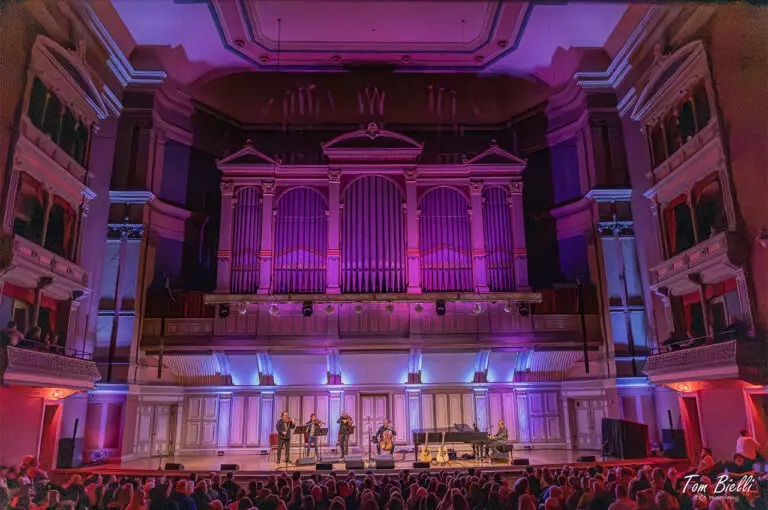
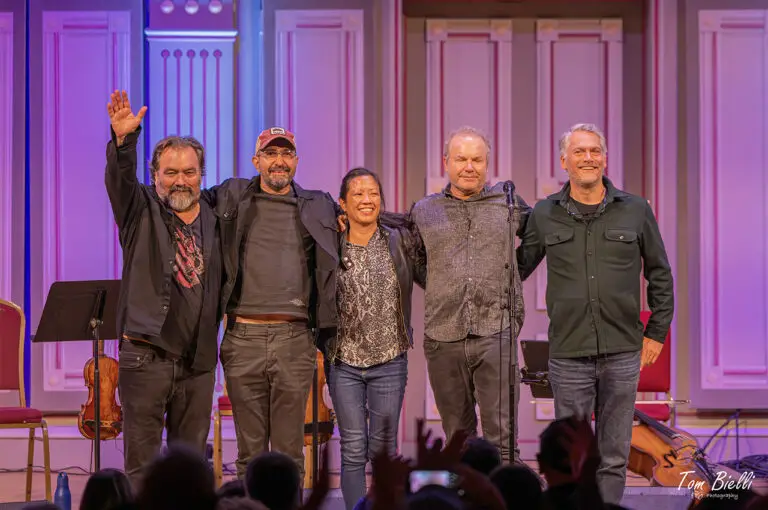
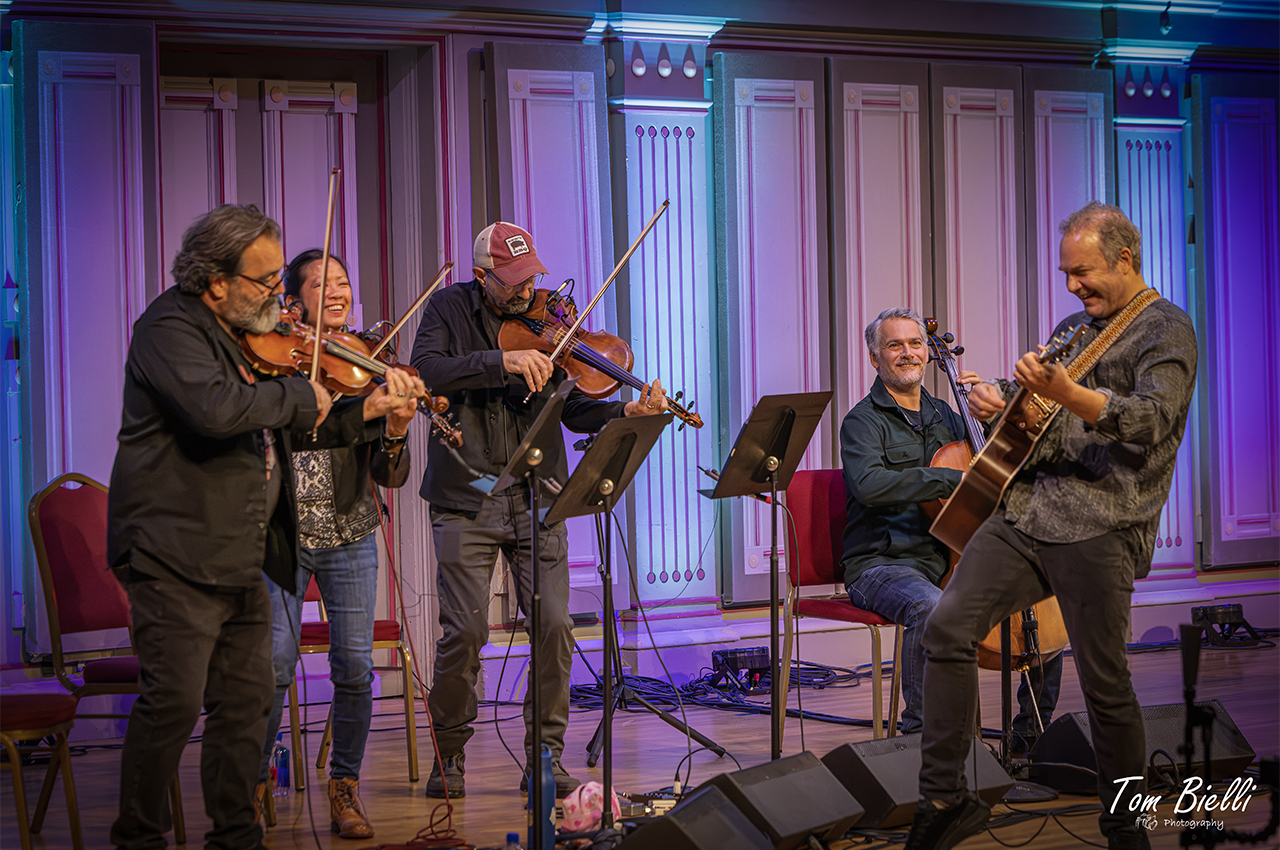
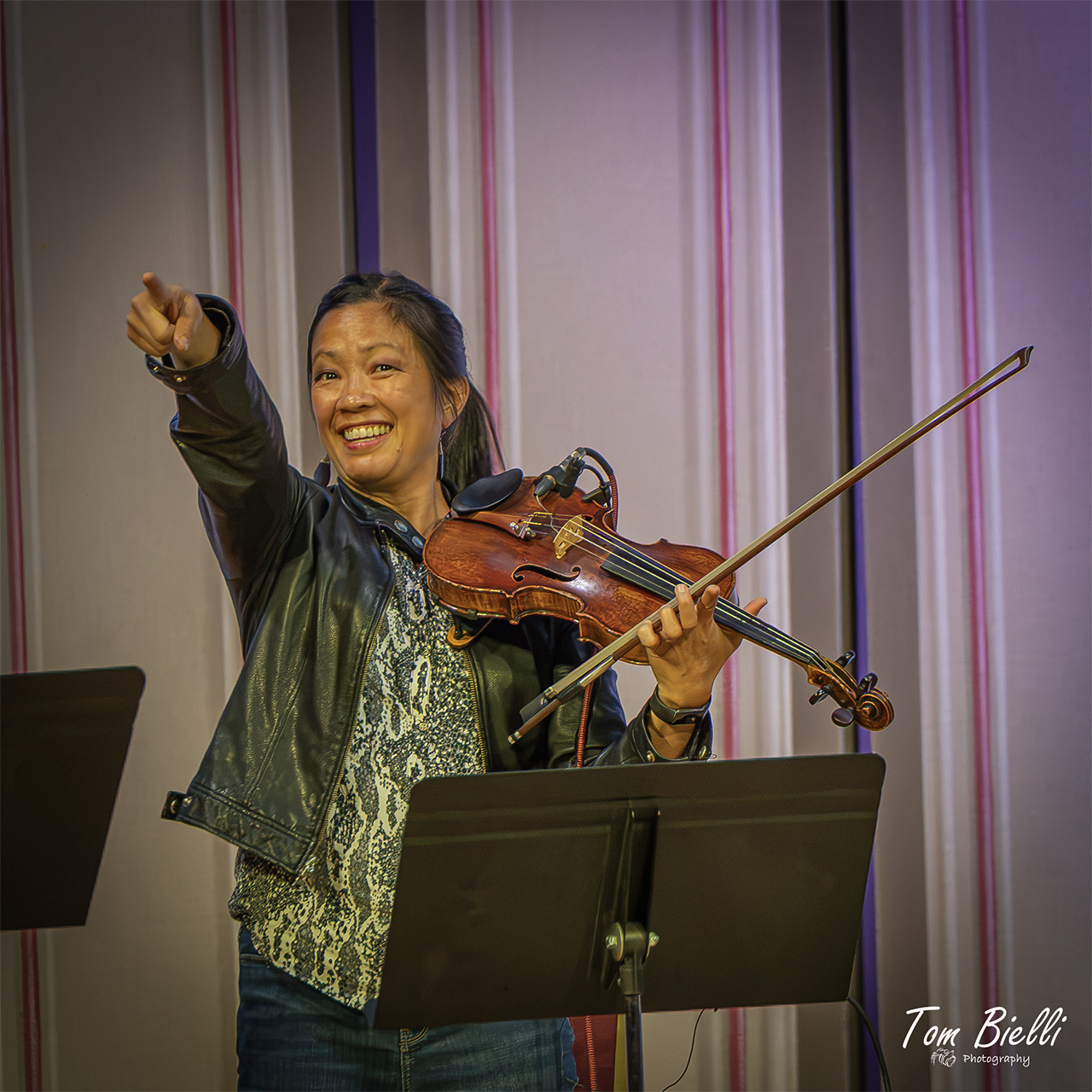
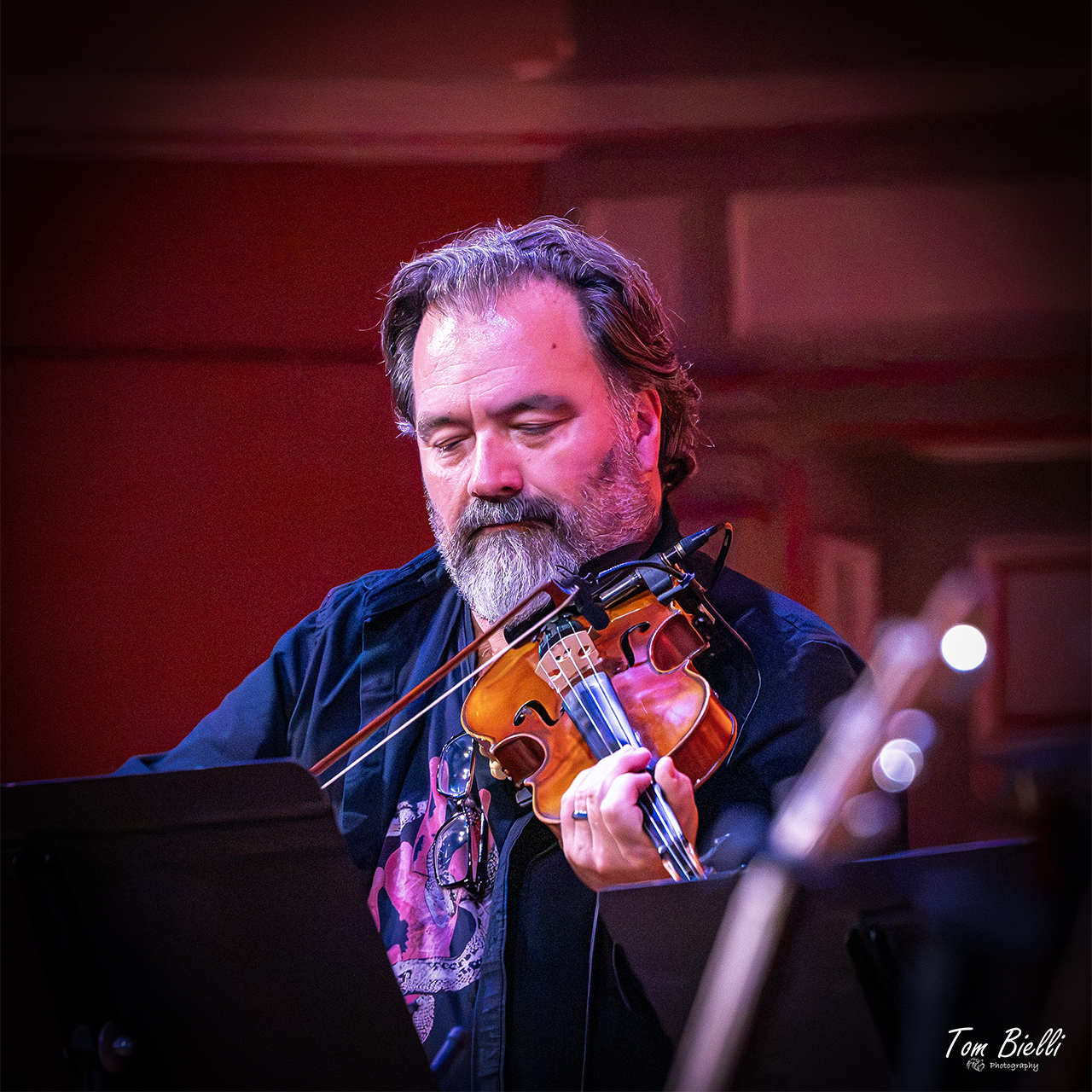
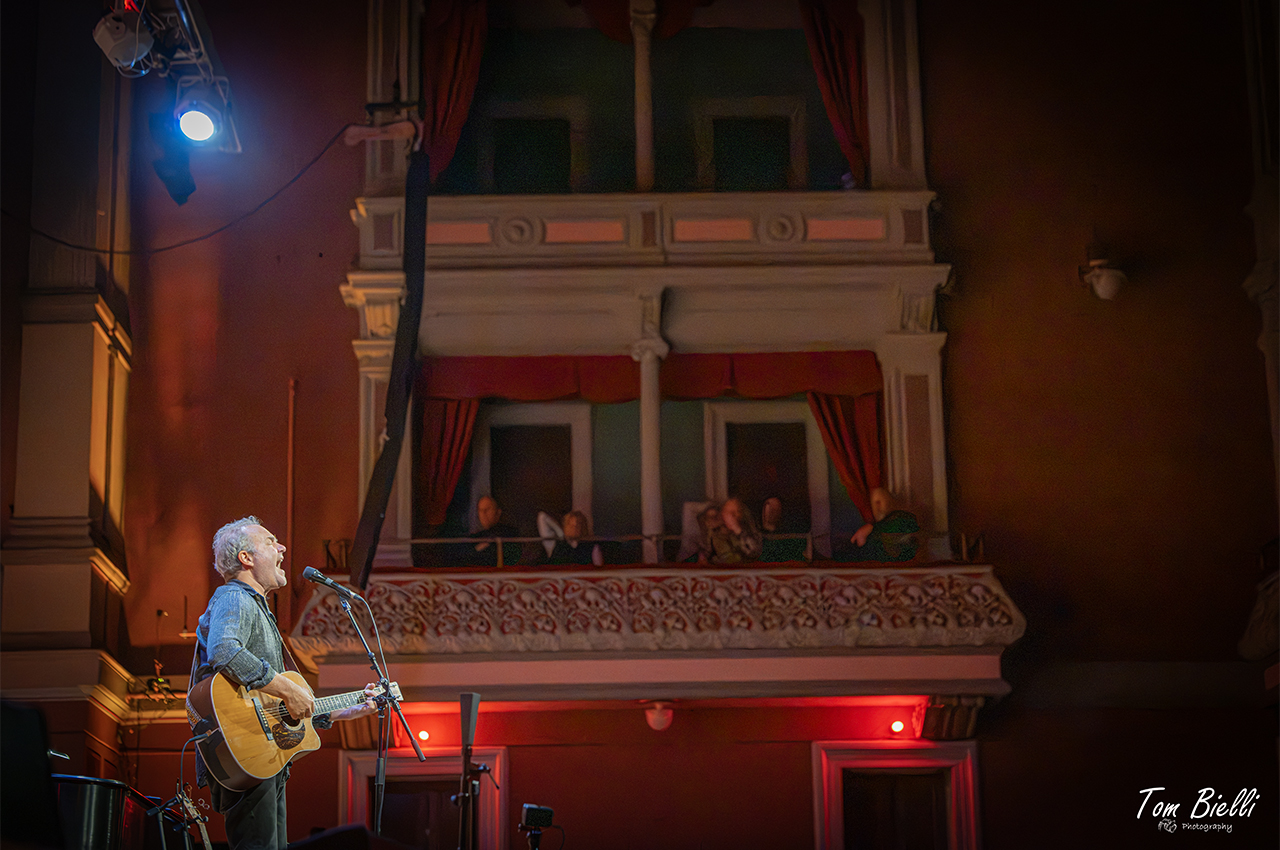
John Ondrasik, a.k.a. Five for Fighting, played Troy Music Hall Oct. 6 with a world-class string quartet comprised of New York City musicians Peter Sachon on cello, Chris Cardona on viola, Melissa Tong on violin, and Jonathan Dinklage, substituting for Tony Award-winning Katie Kresek, on lead violin.
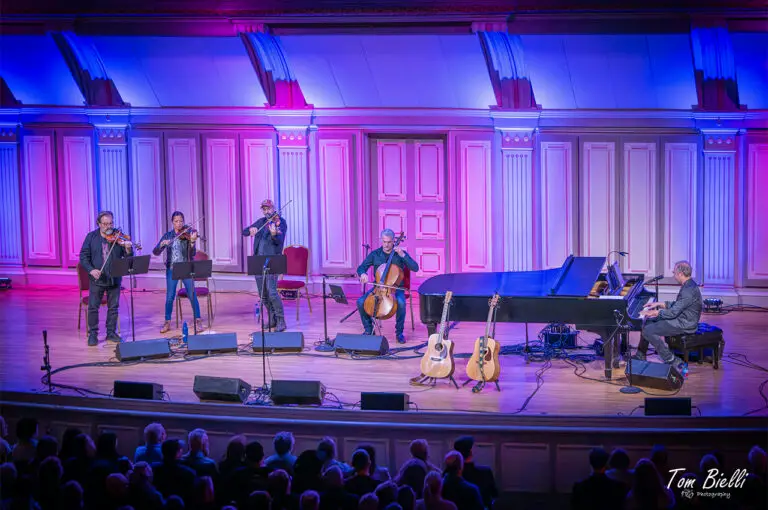
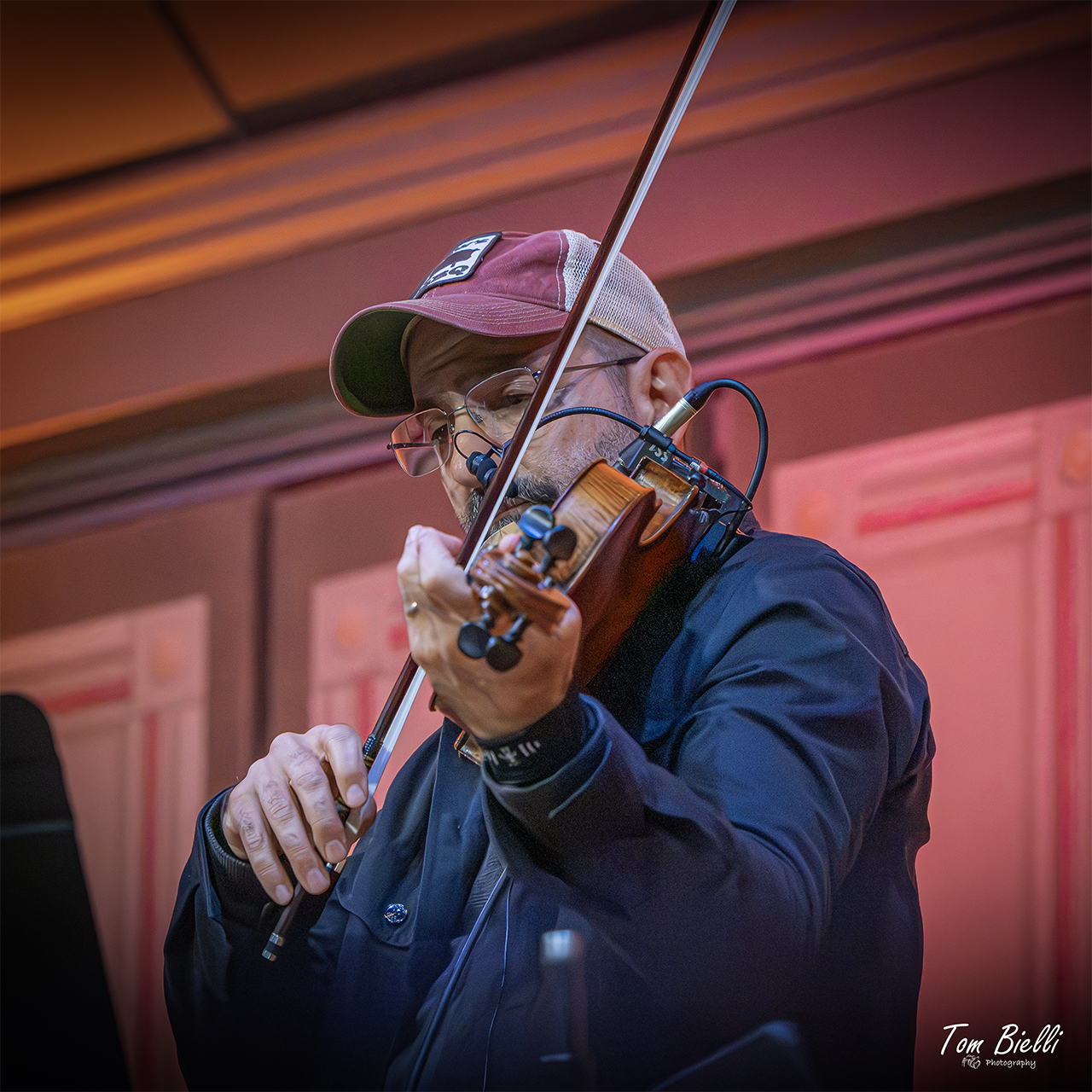
Ondrasik sauntered on stage after the casually-dressed strings section (Tong in jeans and Cardona sporting a baseball cap) to open a capella following a folksy string prelude to “Hope.” The strings soon joined Ondrasik instrumentally to back up the simple, almost old-hymn-like melody and the rousing chorus, “You gotta have hope.”
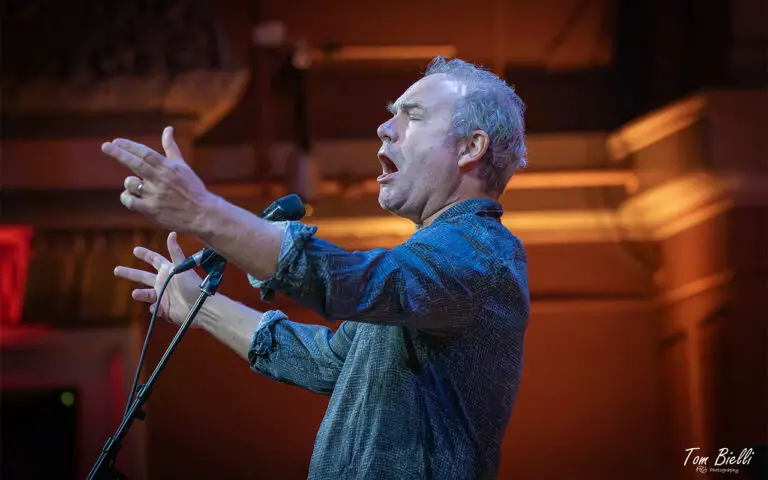
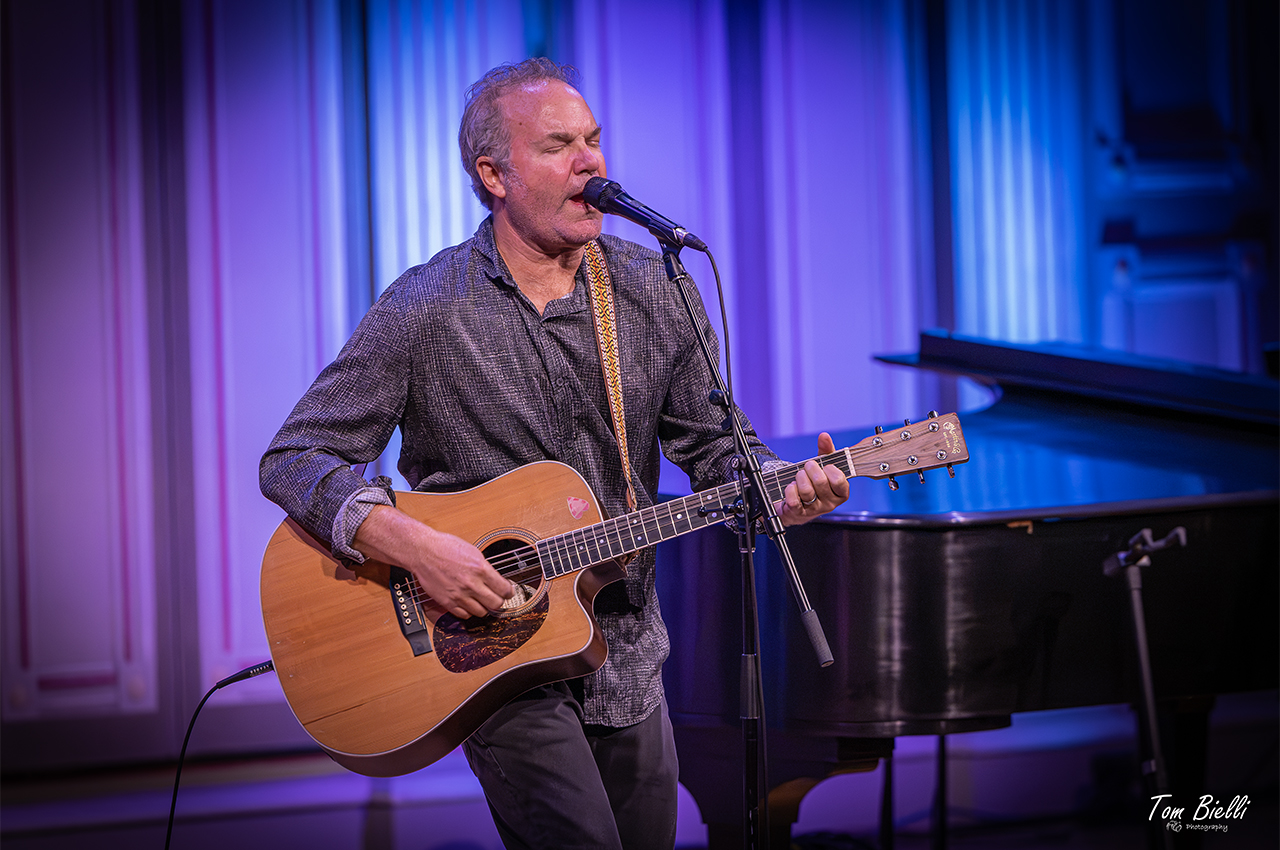
Ondrasik switched to a gorgeous grand piano for the second number, “World” asking in his sometimes almost-falsetto voice, “What kind of world do you want? ,,, careful what you wish for’ cause history starts now.”
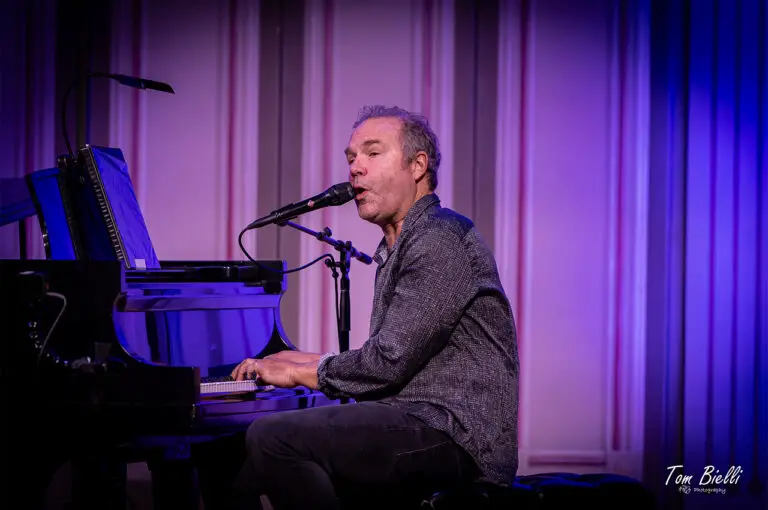
Ondrasik’s trademark high notes peaked and fell repeatedly to complement his powerful, palpable word imagery in yet another string integral to the performance, a string of hits including “Easy Tonight,” his first song on the radio, “100 Years,” “The Riddle” and “Superman” among other tender and sometimes bittersweet songs typical of Ondrasik’s repertoire.
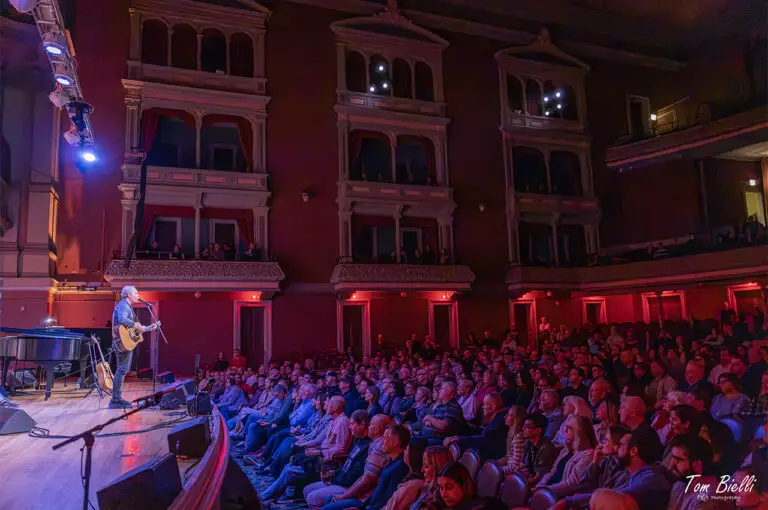
There were other “strings” attached, though, or at least lines crisscrossing and piping up from Five for Fighting’s show: Ondrasik’s lines in lengthy monologues, linear storytelling in the songs the monologues introduced, and Ondrasik’s family line, which wended its way into the lyrics of at least two numbers and appeared in the flesh for the opening act by Lace & Lee.
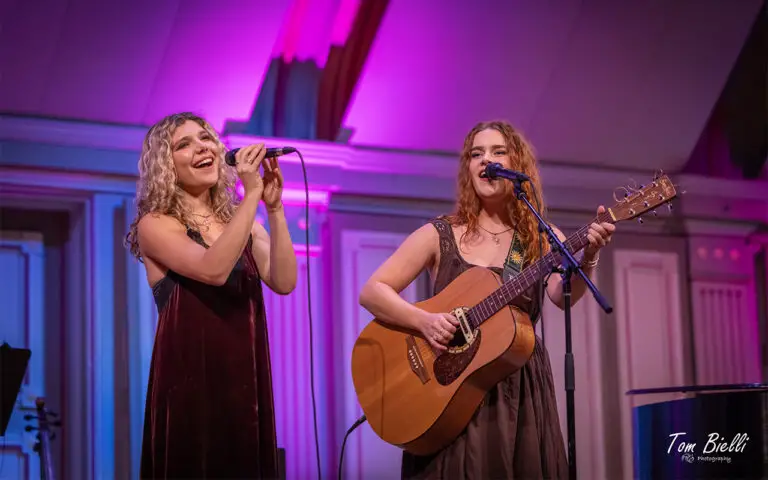
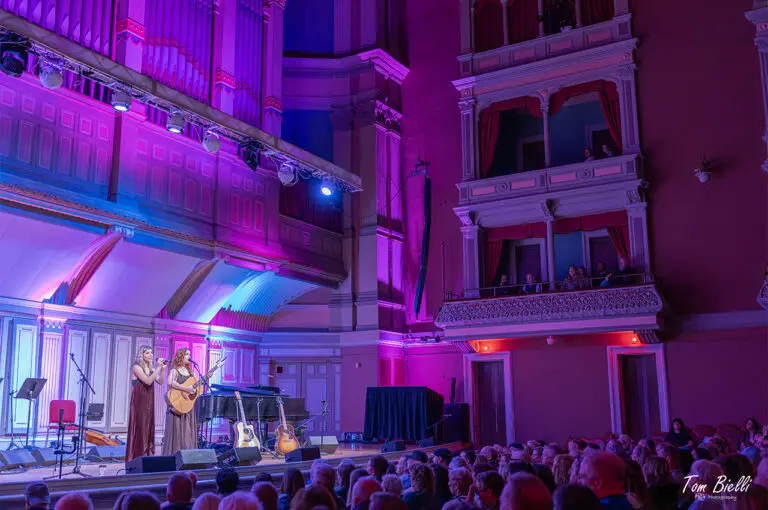
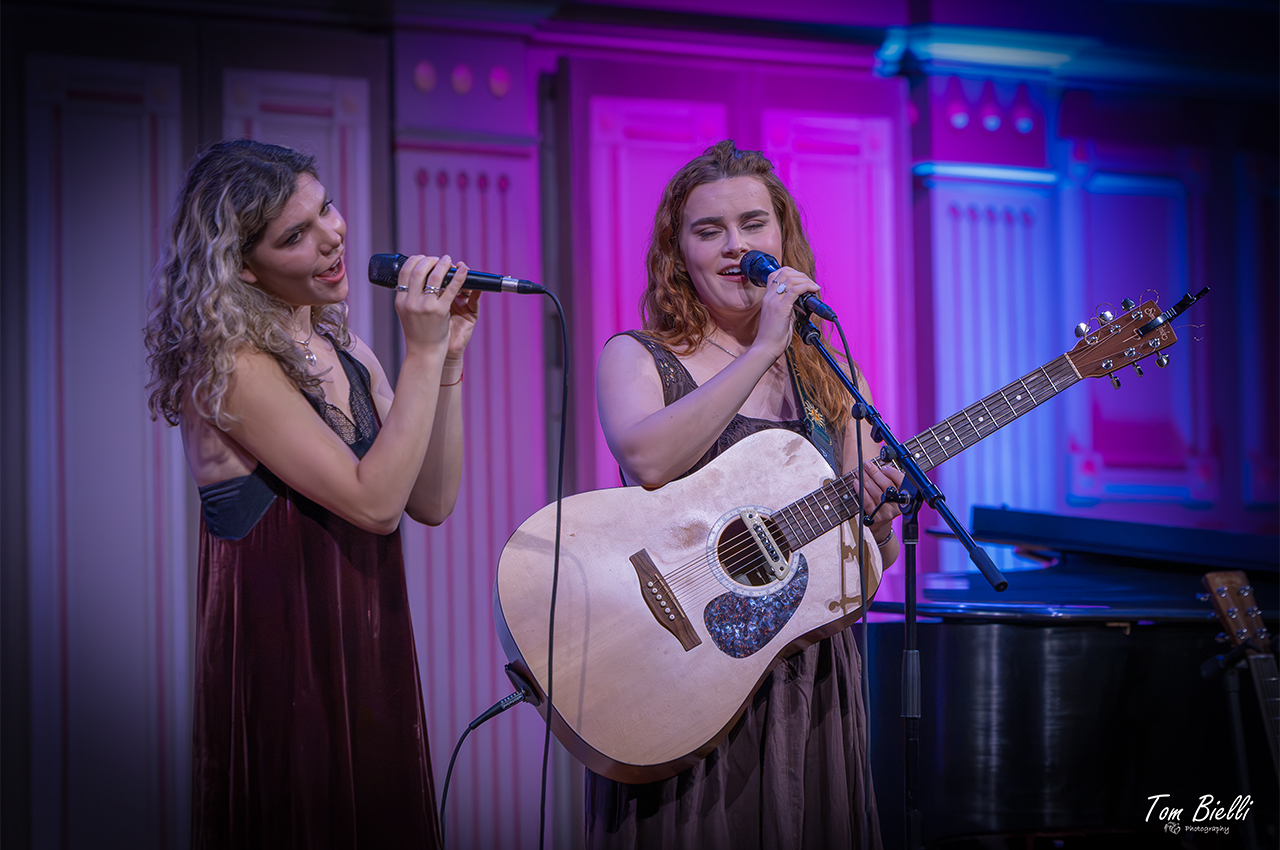
“Lee” is actually the middle name of Ondrasik’s daughter, Olivia, who joined Ondrasik on stage for a cameo after her earlier opener with musical partner Caroline Lace McPherson.
After a lengthy anecdote by Ondrasik about being on tour and receiving a late-evening call from his then-4-year-old daughter, Olivia joined her dad in a duet, singing the lines that inspired him so many years before: “I just love you,” the title of the song.
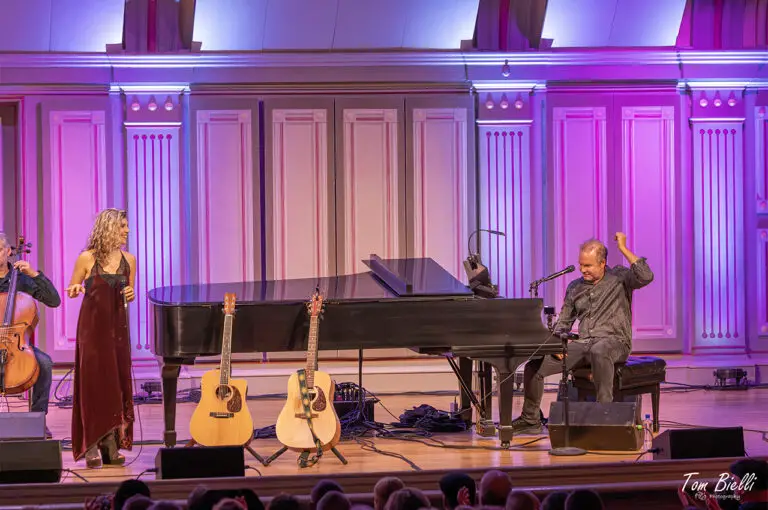
“When are you coming home?” “I’m coming home soon,” they exchanged facing one another in a musical dialogue, then embraced at the end of the number.
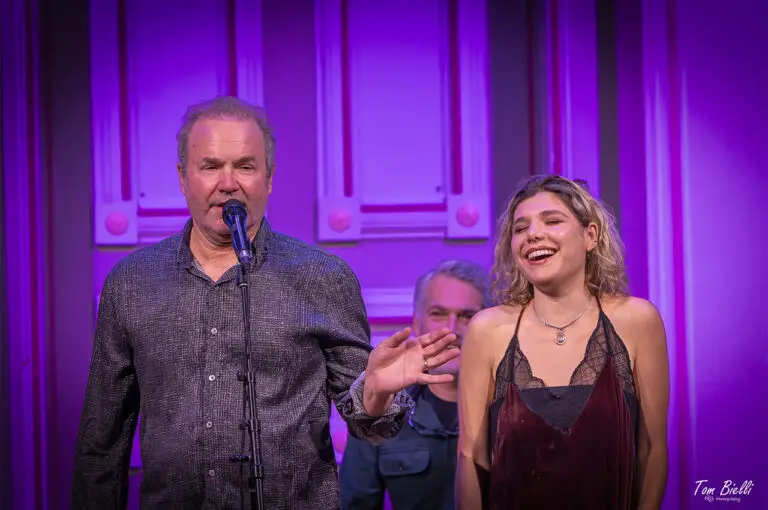
That brand of sentimental imagery found its way into “’65 Mustang,” too, a story song with fast-talking internal rhymes and a bit of a country twang. The title Mustang, Ondrasik said, was a car his father had given him, which he painted purple upon receiving but restored after his first record deal and returned to his father, only to drive his son Johnnie home from the hospital after the latter’s birth.
“I told you a fib,” Ondrasik said, putting down the guitar he had used during the song. “We had an SUV fitted out [for safety] like an egg, drove home in that, got in the Mustang , took a picture and drove into the garage…Don’t tell my son.”
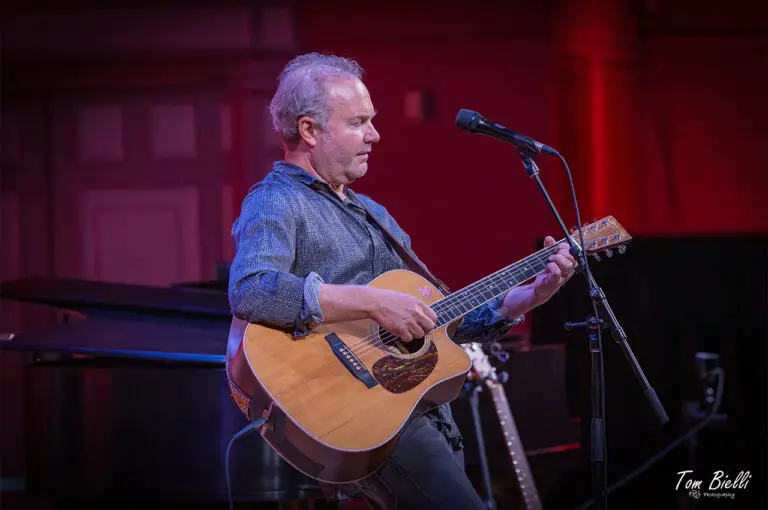
Perhaps sentimentality, cynical enough to avoid being saccharin, is another line that runs through Five for Fighting’s music. Ondrasik has long been an advocate for freedom, and while playing down partisanship, has performed for the US Military and spoken out for hostages held by Hamas in the Middle East. Tuesday he shared two of the songs he wrote after 9-11, the first, “Tuesday” written in 2009, to raise the question of how long the nation would remember the first responders who lost their lives during and after the 2001 incident.
He noted that more than 100 children of 9-11 first responders had followed in their parent’s footsteps despite, or perhaps because of, the ultimate sacrifice.
“Tuesday came and went,” he sang at the end of the song, adding afterward, “We will never forget.”
The second song, “New York City Weather Report,” was actually written first, after the 2001 Concert for New York City. He said of the song:
“We have a lot more in common than what divides us. That’s what this song tells you.”
Ondrasik and stringed company played a revised version of “Superman” in honor of Alon Ohel, an Israeli hostage kept for more than 700 days before being released. Ondrasik told the audience he had rewritten it after an appeal from Ohel’s mother and that on America’s 250th Anniversary Celebration, he played the new version on the USS Nimitz, with Ohel, also a musician, seated beside him at the piano.
“Miracles do happen,” he said.
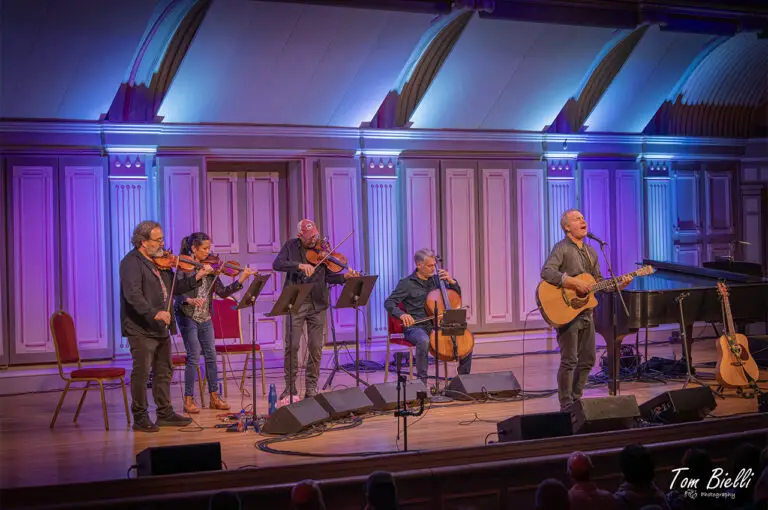
Earlier in the set, he paid homage to military families with “Two Lights,” the tale of a military father who learns that one of the servicemen in his son’s unit is among 13 from Camp Pendleton who have been killed, but the identity has not yet been released.
“Families sit at home hoping that knock on the door never comes,” Ondrasik said. “There’s a window of time when they don’t know if they’ll ever see them again,”
“Two Lights” traces that “window of unknowing” as the protagonist instructs his wife to leave two lights on if she finds out their son is OK.
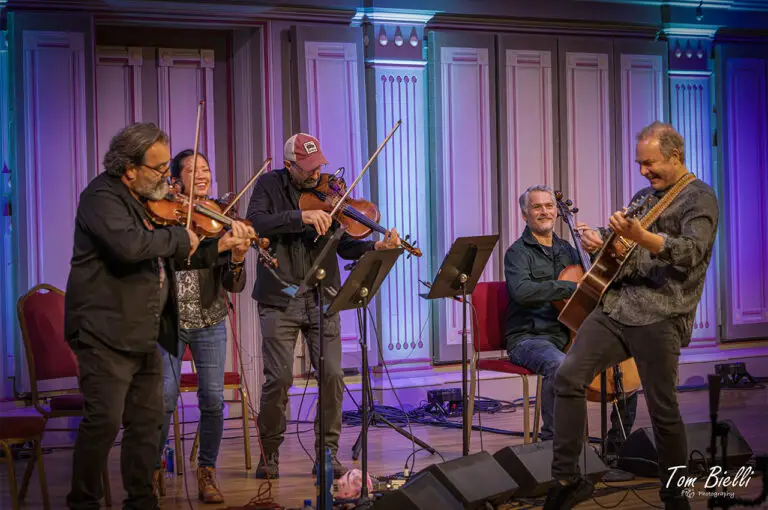
If Ondrasik’s themes and lyrics pull at the heart strings, the addition of stringed instruments enhances the pathos. With each swing of the bow, you find yourself taken from whatever preoccupies you to the humanity of the situation described in the Five for Fighting song.
One of my favorite parts of Tuesday’s show was when Ondrasik gave the stringed quartet carte blanche to jam for several minutes in whatever genres suggested themselves and Ondrasik left the stage while they did so.
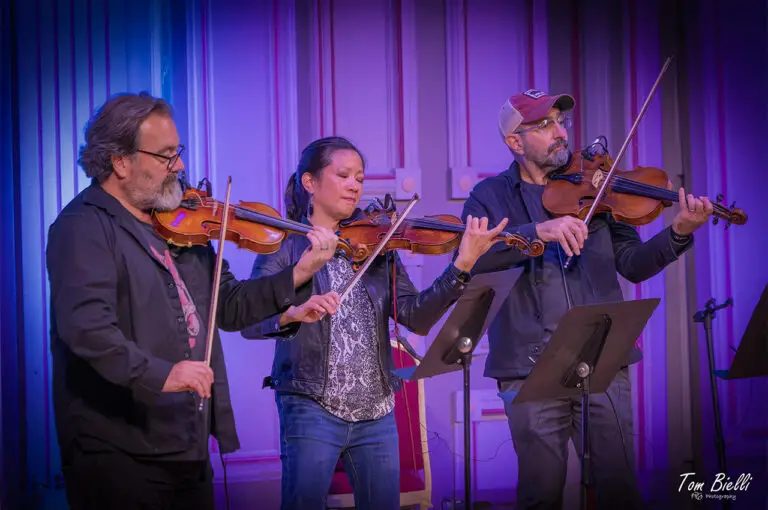
True to Ondrasik’s introduction for the interlude, the instrumentalists, many of whom have played on Broadway, “can play anything”, and “play anything” they did, with Sachon starting out slowly and somberly, Cardona adding layers on the viola segueing to tense, skittish music, only to be interrupted by Tong with strains of Beethoven’s Fifth and eventually meandering into Cold Play, a few notes of “Twinkle Twinkle, Little Star” and a string-smoldering finish with “Dream On.” The audience ate up the improvisation.
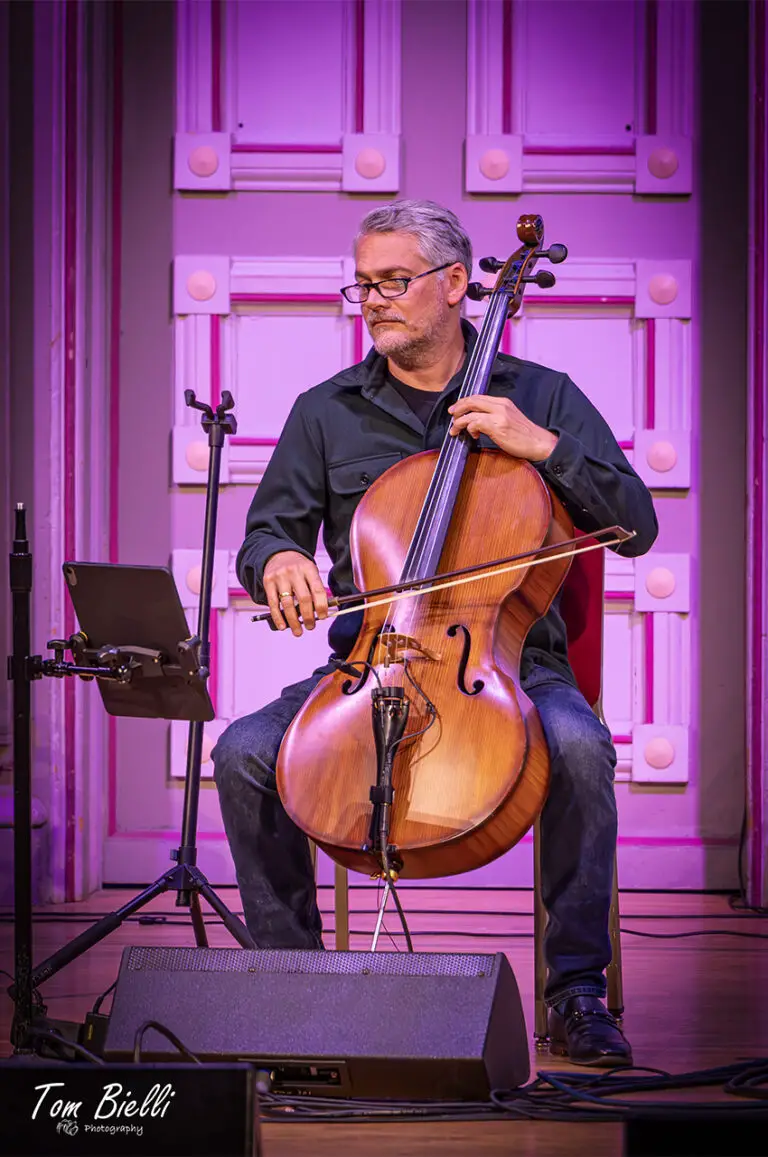
Improvisation and some funny bits came into play a few times during the evening when things didn’t go quite as planned.
A mic malfunctioned center stage while Ondrasik was attempting to introduce “Superman” and he added lib, “We’re now going to play, uh, no, we’re not gonna play” the revised version before service was restored.
As Ondrasik sat at the piano bench trying to find the music for “Tuesday,” which hadn’t been played yet for the current tour,” he killed time putting on and talking about his eyeglasses. “These are for image, he said, “My wife said I needed a new image, so I bought twenty of them and put them around our house.”
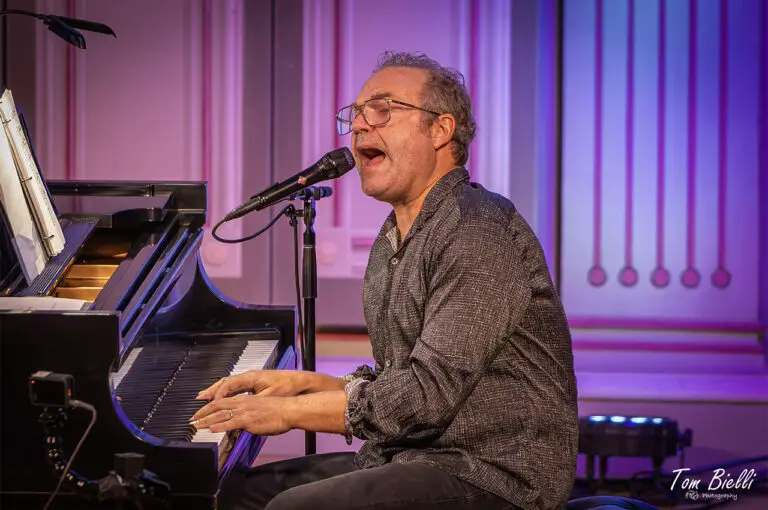
A short time into Lace & Lee’s opening set, Olivia Ondrasik announced she needed to go get a capo for Caroline McPherson so she could play their next number, and off she scurried, returning with the capo, and not missing a beat.
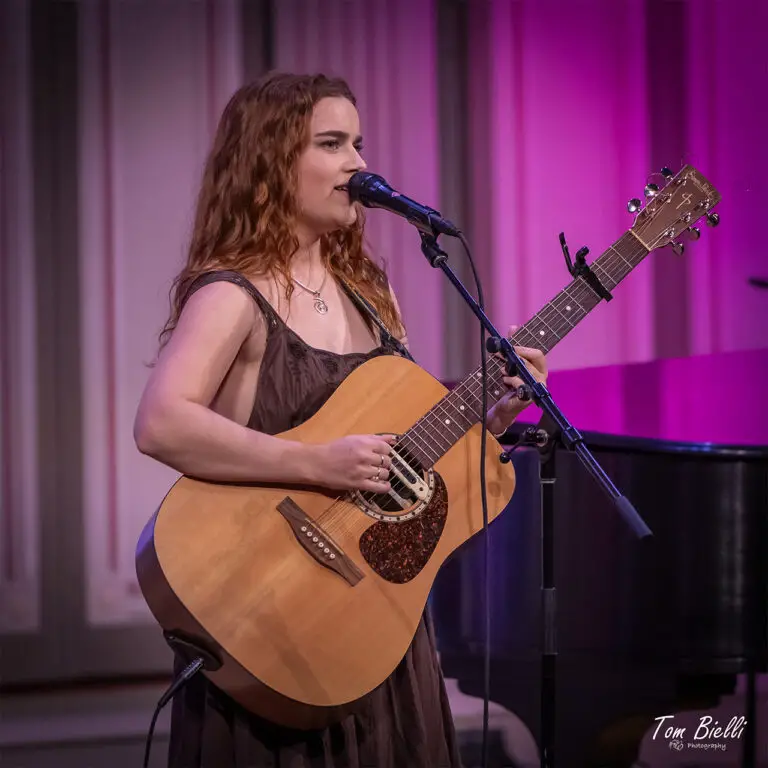
The young women, both now in their mid-20s began opening for Five for Fighting at the beginning of the current tour and have a lot of stage presence and a comfort with one another for only beginning their singing/songwriting partnership in 2024 and not yet having an album under their belts. Their first EP, Mirror Mirror, is due out Nov. 27, Black Friday, and was recorded with Mikal Blue, who has worked with the likes of One Republic, Colbie Caillat and Jason Mraz.
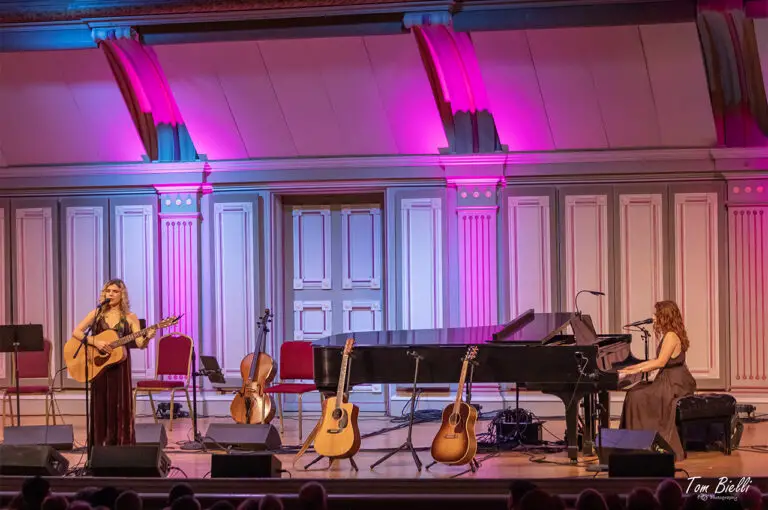
Lace & Lee are both self-described “theater kids” who met in their senior year studying musical theater at the NYU Tisch School of the Arts (New Studio on Broadway). Since then they have recorded several singles featuring a blend of “haunting ethereal vocal harmonies,” “mystical folk rock” and a “touch of Celtic and medieval folk style” per other reviews. Photos feature them in flowing gowns, with candelabra and soft-focus poses and in wood cuts to play up the “new but ancient” vibe.
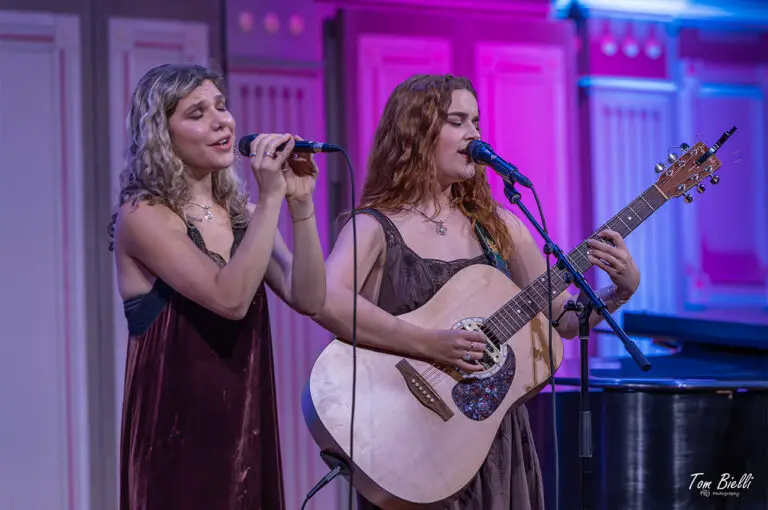
All of those things were definitely present (minus the mood photography), but I thought the musical theater background surfaced strongly.
In “Hunter,” the first number, which Olivia told me she’d penned after a breakup, the pacing, slow and fast and slow again, seemed very theatrical, along with what might be termed gypsy rhythms. The ladies’ body language and facial expressions also struck me as something perhaps out of musical theater. Similarly, the gypsy rhythms, which almost slid into scatlike enunciations momentarily in “Dappled Shade,” and the pounding piano that followed repeated guitar chords in “Mirror Mirror” had a contemporary musical theater flavor.
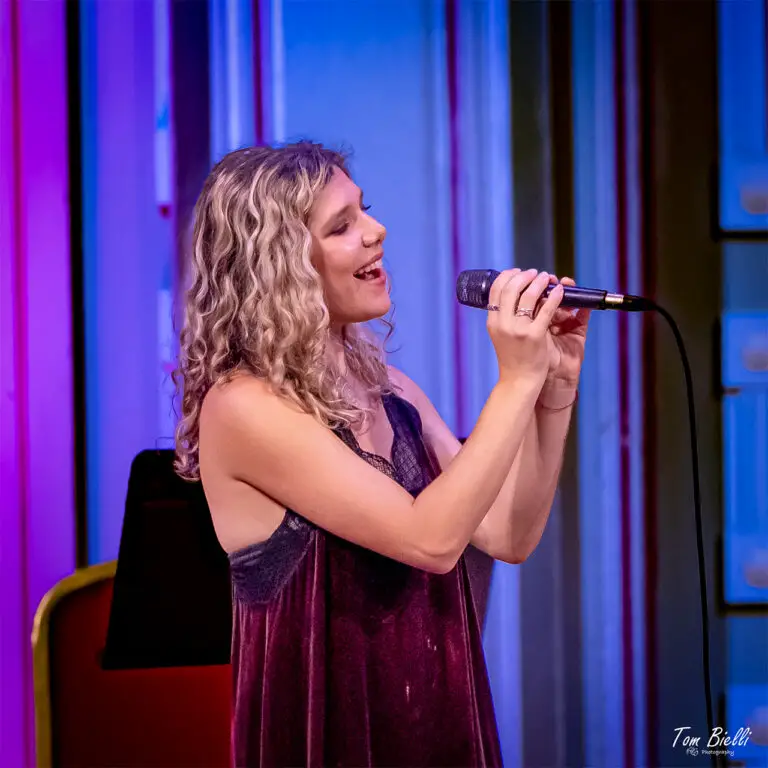
None of this is a bad thing, but, to me, it’s a recurring thing and worth noting. Lace & Lee are bubbly and display a sense of humor when they’re not showing glimpses of a dark side —, or perhaps intertwined with a darker thread, as in the funny, unfiltered sentiments of “Spades” in which the narrative female voice tells a love interest she wants to “fix” him, that he’s “screwed up” and that she questions whether she even likes him, then implores him for honesty.
“Spades. Can you hear them callin’? Give ‘em to me, darlin’.”
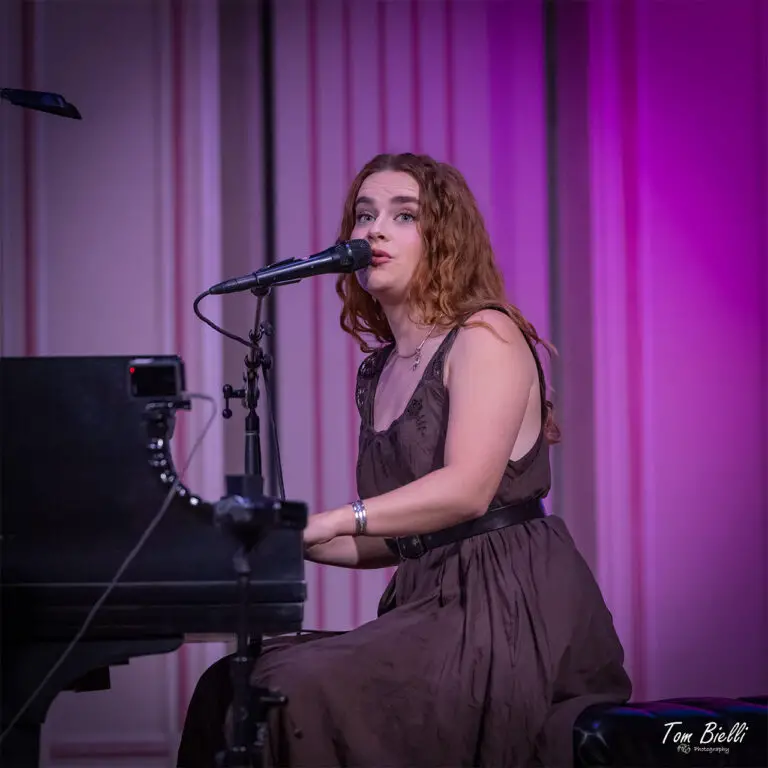
The darkness, medieval nuances and harmonies present boldly in “Oh, What a Weapon,” a story of a king who collects weapons and his encounter with a bard, which Lace & Lee wrote together in their early songwriting.
Then there’s “Road Kill,” an upbeat, yet possibly dark, tale which the duo said they wrote after seeing dead animals to avoid car sickness in the back of a van. It was recorded in September and while I didn’t cypher out any references to actual roadkill,the song switches gears from the bouncy refrain, “I’ve got day dreams, I’ve got plans, I’ve got problems, but do you know who I am?” to “I’m your problem. Now you know who I…am.” The “am” indeed is delivered after a theatrical pause to underscore the previous anonymity of the animal turned haunting victim.
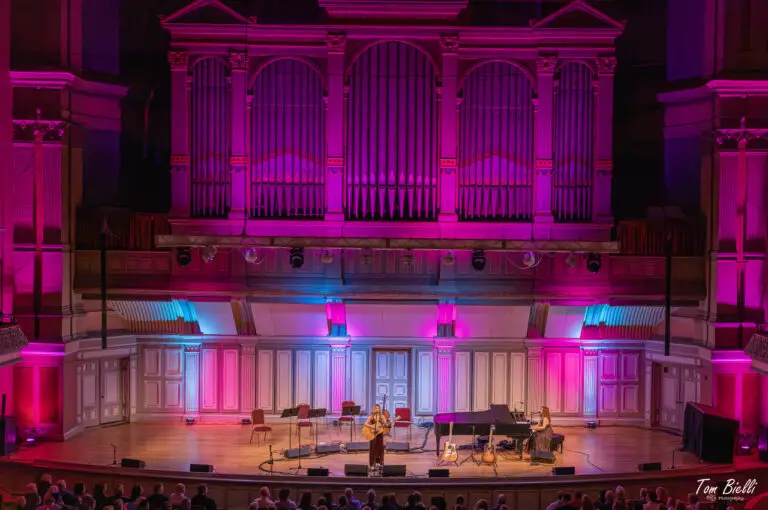
Lace & Lee are immensely talented; their complex harmonies are other-worldly; their themes and musical style are diverse, and if the mirror can show them the future, as their new EP album’s title song commands, it should be long, bright and successful.
Setlist (Lace & Lee): Hunter, Dappled Shade, Mirror, Mirror, Puzzle Pieces, Jolene (Dolly Parton), Spades, Oh, What a Weapon, Roadkill
Setlist (Five For Fighting): Hope, World, Easy Tonight, ’65 Mustang, Two Lights, 100 Years, I Just Love You, String Quartet Jam, Tuesday, The Riddle, New York City Weather Report, Superman Encore: Desperado (The Eagles)

Comments are closed.