
Music has always pushed back against power. From folk songs and Vietnam-era protests to punk’s raw defiance and hip hop’s systemic critique, musicians have long used sound as a weapon against authoritarianism, racism, and state violence. Today, as protests erupt across cities like Minneapolis and political tensions continue to rise globally, music remains not just relevant—but essential.
In moments where silence is demanded, music answers back.

When Music Becomes a Political Act
Music becomes political the moment it refuses neutrality. Historically, periods marked by rising authoritarianism—defined broadly by repression, scapegoating, and the consolidation of state power—have always produced a cultural response. That response often takes the form of music: immediate, emotional, and accessible.
Unlike policy or journalism, music does not require permission. It moves quickly, spreads widely, and embeds itself in memory. It doesn’t just reflect movements—it helps build them.
Roots of Musical Resistance: Folk Music and Anti-Fascism
Long before streaming platforms and viral protest songs, artists like Woody Guthrie and Pete Seeger laid the foundation for music as a form of resistance.
Guthrie’s now-iconic phrase—“This machine kills fascists”—scrawled across his guitar, was not a metaphor. It was a declaration. His song “All You Fascists Bound to Lose” directly confronted Nazism at a time when the threat was global and urgent.
But Guthrie’s philosophy extended beyond opposition. He once said: “I hate a song that makes you think you’re not any good… I’m out to sing songs that will prove to you that this is your world.”
That idea—music as empowerment—became central to resistance culture.
Seeger expanded that vision into collective action. Deeply involved in labor movements, civil rights organizing, and anti-war protests, he understood music not as performance, but as participation: “Songs are funny things. They can slip across borders. Proliferate in prisons. Penetrate hard shells.”
Both artists faced government repression, including blocklisting during the Red Scare. Yet their work endured, proving that music can outlast censorship—and even weaponize it.
San Francisco, 1968: When Music Met Mass Protest
By the late 1960s, music had become an infrastructure for protest.
In San Francisco, anti-war demonstrations against the Vietnam War transformed music into a communal force. Free concerts, protest anthems, and collective singing turned gatherings into spaces for organizing.
But beneath the surface of peace and love, disillusionment was growing. Police violence, militarization, and state surveillance shifted the tone. The counterculture’s optimism began to fracture, and music evolved with it. The rose-colored glasses were coming off.
Punk as an Anti-Fascist Alarm System
By the late 1970s and early 1980s, punk emerged as a direct response to political decay. Bands like Dead Kennedys outrightly rejected authority. Their track “Nazi Punks Fuck Off” was a blunt warning against fascist infiltration into subcultures.
Frontman Jello Biafra summarized the ethos clearly: “Punk was about questioning authority — all authority.”
Similarly, The Clash exposed how systems of power could accommodate fascism when convenient, while Henry Rollins framed punk as refusal: “Any system that demands silence is dangerous.”
Punk’s DIY ethic—self-produced records, underground shows, independent networks—was itself a form of resistance. It rejected both corporate control and state narratives, creating spaces where dissent could thrive.
Movements like Rock Against Racism and the Anti-Nazi League further demonstrated how music scenes could become organized political forces.
Hip Hop: Reporting from the Front Lines
If punk was confrontation, hip hop became documentation. Emerging from communities shaped by disinvestment, policing, and systemic inequality, hip hop functioned as what Chuck D famously called: “Rap is the CNN of Black America.”
Groups like Public Enemy challenged dominant narratives with tracks like “Fight the Power,” while N.W.A. delivered raw indictments of police brutality in “Fuck tha Police.”
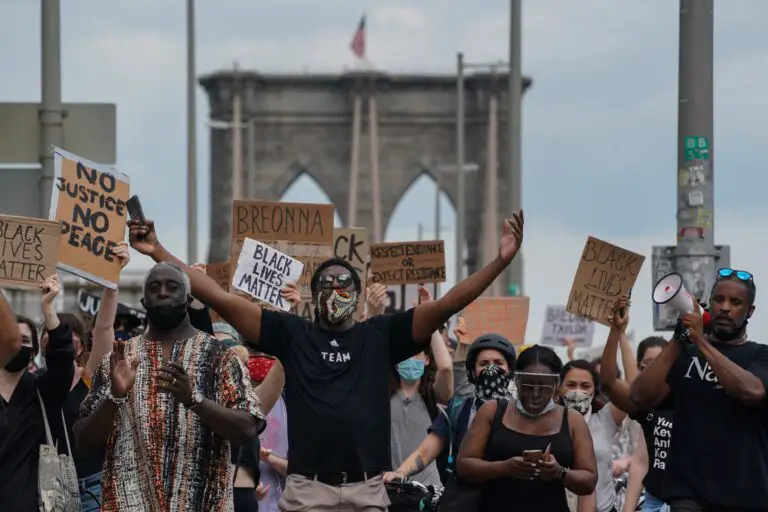
These weren’t abstract critiques—they were firsthand accounts.
Hip hop exposed how policies—from the War on Drugs to mass incarceration—functioned as systems of control. Artists like KRS-One and Tupac Shakur expanded the genre’s political scope, blending cultural identity, survival, and resistance into a unified voice.
A Shared Language of Resistance
Despite their differences, folk, punk, and hip hop speak the same political language. They reject authoritarian control over cultural truth, expose systemic injustice, and center community over hierarchy.
All of this transforms the art of music into action.
Each genre reflects the technology and urgency of its time, with an unchanging core message: resistance must be heard. Music is not decoration for protest—it is part of its foundation.
Why This Still Matters Now
To treat protest music as history is to misunderstand the present.
We are living in a moment defined by overlapping crises—mass protests against policing and immigration enforcement in places like Minneapolis, ongoing global conflicts, rising authoritarian rhetoric, and deepening economic inequality. Across continents, people are confronting state power in the streets, and once again, music is moving alongside them.
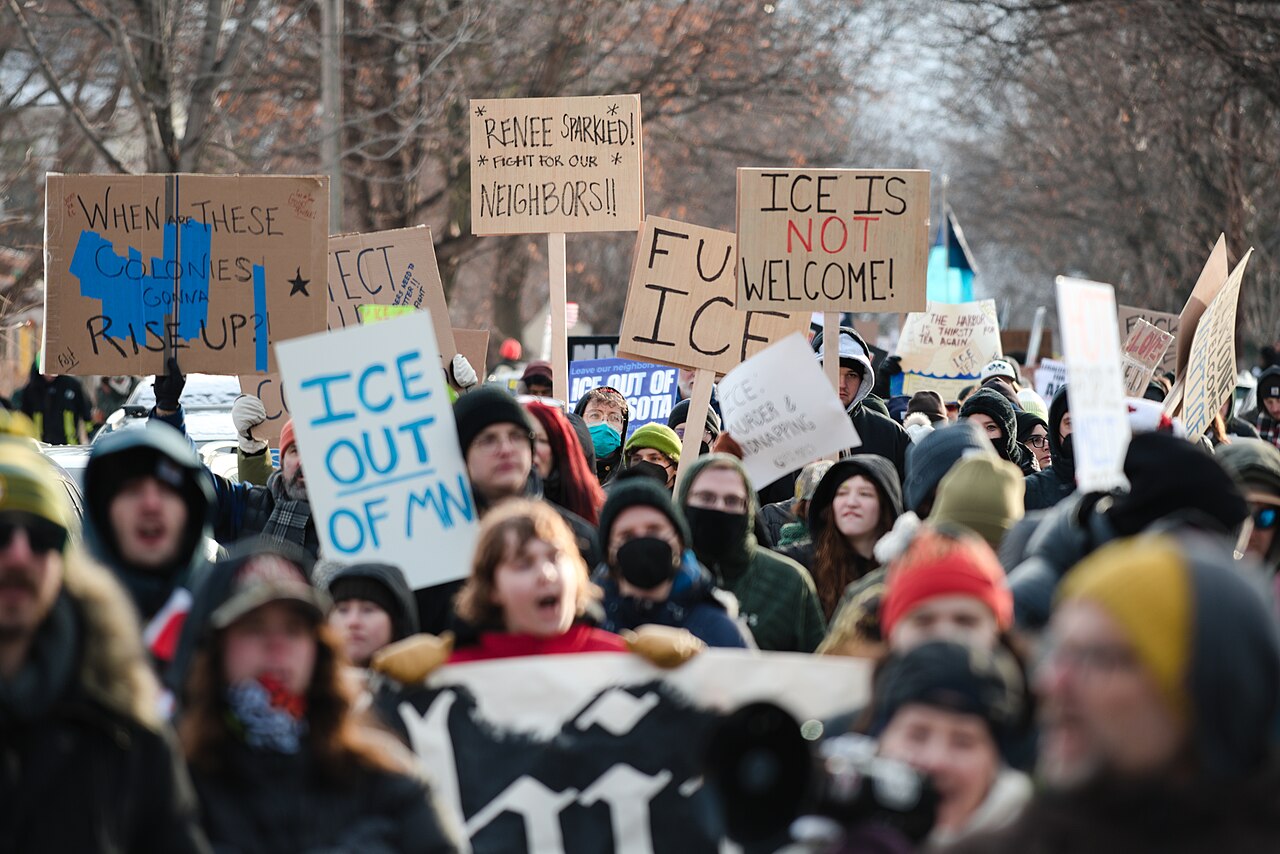
This is not background noise. It is real-time resistance.
When demonstrations erupt, they are often accompanied by sound—chants, speakers, live performances, and songs that travel faster than the news cycle. Music becomes both documentation and mobilization, shaping how events are understood and remembered.
Artists today are not subtle about what they are resisting.
Bob Vylan has turned major festival stages into sites of confrontation, directly addressing police violence, militarism, and anti-immigrant sentiment in front of massive crowds. Their performances blur the line between concert and protest.
Lambrini Girls channel a generation raised in instability, calling out xenophobia, economic precarity, and the silencing of dissent with unapologetic urgency.
Noname continues to reject neutrality altogether, pairing her music with on-the-ground organizing and political education that challenges capitalism and imperialism as root causes—not side effects—of injustice.
Ghais Guevara delivers some of the most explicitly political hip hop of the current era, critiquing surveillance, empire, and historical erasure in ways that mirror earlier resistance movements while updating their language for today.
At the same time, globally recognized artists are using visibility as a form of resistance. Public statements, performances, and rapid-response songs are addressing immigration crackdowns, war, and humanitarian crises—often in direct defiance of industry expectations to remain apolitical.
In conflict zones and heavily censored societies, music is evolving in even more urgent ways.
Underground scenes, anonymous releases, and even digitally constructed voices are being used to bypass state control, ensuring that dissent cannot be fully silenced.
A World in Crisis, A Culture That Responds
What makes this moment distinct is not just the presence of injustice but also the instant knowledge the world has at its fingertips.
Wars unfold in real time on social media. Police violence is captured and shared instantly. Policies that impact millions are debated and enacted in public view.
Music Against the Machine: ICE, the Super Bowl, and Global Resistance
In 2026, resistance music is not confined to underground scenes—it is happening on the world’s biggest stages.
When Bad Bunny headlined the Super Bowl LX halftime show, the performance was more than a cultural milestone—it was a political moment. As the first solo Latino artist to headline the Super Bowl with a primarily Spanish-language set, he challenged dominant narratives about who “belongs” in America.
But the deeper significance came from what surrounded the performance.
In the weeks leading up to the Super Bowl, Bad Bunny had already sparked national attention by publicly denouncing U.S. Immigration and Customs Enforcement (ICE), using the phrase “ICE out” during a major awards speech. His comments came amid widespread protests and outrage over aggressive immigration enforcement and reported civilian deaths.
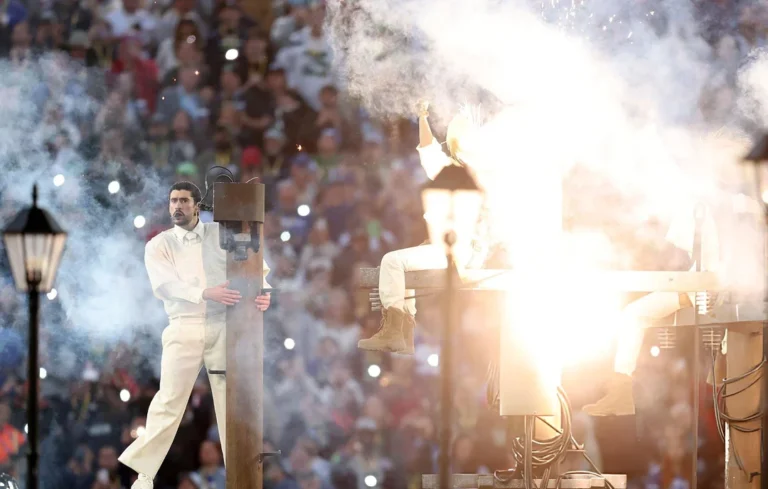
The Super Bowl itself became a site of protest:
Activists distributed thousands of “ICE OUT” towels inside the stadium.
Political leaders threatened to increase ICE’s presence at the event.
The performance triggered national debate about immigration, identity, and dissent.
Even within the show, symbolism spoke loudly. Visual references to colonialism, Puerto Rican identity, and unity pushed back against narratives of exclusion, reframing “America” as something broader, multilingual, and contested.
This is what modern resistance looks like: not separate from mainstream culture, but embedded within it—impossible to ignore.
Iran: When Singing Itself Becomes Resistance
If Bad Bunny represents resistance on the global stage, what is happening in Iran shows the stakes when music is directly criminalized.
In Iran, women are banned from singing solo in front of men—a restriction that has existed since the 1979 revolution.
To sing publicly as a woman is not just artistic expression—it is defiance. And yet, music persists.
And through all of it, music moves just as quickly—responding, reframing, resisting.
Where traditional media can be filtered or controlled, music often slips through.
It shows up in protest playlists shared across platforms. By live performances that double as political rallies. Through viral tracks that carry messages further than speeches ever could. And in strong community spaces where people gather not just to listen, but to organize.
This is where your earlier through line becomes undeniable: from folk to punk to hip hop, the function of resistance music has not changed—only its speed and reach have.
In 2026, amid violent crackdowns and mass protests, an AI-generated singer named “Nava” emerged as a symbol of resistance—giving voice to women who are legally silenced. Her song spread widely despite censorship, becoming an anthem of hope.
Public gatherings—even cultural celebrations—have turned into acts of defiance, with music, dancing, and chanting despite the threat of arrest or death.
Earlier protest songs like “Baraye” by Shervin Hajipour and “Soroode Zan” by Mehdi Yarrahi became global anthems for the “Woman, Life, Freedom” movement—transforming personal grief into collective resistance.
The risks of artistic resistance are stark—Mehdi Yarrahi faced flogging as punishment after releasing protest music supporting women’s rights.
Even silence can be musical resistance: members of Iran’s women’s national soccer team made global headlines by refusing to sing their national anthem—a quiet but powerful act of protest.
Here, music is not just protest. It is a risk and a survival.
It is evidence that even under extreme repression, expression finds a way.
The Soundtrack of Defiance
From Woody Guthrie’s declaration that his guitar could “kill fascists” to modern artists using microphones, algorithms, and global platforms, the message remains consistent:
Resistance must be heard.
Fascism and authoritarian systems rely on silence, on fear, on the erasure of truth. Music disrupts all three. It preserves true memory when narratives are rewritten to benefit those in power. It builds solidarity when communities are divided. Language is given to emotions that might otherwise remain internal and powerless.
In a world marked by unrest and severe social injustices, music is not an escape.
And as long as people continue to resist, there will be sound—loud enough to challenge power, and persistent enough to outlast it.

Comments are closed.