

Newcastle, England’s underground metal heroes Raven were formed by the Gallagher brothers John (bass/vocals) and Mark (guitar) in the mid-70s, and came to prominence as part of the New Wave of British Heavy Metal (NWOBHM) movement in the early 1980s, starting with the release of the speedy and ripping “I Don’t Need Your Money”/”Wiped Out” 7” single on Newcastle indie label Neat Records in 1980, followed by three albums – Rock Until You Drop (1981), Wiped Out (1982) and All For One (1983) – all on Neat Records and all hailed as underground metal classics and precursors to the thrash metal genre that would explode in the mid-1980s.
As the NWOBHM movement faded around 1982, Raven (the Gallagher brothers and hockey-helmeted drummer Rob ‘Wacko’ Hunter) shifted focus to touring in the United States, basing themselves in New York state, and undertook coast-to-coast touring in the States in 1983 – 84, bringing future legends Metallica and Anthrax out as opening bands, and eventually signing to Atlantic Records for four records between 1985 – 87. Since then, the band have released numerous records (24 albums, EPs and live records) and toured worldwide consistently (save for some breaks in the 1990s-early 2000s due to shifts in trends and physical injury).
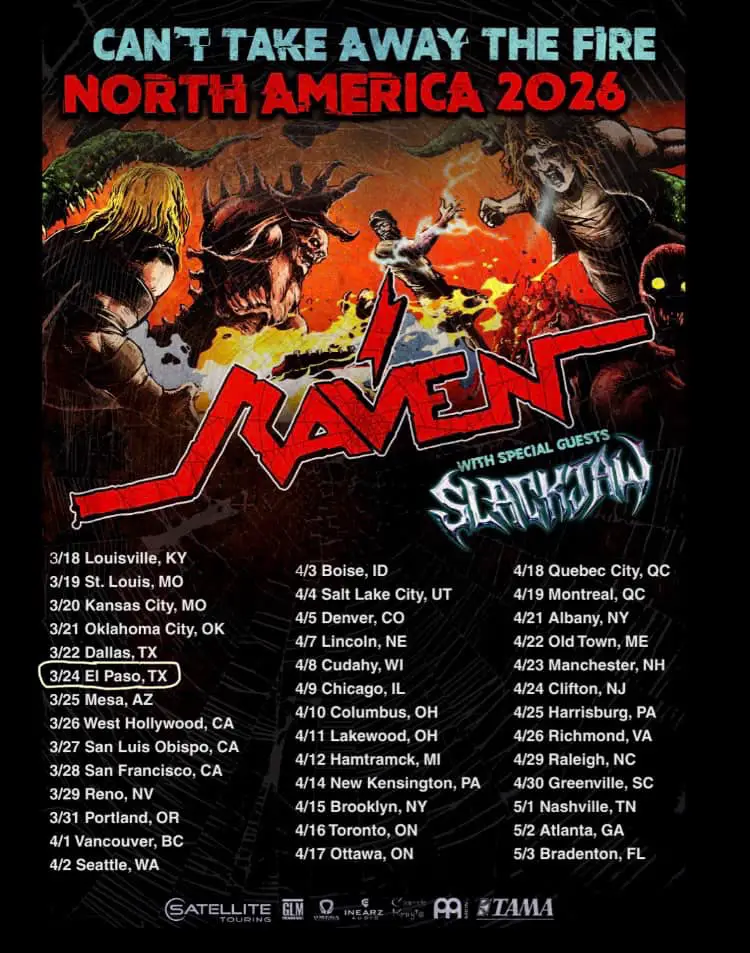
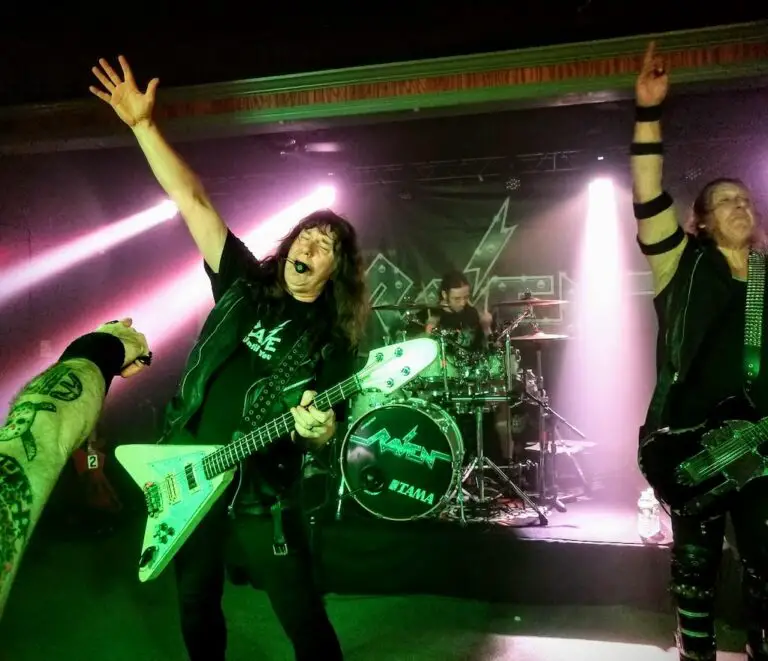
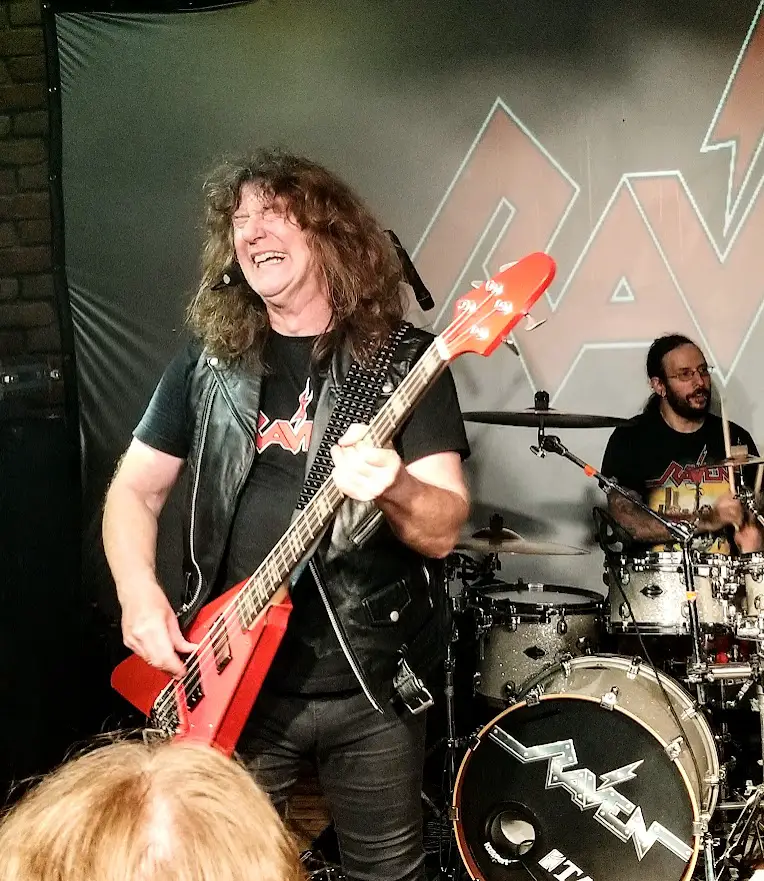
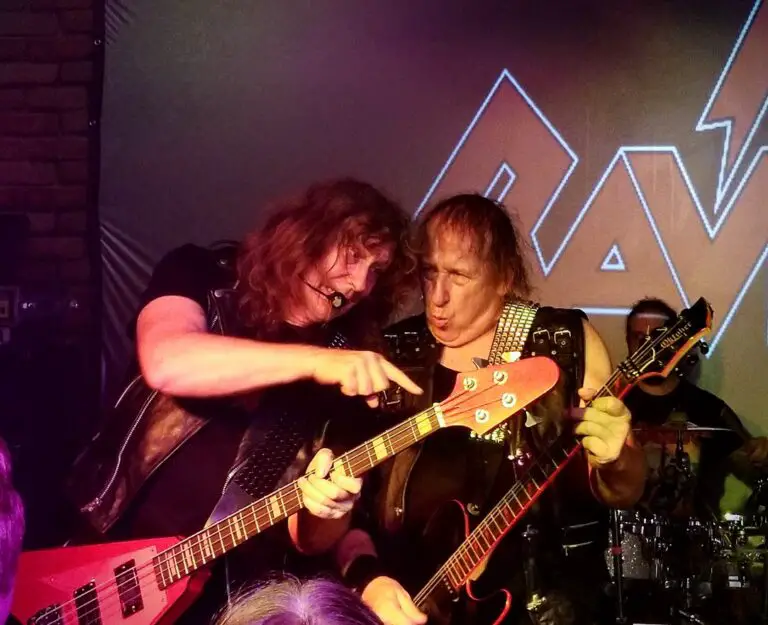
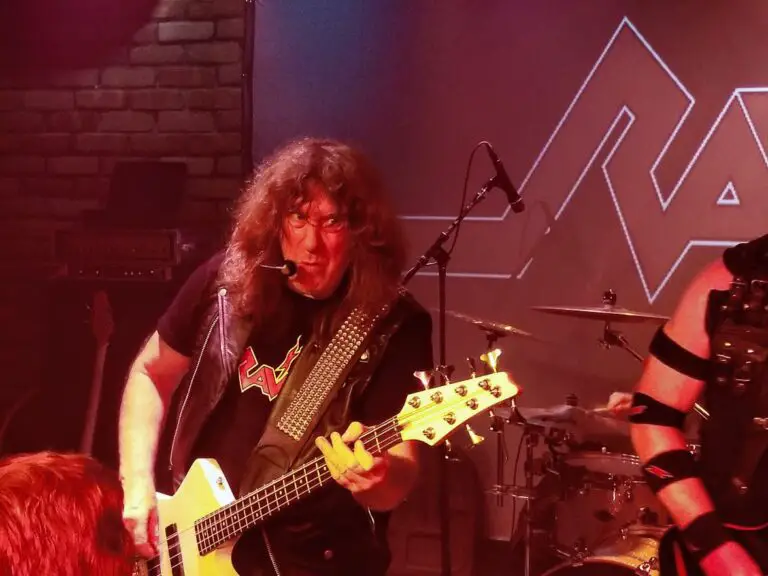
In early 2025, the band released the hammering Can’t Take Away the Fire EP, and after an unplanned break owing to surgeries for John (brain) and Mark (knee, ankle), the band (which also now features American drummer Mike Heller) are recovered, raring to go and undertaking a sprawling 39-date tour across the U.S. and Canada which runs from March 18 – May 3, 2026 (with South Carolinian heavies Slackjaw supporting) , including two New York dates: in Brooklyn at the Woodshop on April 15, 2026, and in Albany at Empire Underground on April 21, 2026. Prior to the start of the tour, we spoke to bassist/vocalist John Gallagher to discuss the EP, tour, and the band’s lengthy history and connections with NYS Music.
So I’d like to start with the new EP, Can’t Take Away the Fire, which you’re touring on, but which came out a year ago.
John Gallagher: Yeah … I’m happy we had that. ‘Cause, between that and the Metallica cover tune [of Metallica’s “Metal Militia” from No Life ‘Til Leather – A Tribute To Metallica’s Kill ‘Em All, released in November 2025], that kind of helps fill in the gap for 2025, which was, as I laughingly call it, our “medical gap year”.
Mark had the leg operation, right? And you had the brain surgery.
John Gallagher: Yeah, well, he had two. He had the ankle replacement, and then he had a knee replacement. He’s more metal than he’s ever been, literally.
Are we going to hear anything from the EP in the live set, do you think?
John Gallagher: Well, we’ll put something in from it. I don’t like beating people over the head with new material, necessarily. But we’ll put at least one song in there. We’re gonna do at least one song of the old stuff we’ve never done before. Keep it nice and interesting. And a couple of ones we’ve never done in 15, 20 years.
One song I wanted to ask you about from the new EP is “The Wreckage”, which is a little different from Raven. It’s, like, this slow, huge, creeping, heavy, almost bluesy in places, epic song, slightly reminiscent of a couple older songs, maybe, like “Juggernaut” or “Into the Jaws of Death”, but not really. It’s a different song for you guys.
John Gallagher: No, it’s… you’re right, it’s definitely more of a bluesy thing, it’s got a touch of, like, “Dazed and Confused” in it or something like that, for sure. It was just a finger-picking thing when I was sitting with a guitar going, like [picks up acoustic guitar, starts jamming a riff] … And I’m like, what? That’s kind of cool. What if we did it loud?
I like when the band takes a slightly left turn, you know? Those are sometimes some of my favorite songs from you guys.
John Gallagher: Yeah, that seemed to be the right place to do that as well, putting it on an EP, because, you know, it’s odd doing an album. You want it to be cohesive, and you don’t want anything really to jump out and go, oh, why did they do that there? So, something like an EP or an extra track, you can kind of go, eh, let’s give it a shot, see what happens.
Speaking of extra tracks, you put 3 live songs on the end of the EP, each one of your three drummers [original drummer Rob ‘Wacko’ Hunter, second drummer Joe Hasselvander and new drummer Mike Heller] are on the three different songs. Where did that live recording of “I Don’t Need Your Money” from Amsterdam, Holland in 1984 come from?
John Gallagher: As far as I know, it’s a radio broadcast. And somebody sent it to me, and I’m like “wow, just for the audience alone, it was like, wow”. The three extra songs – let’s do that because we had the 5 songs, and the record company like, well…the distributors don’t like EPs. But they’ve got to sell it for less, because there’s less songs, so let’s put more songs on, call it an EP, but it’s really an album. Whatever. But it came out great, the EP, and it’s a good pointer too, for where we’re going on the next expedition, which we should be recording in the summer.
Before I got hit on the head, I was diligently working here, collating, writing, and putting stuff together. So we have a lot of songs, and a lot of good songs. So our work’s cut out to select a good 10, 11 songs, what have you, 40, 45 minutes. None of this, you know, here’s our magnum opus, here’s 42 songs. People can’t digest that.
You kind of went in that direction with Extermination (2015). Fantastic record, but it’s a long record.
John Gallagher: And it was one of the few complaints we got about Extermination, was it was 2 or 3 songs too long. To my mind, back then, it was just like, well, you’re stupid, you’re complaining because there’s more songs.
You know, something like what Metallica‘s been doing, you might have one disc, but there’s like 400 songs on it. If you’ve got a narrative, concept album type of thing, you can get away with that. But otherwise, it’s like… I mean, I know that the Chili Peppers did an album a few years ago called Stadium Arcadium, and for what they do, it’s very good. But, to this day, I haven’t listened to it all the way through. There’s just too many songs.
So this tour is starting March 18, I believe in Kentucky. It’s going through May 3rd, coast to coast, Canada, it’s a pretty long tour.
John Gallagher: Pretty much. I mean, we were laughing about that. You can’t play everywhere. If you played everywhere, you’d be on the road on one tour for 3 or 4 years. People say, why aren’t you playing here – famously, yourself, why aren’t you playing Albany? Those things can happen.
You know, you’ve got these…radius clauses where you can’t play within 100, 120 mile of where you’re playing.
This tour, you’re playing two shows in New York, one in Brooklyn, where you’ve played many times, but you are making it back to Albany [where the band have only ever played the Capital District 2x before] this year on April 21st.
John Gallagher: Well, we got a following in upstate New York, Albany, so we need a gig there. So it’s good, there’s places we’re playing we’ve never played in many years, like Reno. I think we played in Maine for the first time last tour before, so we’re playing there again. But, I mean, I had one guy: Why are you playing Old Town [Maine, on April 22]? Why aren’t you playing Bangor? Now, I looked at a map, it’s 12 miles difference, it’s like…come on, man.
Well, it’s great that you’re playing in upstate New York again. You guys are obviously from Newcastle, England, part of the NWOBHM, British band through and through, but I’ve always kind of thought of you guys as being sort of an honorary New York band, because you lived in New York, you recorded a whole bunch of records in New York, I wanted to ask you a little about the New York history that the band has.
John Gallagher: Oh, jeez. Well, we lived upstate from, like, 1984 to ‘88. I got married in ‘89 and moved down to Long Island, lived in Long Island for 10 years, then moved to Virginia. Now I’m in Florida.
But when we first came over, it felt very comfortable. The northeast of the States, we were coming from the northeast of England, there was a lot of parallels. You know, straight talking people, what you see is what you get. You know, the people from, like, Northern Jersey and New York, yeah … we definitely bonded.
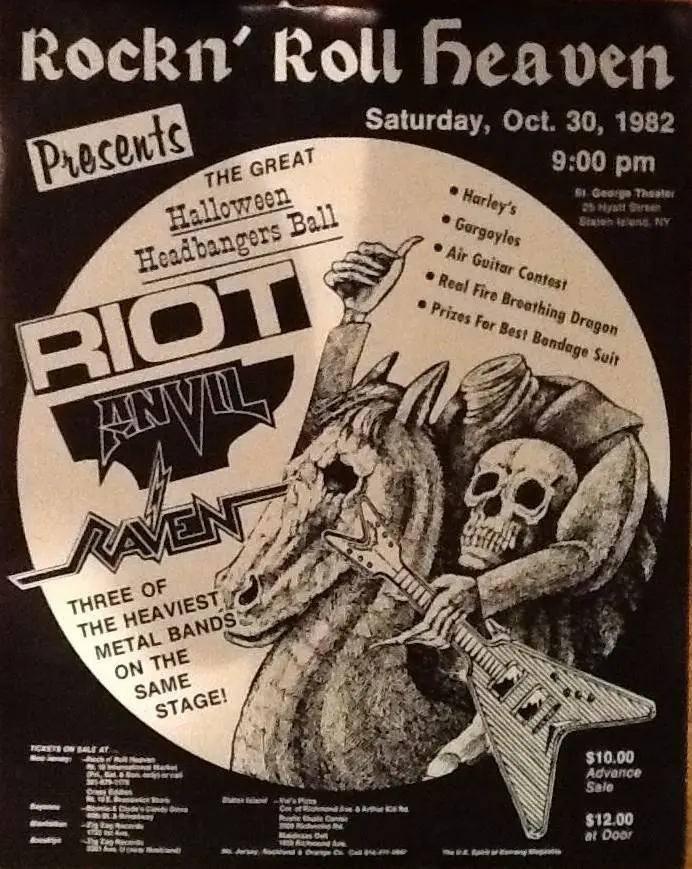
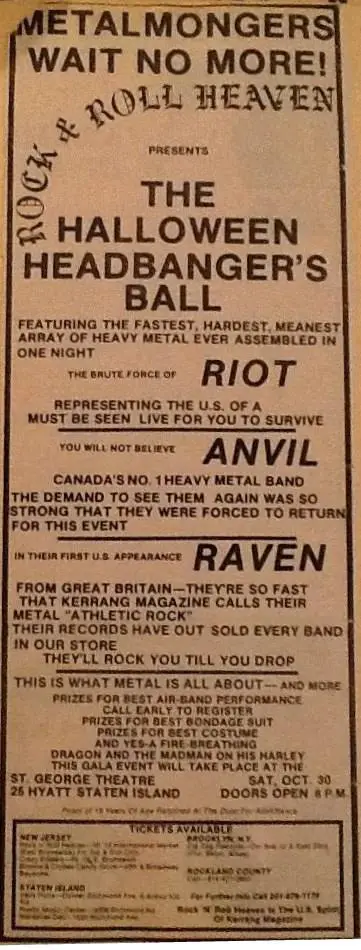
Your first ever show in America was in Staten Island, the Halloween Headbangers Ball, 1982, with Riot and Anvil right?
John Gallagher: St George’s Theater! No, was it October 30th, 31st? Yeah.
Did you guys have any idea you had a following in the States when you came over for that show?
John Gallagher: Not a clue. No.
On that show you were playing with Riot, who were coming off that great Fire Down Under album a year earlier. You were playing with Anvil, who had probably their best album out at the time, Metal on Metal, and you guys opened the show, you’re touring on your Wiped Out album, and according to legend, you stole the show that night.
John Gallagher: Yeah, which is even more amazing when you think that a couple of guys from Riot were actively trying to sabotage us throughout the gig. Yeah, they went to the stage box. Let’s put the bass guitar on the vocal track. Let’s put the vocal track on the bass drum track – stuff like that.
Was that the only time you ever played with Riot?
John Gallagher: Yeah. Well, we had Riot Act, which was [ex-Riot guitarist] Rick Ventura’s band, opened for us a couple years ago. Rick’s a great guy, I’ve got no problem with him, and I don’t know who it was particularly [who did that]. But you know, they pulled the 5 hour sound check. And, it was just like, uh, whatever. Infantile competition’s ridiculous. You just go out and do your thing. If everyone plays great, it’s a great night.
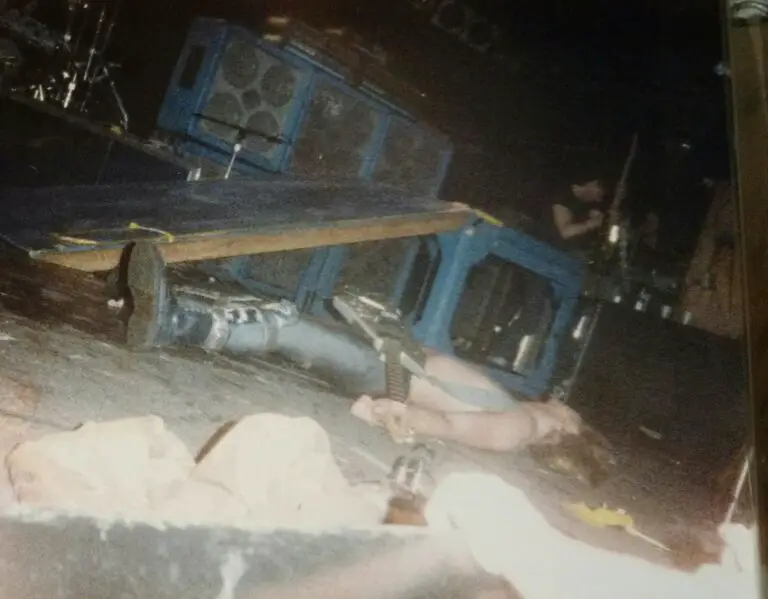
On that 1982 tour, when you came over and did the Halloween Headbangers Ball, you also did a bunch of shows around New York and New Jersey with Anvil, right?
John Gallagher: Yeah. Yeah, we played, god, Nanuet [New York] I remember that one particularly, because the opening band were late, they held the whole show up, and they went on at, like, 1 o’clock in the morning – and when they got there, the band was a cover band! It’s like, are you freaking serious? Oh, God. Yeah, and we played the Showplace in Dover [New Jersey], which was hilarious, because it was a strip club. And years and years later, we did the Glow album. And it was at Showplace Studios in Dover. “Well, that sounds familiar”, and they’re showing us the studio, which is beautiful, and we go into the tape room. And there’s another door, and you open that door, and you’re in the strip club! Crazy.
It’s like The Sopranos.
John Gallagher: Yep.
So, the guy who brought you over for those first shows, of course, was Johnny Z [Zazula], who famously later went on to manage you, manage Metallica, manage Anthrax, and started record label Megaforce Records. Were you talking about the Zazulas becoming your managers as early as 1982, or did that come later?
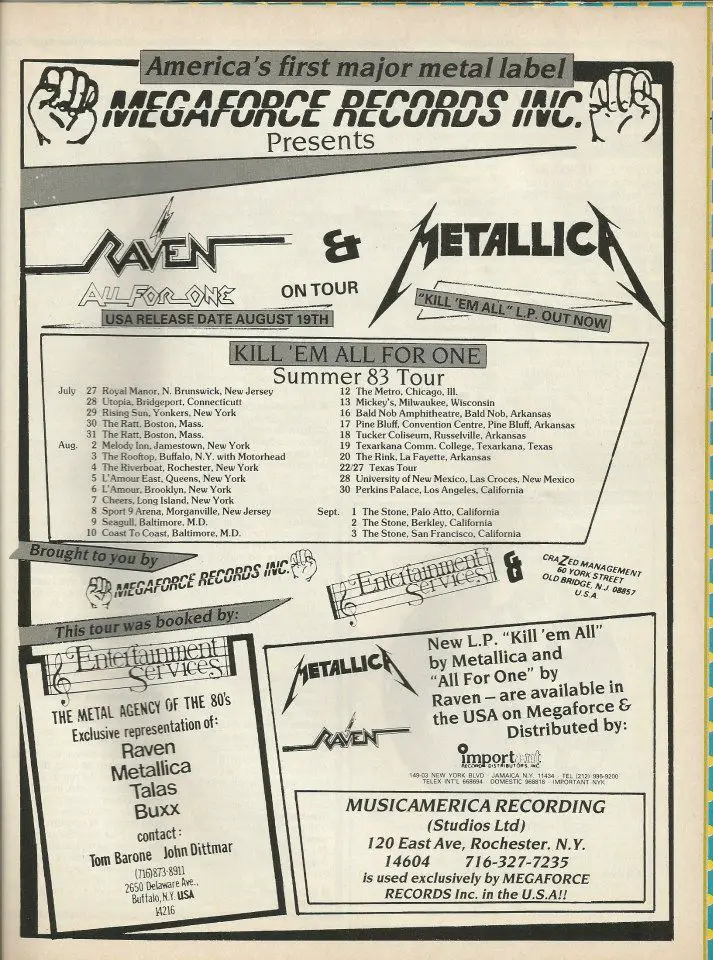
John Gallagher: What had happened was we did those shows in ‘82, and they said, let’s bring you back next year and do a headline tour. So it was really during and following that headline tour, the Kill Em All for One tour [where Raven toured the States with Metallica as opening band in Summer 1983], where it was like, we’ve got to get away from Neat Records, and the plan was to come over in ’84, bring all our equipment, and work. Get a major deal. Get a major agency deal. And just work until we got it, which took the whole year, but we pulled it off.
One of the quotes I remember from Johnny Z was that when he had that record store, Rock and Roll Heaven, in New Jersey, that Raven outsold every other band back when he had the shop.
John Gallagher: I mean, [the legend was] you know, he’s got the biggest import store on the eastern seaboard, and, ok, sure, let me see, and then you get there and it’s in a flea market! But, it’s true. People came from miles around because he had the hookup, he knew what the good stuff was, he would say, check this out, buy this, buy that, and the kids followed suit, you know?
That kind of leads to the question, the Raven records he was selling at the time are those first three Raven records, which came out on Neat Records in England, Rock Until You Drop, Wiped Out, later, All for One, which Megaforce [Johnny Z’s label, licensed from Neat and] put out. Those albums have been reissued countless times. Have you guys ever seen a dime from those records?
John Gallagher: Very little. Technically, right now, [those records are] owned by…I think the conglomerate is BMG. There’s a 35-year copyright thing that went into effect where they give lip service. Atlantic Records gave us our stuff back. You know, we’ve got the rights back to that in the States. But BMG is just like, yeah, sue us.
So, when we did the Rock Until You Drop box set [on Cherry Red Records in 2022], I had to license it from BMG. You know, that’s something that would only change if there was a class action suit with many other artists.
It seemed like every metalhead had those first three records back in the day. I can only imagine how many copies those early records sold, is there any way of ever knowing?
John Gallagher: No. No, Neat Records was…you mentioned The Sopranos, that could have been Neat, but they were too incompetent to be The Sopranos, really. David Wood [Neat Records boss] was quite a character. He was, like, a couple of different TV characters from TV shows in England. Scrabbling for every penny, always with a great turn of phrases. He looked like Benny Hill as well, which made it even stranger, you know. The best comment I heard about Dave Wood is he started a snowball, and then ran out of snow, because there were only so many great heavy metal bands in the northeast of England, and he ran out of them. And one by one, they all went. I mean, 1983 for us in Europe was…”we need to play some gigs, what’s going on?” “Oh, you know, things are tough right now” and so we just, you know, pitched our tent over here [in America]. We played over here [with Metallica in 1983], and it seemed good, so we toured in ‘83, and it was wonderful, and it was just like…there’s possibilities here, we can play, people are coming out to see shows, yeah, let’s do that, you know.
When that 1983 Kill Em All For One tour happened, your, your biggest market was here in New York state or down in the city. You guys played a weekend in both Brooklyn and Queens at the two L’Amour clubs, and packed both shows. I mean, that’s a couple miles from each other.
John Gallagher: I mean, and that’s insane. Who does that these days? Almost no matter how big they are, who plays you know, like, literally, what is it, like 5 miles, 6 miles apart from each other?
You played Yonkers too, which is, what, 10 miles away?
John Gallagher: Yeah, I mean… it was a different time. When we first came over, and I think not long after that, they changed the drinking age. And you used to look at this thing called the Aquarius in New Jersey, which was like the local paper with all the gigs. There was hundreds of bands playing. It was absolutely crazy. And then I think when they changed the drinking age, that reduced it, but there was still a lot of bands playing.
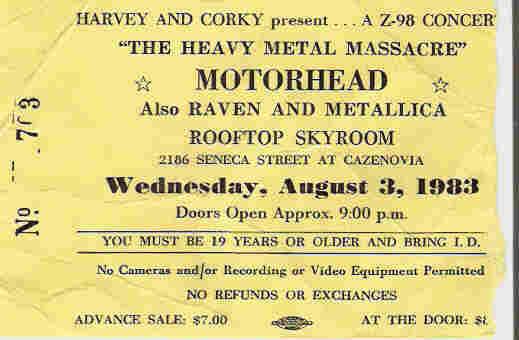
There’s another show in New York state from that tour that I wanted to ask you about. It’s kind of another legendary triple bill. You guys played in Buffalo, New York [August 3, 1983 at the Rooftop Skyroom in Cazenovia], on the Kill Em All for One tour, Motörhead headlining, you guys in the middle slot, Metallica opening. Amazing triple bill. What do you remember about that show?
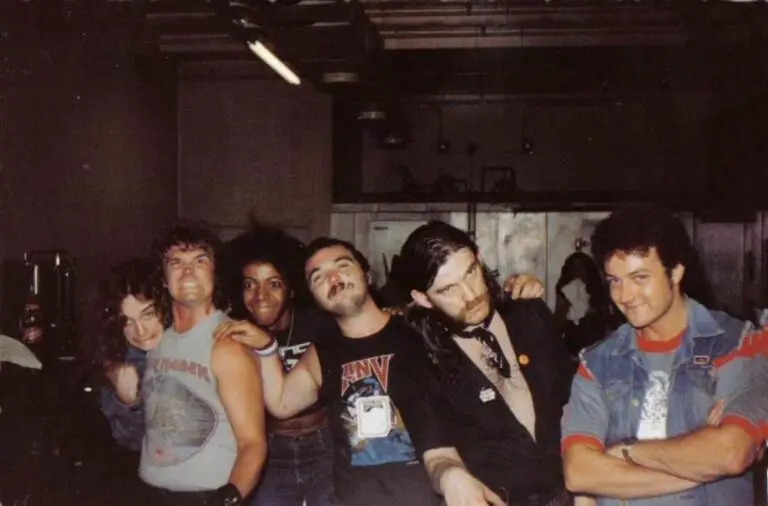
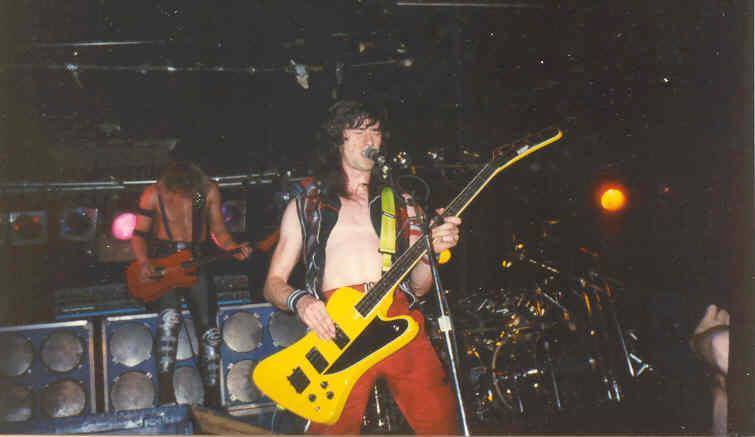
John Gallagher: Lemmy, mainly! Lemmy was so funny. He introduced us to everyone, brought us onto the tour bus, and sat there with a joke book for 2 hours reading jokes and rolling around the floor laughing at his own jokes. And Brian Robertson [ex-Thin Lizzy guitarist, then in Motörhead] sitting in the corner, absolutely drunk out of his mind, pink shorts…red or blue hair, I can’t remember. Red hair, I think. And at the end of the show, our tour manager and their tour manager pulled guns on each other. That was fun. And some guy snuck behind the amps and turned them all down, by, like, half. Because when Motörhead were using the gear, they’re just full up, you know, to 11, everything, they would have blown it all up.
And at the very end of the night, you do the idiot check to see if anyone’s left anything behind in the dressing room. And the dressing room was a kitchen, and the kitchen had a walk-in freezer. So me and Mark are in there looking to see if anything’s left behind. The door opens, and there’s Lemmy with a big box with “pita bread” written on it. Like, what are you doing? He goes [adopts gruff Lemmy rasp] “well, you know, you’ve got to steal something, haven’t you?” And walked away with it. And then the last story on that, of course, is the promoter, who was one Harvey Weinstein [famous Hollywood sexual harasser, then part of Buffalo rock promoters ‘Harvey and Corky’].
So you mentioned a little earlier, after the Kill Em All for One tour, you guys came back to the States in 1984, and just toured until you found a record deal. That was the ‘Live at the Inferno’ tour with Anthrax as opening band.
John Gallagher: Yep.
And one of the shows you guys did on that tour, another legendary triple bill, exactly one year later, was also in New York, in Manhattan, at the Roseland Ballroom, August 3, 1984, three Megaforce Records bands, Raven were the headliner, Metallica was the middle band, Anthrax opened – is it true that all three bands got signed to major labels that night? Is that the night you got signed to Atlantic Records?
John Gallagher: Basically, yeah. I mean… we were told they [Atlantic Records] wanted us, and negotiations, of course, dragged on for a month or two, but yeah. Island [Records] got Anthrax, and Elektra got Metallica, although there’s a great apocryphal story about that. [Elektra scout] Michael Alago had dragged Bob Krasnow, Elektra president, into the show and Krasnow was drunk. And said, those guys. Sign them. I want them. Sign them. So, the next day or whatever, when they brought Metallica up to his office, he looks, he goes. “I thought there were only 3 of you guys.” It’s a good story, put it that way, I don’t know if it’s true.
Before you went to Atlantic, you put out a double live album, Live at the Inferno (1984), on Megaforce and Neat Records. And that was, as far as I know, the first independent label double live album – certainly by metal band.
John Gallagher: May well be, yeah. And that was us beating Neat to the punch, because we knew they were going to do a compilation. You know, that would have been their modus operandi, which they did [1985’s The Devil’s Carrion], and it’s, like, mislabeled, there’s tracks labeled on the sleeve missing from the record, it’s like…[sighs]
Live at the Inferno, I think, was recorded at the Roseland Ballroom show and at L’Amour in Brooklyn [September 15, 1984], and mixed in New York in Ithaca at Pyramid Sound Studios, right?
John Gallagher: There was also stuff [on the live album] from Chicago. We seemed to live there [at Pyramid Sound in Ithaca] – we were doing the Stay Hard album [first album on Atlantic Records, 1985], and we did a couple of tracks for a movie called Hot Moves. I think we did Stay Hard and we mixed the live album right after it.
Does anybody know where all the tapes of the full shows that Live at the Inferno are? That would be great for a box set.
John Gallagher: No. Trying to find any of that stuff is like…[shrugs]
The cool thing about that record was that you put in live versions some of the sort of more obscure songs, b-sides like “Crazy World” and “Wiped Out”, and “Let It Rip” (originally from a 1980 MCA Records compilation album called Brute Force).
John Gallagher: Yeah, they’re two of the best songs on the whole thing, “Crazy World” and “Let It Rip”’s fantastic on there. Yeah, that’s a good one.
Stay Hard (1985) was the first record after Raven signed up to Atlantic at that point – did they have any influence on how the record sounded?
John Gallagher: From what I remember, there was a couple of changes they wanted. They wanted a cover of “Hard Ride” [an early Raven single and track from debut record Rock Until You Drop] and we’re like, really? Well, if that’s the worst they’re asking for, fair enough.
And we recorded it with our sound engineer at the time, Norman Dunn, who’s a phenomenal sound guy for live, and it sounded a little flat, the mixes weren’t happening, so we brought Michael Wagener in [Accept producer who had produced the amazing-sounding prior Raven record, ‘All for One’]. We recorded [1985 semi-hit single] “On and On”, and we re-recorded “Hard Ride”.
So Michael Wagener just produced those two songs. And remixed everything else, yeah, pretty much. He wasn’t in from the ground floor.
The album after Stay Hard, The Pack is Back (1986), produced by Eddie Kramer (Hendrix, KISS, Zeppelin), recorded in New York at Bearsville Studios in the Catskills, turns 40 years old this year.
John Gallagher: That’s right.
That’s one of those records that’s probably the most divisive record in your catalog, you know, there’s a hardcore of fans who absolutely love that record. And some people totally don’t.
John Gallagher: Yeah, and there’s the hardcore fan who loves the band and absolutely hate that record, I mean…I can see both points of view, and I have both points of view. In that, as far as an achievement in…what would be the word? Craft? You know, craft rears its ugly head when substance may be a little low. You can polish that turd real bright if you work hard enough at it. You know, let’s do a high-tech heavy metal album, you know, and Rob [Hunter, drummer] wanted to play to a click track, and it was like “Why are we doing it like this?” And so I had misgivings.
But some of the songs were really good. We played “Youngblood” for quite a while, it was a great song live. “The Pack is Back” actually worked great live. But there’s other songs on there where it’s very much … “of its time.” With the lyrics being a little bit on the edge of twee, you know? “Nobody likes it when the bad girl wins”, you know, stuff like that. And there were a couple of [unreleased] songs that were actually worse, that kind of got excised out. It was a bridge too far, thank God. But we learned a lot. We learned…not to do records like that.
We learned that we know what we like. After we did the Mad EP [also 1986], it was like, we’re done, we don’t need anybody else, we know what we want, we know how to get it, we just need a facilitator, a good engineer.
But Mike [Heller, current Raven drummer] even said, you know, just to drive everyone crazy, we should re-record the whole thing [The Pack is Back], just for the fun of it. It has crossed our minds, and hopefully when Mike finally gets his studio built, and we have time…
You mentioned the Raven Mad EP, which seemed to appear almost immediately afterwards, I think July 1986. Also a 40th anniversary this year: was that always the plan, to go right back in the studio and get an EP out immediately, or was that “damage mitigation”, to show that you’re still heavy after The Pack is Back?
John Gallagher: Yeah, I mean, it was more of that. There was the whole thing of, like, the backlash of it [The Pack is Back]. Looking at the cover [the band, costumed, bursting out of lockers] and going, yeah, why are we there? Why do we look like that? What seemed fun, didn’t look fun. And we did a bunch of soul searching. I remember a big meeting we had all day, and it was just like: we need to do an EP.
We’d [also] kind of painted ourselves in a corner when we signed with an agent, which was Premier Talent, which was The Who. And Journey, and Judas Priest. And that’s about it. ICM was the agent who had all the heavy bands. And they were upset that we’d signed with Premier, therefore they wouldn’t give us any tours.
So, we played a few dates with Judas Priest when The Pack… came out, which was amazing, it was great. And then nothing. So we had to tell them [Premier Talent], you know, we have to leave. And we went cap in hand to ICM, we screwed up, can we sign to you guys? And they took us on, that’s when we did the [1987] tour with W.A.S.P. and Slayer.
[The idea of the EP was] putting us back on the track, and we need to get on tour. Great, we got a tour with Twisted Sister. Awesome. About one week before the tour started, they pulled the plug because of their problems with [1985 LP] ‘Come Out and Play’.
So, and then we just like, well, then, we have to go out and headline, play clubs, so we did.
I remember a show from that Mad tour at L’Amour in Brooklyn, on Halloween 1986.
John Gallagher: That was a fun show, yeah, I remember that. Was that the one with Carnivore [featuring Peter Steele, later of Type O Negative, who opened for Raven at L’Amour in Brooklyn on Sept. 15, 1984]?
No, [Connecticut metal band] Liege Lord opened that one.
John Gallagher: Oh, right. Yeah. One of those guys, I can’t remember his name, now moonlights as tour manager for Yes.
That white Stratocaster on the back of the Mad EP, with ‘Mad’ burned into the back of it. Does Mark still have that?
John Gallagher: Oh, no, that got destroyed on… with the dates with, uh, Judas Priest, I believe. And then he had the other one with chain on, which was a white strat, which I’ve just… I just finished fixing up. I gave it to him back for his birthday.
You did a show with Ozzy Osbourne on the ‘Mad’ tour, right?
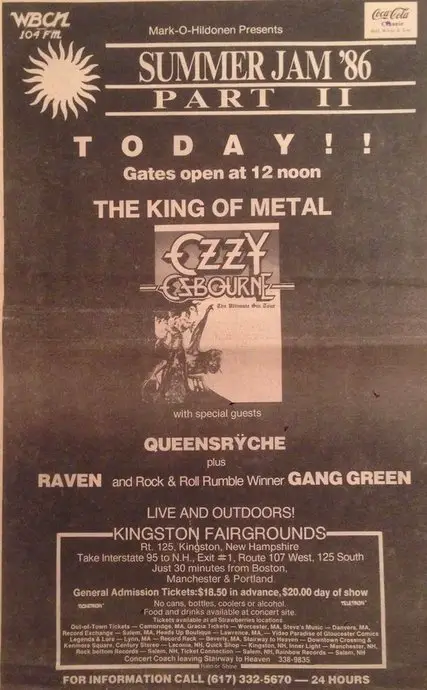
John Gallagher: The one in New Hampshire [the Summer Jam ’86, a September 20, 1986 festival show with Ozzy, Queensryche, Raven and Boston hardcore band Gang Green]. I have memories of the police dragging kids around to the back and beating the shit out of them. Never seen that before, that was scary. Ozzy’s tour bus pulled all the way up to the stage, the door opened, Ozzy walked out, played the show, then walked back in the bus and: gone. He was there for, whatever, 2 hours, and that was it, in and out.
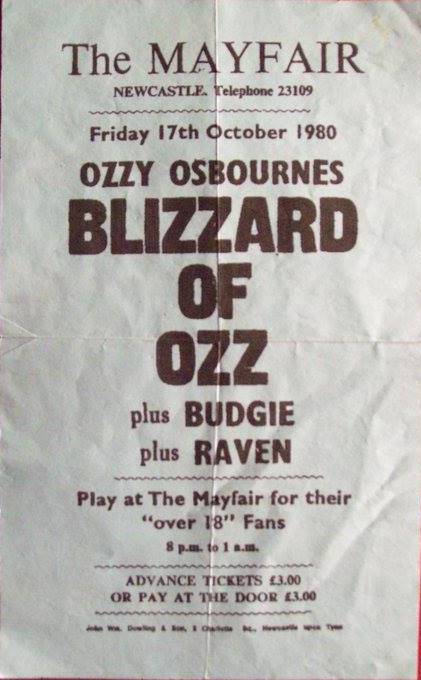
You guys had done shows with Ozzy back in 1980 on the original Blizzard of Ozz band UK tour, right?
John Gallagher: Oh, yeah. You know, that was fantastic of him, and he did that all the time. He’d look for a young band and go, yeah, you’re coming out. So he brought us out. He brought out Metallica, Anthrax, Motley Crue, I mean, you name it. He had an eye for that, for sure, you know.
With the 40th anniversary of those two records, The Pack is Back and Mad, any chance either of those records will get played in their entirety this year?
John Gallagher: Hell, no! The trouble with anniversaries like that, you’ll turn around and there’s one every 5 minutes. You know, we did [a tour playing all of 1982 album] Wiped Out, we did [a tour playing 1983 album] All for One, and then we looked at each other going, we’re not doing one of these for a while.
It’s kind of fun, just because you get to play some songs that never got played live. That’s kind of cool. But, if you do it every year, it gets to be a bit much and at this point, it would be almost every year, so.
But we are delving back into those realms [of The Pack is Back and Mad], and we will be playing at least one song, so…
The other album people have wanting to hear a song from live again was your last album for Atlantic Records, Life’s a Bitch (1987), fantastic record, again recorded at Bearsville Studios in New York state – you haven’t played anything live from the record in many, many years. Are any of those songs something that could ever come back into the setlist?
John Gallagher: Well, you never know. You never know … he said cryptically.
[On Life’s a Bitch] we were completely fed up with Atlantic, which comes out in the lyrics very strongly. We had a lot of piss and vinegar. But it’s a good record. The band’s playing great, there’s some great writing. I love the record, it’s a great one for Rob [Hunter, original drummer who left the band later that year] to finish his tenure with the band, even though we didn’t know that was going to happen, but he can hold his head high as they say.
I saw him make a comment recently and he said it was his favorite drumming album.
John Gallagher: Yeah, he just goes for it. Goes hell bent for leather, yeah.
I saw a social media post which suggested that you guys re-connected with Rob recently.
John Gallagher: We did. It was back in 2024. He was preparing to record Branford Marsalis [Hunter works as a sound engineer now] in New Orleans. And he went there to do some prep work, because it was, like, a live recording. And he just said, I’m in town. What time’s the sound check? And I told him, he says, I’ll be there. So, 37 years later…me, him, and Mark sat, and it was like… it was one day later. And I’m incredibly happy we did that, not that there was any air to clear at that point, it was just war stories and laughing and fun and it was awesome, it was good.
Does he still live in New York, in Ithaca?
John Gallagher: In a little town outside of there, but he’s on the road almost as much as we are, if not more.
So the last record you guys recorded in New York State was the 1988 album, Nothing Exceeds Like Excess, for Queens label Combat/Relatively, recorded in Utica, NY with new drummer Joe Hasselvander, a full-on, heavy record.
John Gallagher: That’s right.
What are your memories of making that one?
John Gallagher: Well, it was crazy, I mean, we had our new drummer, Joe, and he was like a… what would you call it, a chick magnet. Everywhere he went, girls would be trailing after him, and it was like, what is this?
So, every night we’d be kicking people out of the studio. And when the guy [who recorded it] wasn’t looking, we’d be playing with a board. Because he didn’t know what he was doing. You know, the heavy metal thing was a bit out of it for him, I think. So, low budget… not the greatest production. Great songs. Absolutely great songs. And great performances, too, all around, yeah.
You know, since Joe left, we haven’t really touched on that. I’d love to play something off that album … you know, “Lay Down the Law”, “Into the Jaws of Death” or there’s a good rock and roll one on there called “The King”.
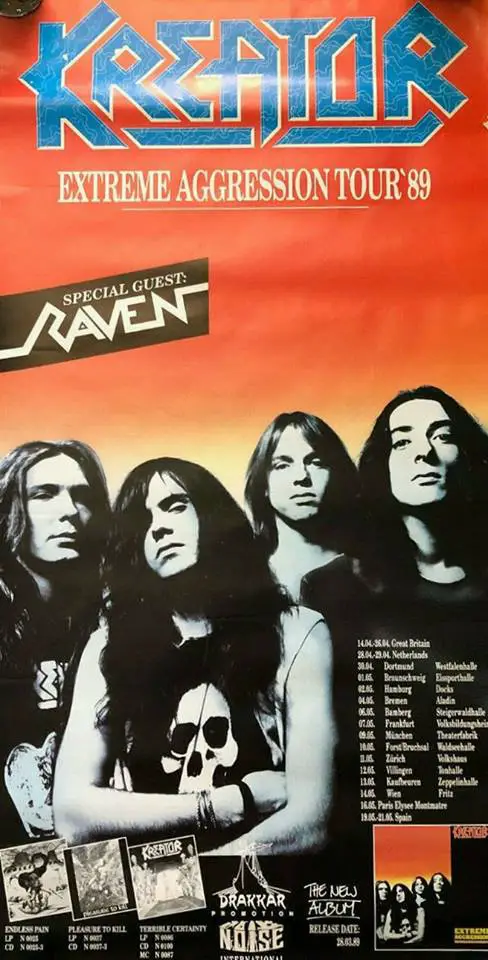
One thing I always wanted to ask you about that era, you toured in America for Nothing Exceeds Like Excess with Testament, and you toured in Europe with Kreator, both of those bands were younger thrash bands at the time, both are bands who probably grew up listening to you guys. Kreator actually recorded a cover of your song “Lambs to the Slaughter” a little before you went on tour with them. What was the thinking to play gigs with (then-)younger bands like that?
John Gallagher: Well, it was… It was getting back on the horse. I mean, you know. To a large extent, a lot of people had just blanked us out after The Pack is Back, you know? I mean, I famously had a discussion with a guy from a major label who will remain nameless where he just said like “You had a good run. You know, you guys put out some great music, it’s time to hang it up.” I thought, I’ll be doing this a lot longer than you will. You wait and see.
He’s still in the business, and I ran into him, going to a festival and he sat next to me and we talked for 2 hours. And I never mentioned it once, because I didn’t have to. You know, the best revenge is good living.
The tour with Kreator in Europe [in 1989], that was the first time you had been over there in probably 5 years, right?
John Gallagher: You’re right, yeah, ‘84, we did a couple of shows in Holland. We had so much ground to recapture. We played 3 shows in Holland in early ‘84, 3,000 seaters, headlining. And during the period with Atlantic? “No. We’re not paying for, you know, you can’t go to Europe.” They had no idea.
So, you know, we’d been in touch with Kreator’s management due to their cover of “Lambs of the Slaughter”. And they got in touch and said, would you consider opening for Kreator, playing in Europe? Absolutely, why not?
Younger audience but, you know, we relish that kind of challenge, still do. And…you know, we had to work, but that’s what we’re there for, you know, they’d say, “who are these guys?” And by the end of the night, “yeah, yeah, I’m into it.”
And you look back now, it’s just like we were treated like the grizzled veterans, and that’s like, 30 years ago or something? It’s crazy. [We were] still kids, yeah. Crazy.
That kind of led to a renaissance for you guys in Europe, though, because during the 90s, in America, a lot of metal bands really couldn’t get arrested. Your main focus [in the 1990s] was in Europe, right?
John Gallagher: Yeah, I mean, the grunge thing had come in, and then following that was the nu-metal thing, but that hadn’t really hit Europe. We basically went with Kreator’s management, we recorded Architect of Fear over there in Germany, and then toured with [German metal band] Running Wild. Playing… you know, decent-sized theatres, and that was awesome. It was a great tour, a lot of fun.
There wasn’t a lot of work for you guys in America during those years, but I do remember one show Old Bridge, New Jersey, 1995, Raven played with Anvil, and my friends and I drove down from Albany for that, and I remember thinking, geez, this is 1995, who’s gonna show up? And we get there, and the place is jam-packed.
John Gallagher: Oh, yeah. That was fantastic. I think we did one other show, as a warm-up before we went to Japan, in Kingston, New York.
And we did a lot of work in Japan, got a deal there. Did the Glow album [1994] at Showplace studios in Dover, New Jersey. Went over to Japan, recorded a live album [Destroy All Monsters/Live in Japan, 1996], and that kind of kept things going for a bit.
And Europe was getting better, and it was really funny, it was described to me that, you know “metal was on the outs”. And then a band from Sweden called Hammerfall came along, they were like Manowar and all this other stuff, but they’re not from Germany, so we can support that, this is great. So we go, okay, let’s bring them out, so there was us, Tank, and Hammerfall. What a great tour! That was so cool. That was when we did Everything Louder [SPV Records 1997].
But then you got knocked off course by Mark’s injury in 2001.
John Gallagher: Yeah. We did the tour with Tank and Hammerfall. And about, I don’t know, a year, 18 months later we went out with [Accept singer] Udo in Europe, which was fantastic, our good old friend, Mr. Dirkschneider [who had co-produced the All for One in 1983 and guested on some EP tracks, “Inquisitor” and a cover of “Born to be Wild”]. That was really, really good for us. And then we did some dates with them [U.D.O.] in the States, in 2000. We played the Station in Rhode Island, maybe a year or two before it went up in flames [in February 2003 at a show by the band Great White]. I remember Joe running out after he got there, he goes, this place is a fire trap! Literally, he said that. Because you walked in, and it narrowed to a corridor. And it just did not have to happen.
Anyway, so we toured with Udo and then we were set to do all sorts of stuff in 2001, we were writing, we were getting ready to record, and then our father died. So we went over for the funeral. I came back on September 10th [2001]. Mark and his wife came back on September 11th and spent the next 3 weeks in Newfoundland.
And then following that, only a couple of weeks later, he ended up having his accident – a building fell on him and nearly killed him, crushed his legs.
It was, like…okay, we have more important considerations than, you know, when the next tour is coming up.
We actually played a couple of shows in 2004, when he was in a wheelchair, we played in Worcester, Massachusetts, with this band Seven Witches, we had them with us, we played a couple of shows. Worcester, somewhere else in Jersey…and then we played Trenton. I think it was like 3 or 4 dates and it was…strange, because he played like a demon, but he was in a wheelchair.
We played Virginia, and right after the middle part of “Lambs to the Slaughter”, he stopped, bent over, threw up all over the stage, wiped it off, and then went back into the riff and finished the song. Some guy said “that’s rock and roll!”
And it was like, wow, what’s, what’s gonna happen here? But in 2005, we played a festival in Tampa, and he had this huge leg brace on. And then we played a festival in England, Bloodstock, and he had a smaller leg brace on.
And it just gradually [improved], we started writing songs, and we put an album together, and we ended up doing a few festivals in Germany, and then we got a deal with SPV, and that was the ‘Walk Through Fire’ [2009] album.
I remember seeing you guys in 2013 at the Superstorm Sandy benefit [in New Jersey with Twisted Sister, Anvil and The Rods, organized by Johnny Z], which is, you know, just a few years after the leg brace years, and Mark was up on the monitors and running around the stage, so he came back.
John Gallagher: Which he’s done ever since, it’s just nobody sees the aftermath. Where he walks off and curls into a ball, you know, cause his legs are killing him.
I mean, he might have to get the other knee and probably the other ankle done, who knows? But right now he’s like a changed man, he’s Mr. Smiley, you know, it’s great.
Back to the current tour, you’re doing America through early May, you’re doing Europe for the rest of May, and am I correct that the plan after that is to record a new album?
John Gallagher: Yeah, we got June, July, August, and that’s the plan. Record a new album. And then we’re going back to Europe in September, doing, like, another 2-3 weeks, and then we’re doing South America early October. May possibly be doing something November-ish in the UK, we’ll see.
There’s some offers, and we’re working through it. And then we’re planning already for 2027, because there’d be a new record coming out. We’ve got a band we want to work with, and they want to work with us. It’ll be a great package, see if we can make it happen.
Is the new record going to be on Silver Lining Music or you don’t know at this point?
John Gallagher: Yeah, it’ll be on Silver Lining, yeah.
Will they be putting Can’t Take Away the Fire out on vinyl?
John Gallagher: Nope. They have not. And that’s something, hopefully, we can get sorted out and, and again, it was one of these stupid things, well [they won’t release it on vinyl because] it’s an EP. It’s like, so just charge whatever you like, I mean…no, you’ve got it wrong. We have a core following who’s rabid. They love what we do. If we put something out, and the quality’s there, they’ll buy it. And I’m the same way, if I like a band. I’m gonna buy this stuff, I’m gonna buy the catalogue, I’m gonna buy everything that comes out.
Like, SPV did at least, they’d contract with someone and, like, an outside entity to do a limited run of vinyl. And when it was gone, it was gone.
I’ve still got some [vinyl] of the live album we did [Screaming Murder Death From Above – Live in Aalborg – SPV Records 2019], which was right before Metal City [SPV Records 2020].
But once they’re gone, they’re gone. Unless, you know, it comes back to us and we can put it out, or I’ll talk to someone to do a run. You know, there’s a couple of outfits, like High Roller Records, who do a great job in Europe.
So before I let you go, a question: if someone who might be reading this hasn’t heard the band, and you want to point a new listener to a particular Raven record, what record or records would you point them to?
John Gallagher: I would think the easiest, of the old stuff, to get into would probably be either All For One [1983], or do it chronologically, and start with Rock Until You Drop [1981]. The first album, Rock Until You Drop, is pretty good for setting the deck, there’s a little bit of everything in there. It’s not just, boom, one thing, you know? It shows possibilities, which, you know, we kind of took down the line.
And as far as the newer stuff…I don’t know. Metal City, maybe the new EP. It’s gonna be a good jump off point, but you can’t go wrong with Walk Through Fire [2009] onwards. We set our flag in the ground, it goes, okay, we’re starting from Walk Through Fire, the next album [Extermination, 2015] will be better. And it was. We worked to make it better. Next one, gotta be better. We made Metal City [2020] better. Next one, gotta be better. We made All Hell’s Breaking Loose [2023] better. And we’ll continue with that in mind. It’s like, raise the bar. Can’t stand still, raise the bar, do it better. We can always do it a little better.
Nice. And that same question but with regard to a specific Raven song. We live in a short-attention-span Spotify and Amazon Music culture now, some people don’t listen to albums anymore. If you’re going point people to one or two songs, what song or songs would you point people to [to check Raven out with]? You know, you’re only talking about a few hundred songs here, so it’s an easy question.
John Gallagher: Oh, yeah, sure! I mean, again, with the early stuff, “Hard Ride”, maybe “Break the Chain”, something like that. The newer stuff…I mean, new new, “Can’t Take Away the Fire”, it’s an easy in to the harder stuff. If you want to hit the hardest stuff, “Black and Blue”, “Top of the Mountain”, “The Power”, “All Hell’s Breaking Loose”, or “Surf the Tsunami”, stuff like that.
And don’t forget about the very first single, “I Don’t Need Your Money”, which never gets old.
John Gallagher: Well, yeah, I mean, that pretty much was a blueprint right there. Heavy, fast, twisted arrangement, humor, a little bit of everything in it, you know?
Raven tour America and Canada from March 18 – May 3, 2026, with two New York state shows:
April 15, 2026 – The Wood Shop, 21a Meadow St., New York City, New York 113206:
April 21, 2026 – Empire Underground, Albany, New York, 93 N. Pearl St., Albany, New York 12207:
More info at: ravenlunatics.com

Comments are closed.