
Johnathon Kelly, a 50-year-old native of Kingston, Jamaica, created and funded Jamaica Music Atlas, a free, interactive public archive of Jamaican music and every place it has influenced globally.
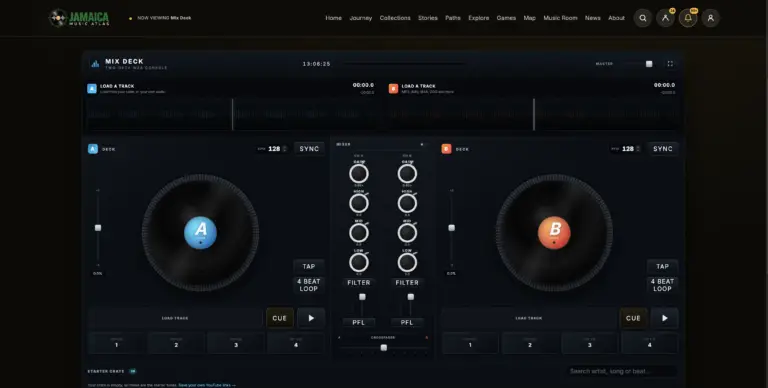
Users can find specific locations using the map feature, create their own mixes in the Riddim Lab and Mix Deck and explore different historical paths of reggae and hip-hop music across the globe. The site holds over 3,500 records, more than 100 long-form stories and 251 mapped locations across 14 countries.
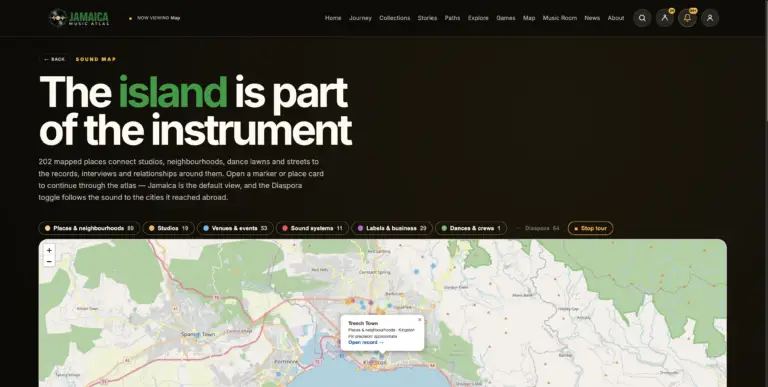
Kelly, an IT professional by trade, used those skills to create tools that do something a single human cannot. His goal with the site was easy access to the history of Jamaican sounds and the way one record connects to the next.
Every piece of information on the site can be seen with its source and rating of how well it is documented. For full transparency, when two sources contradict each other, it is displayed on the site. The site also allows users to track their history easily and has a clean, easy-to-use design.
The hands-on aspect of a digital DJ console with job wheels, EQ or equalizer, loops and a crossfader allows users to mix songs from the archive or upload their own to the site. This interactive feature is built on the principle of learning by doing, according to Kelly.
The site features a New York route, documenting the geographical history of Jamaican music finding its way and spreading throughout the Big Apple.
Starting in 1967 with Clive Campbell, known as DJ Kool Herc in the Bronx. Originally from Kingston, the DJ brought his knowledge of how a sound system works to New York. Through the linkage of 53 records, Kelly has determined that Campbell planted the seeds of hip-hop through his mixes.
The path also includes a page on Cindy Campbell, the organizer and financier of the Sedgewick Avenue party in August of 1973, where Kool Herc, her older brother, showcased his breakbeat technique. It is widely regarded as the founding day of hip-hop and Campbell is often forgotten for her part in it.

Next comes Tony Screw’s Downbeat the Ruler, the Biltmore Ballroom’s rise to the mecca of sound clash until burning down in 1999 followed by the Amazura in Jamaica, Queens taking its place.
The story of VP Records, named after founders Vincent and Patricia Chin who came from Jamaica to Queens in the 1970s. The couple sold records out of Queens for over a decade before starting the label. VP Records went on to buy Greensleeves Records in 2008, making it the largest reggae label and publisher in the world with over 25,000 titles.
The 21 step route rounds out with Shinehead’s “Jamaican in New York” and Super Cat and the Notorious B.I.G. on a hip-hop remix of “Dolly My Baby.”
Kelly encourages contributors who know any information that will help build out the website to send in corrections or additions to the Jamaica Music Atlas at this link.

Comments are closed.