


For all the careers Woodstock ‘69 launched into the stratosphere (Santana, Melanie, Joe Cocker, and Ten Years After), there are artists who graced that stage yet remain unjustly in the shadows. Although their performances may have earned a standing ovation from the 400,000 attendees, they weren’t featured in the festival’s popular documentary or in either of the two multi-disc compilations released in the early 1970s. And there is no bigger, more talented “lost treasure” of the original Woodstock than New York’s own Bert Sommer.
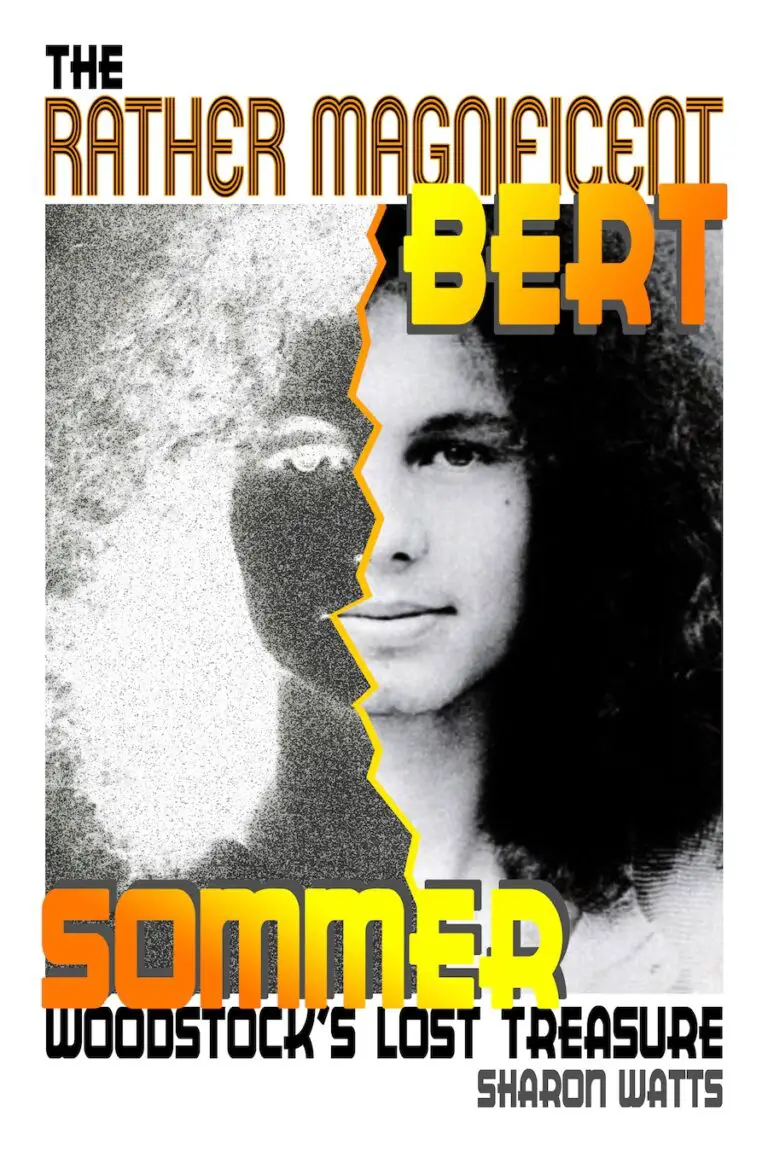
Now Bert is the subject of what is sure to be one of the finest and most deserved music biographies of 2026, The Rather Magnificent Bert Sommer: Woodstock’s Lost Treasure (Lucknow Press). It’s a true labor of love and an exemplary work of musical archeology by Sharon Watts, a first-time book writer who only discovered Bert in 2017 while watching a short clip of his spectacular performance of “Jennifer” at the Museum at Bethel Woods.
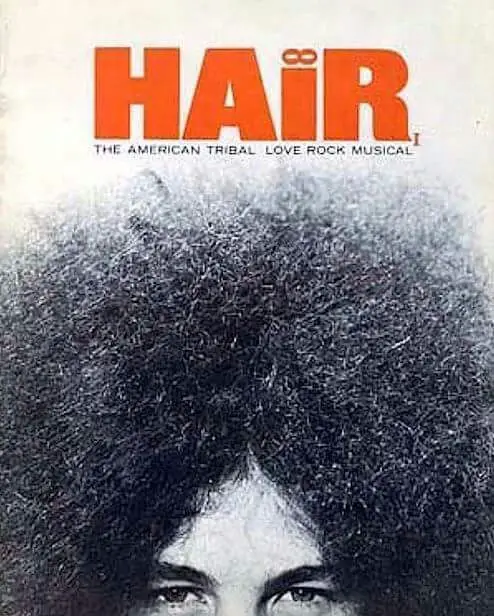
Bert’s short-order bio is well known among true New York City music buffs. He was a tall, good-looking gent who wrote many songs for local favorites like The Vagrants (the early band of Mountain’s Leslie West), who did a short stint in the post-hit version of The Left Banke (“Walk Away Renee” fame), who then stumbled into a role in the mega-successful musical, Hair, in New York, then Los Angeles. In fact, it was Bert’s glorious head of curls that was featured on the poster for the L.A. edition of the play. Then came Woodstock, the moment that was supposed to solidify his career, with a captivating performance that has amazed millions of uninitiated viewers on YouTube today.
But Watts is not a short-order writer. She begins to excavate the mystery of Sommer, tracing it back to 1862, when his ancestors arrived in America. Bert would be the product of a broken marriage, living with his father in Queens and in suburban Hartsdale, while his distant, similarly adventurous mother would open a bar and start another family in New Jersey.
“The world of pop music was ready for another revolution,” writes Watts. “The first shot came unexpectedly in Dallas on November 22, 1963… On the other side of the pond, the Fab Four were providing the musical means to storm the castle of an America desperate for a reason to smile again.” Like tens of thousands of American kids, Bert became singularly focused on music, especially songwriting, with the arrival of the Beatles.
Watts does a fine job of profiling Bert’s early apprenticeship, his early duos perhaps modeled on The Everly Brothers (the Beatles’ own big influence), his songwriting for other artists, and “the New York minute” he spent as the new lead singer of The Left Banke. It’s Bert who provides the voice on the wonderful co-written yet unsuccessful singles “And Suddenly” and “Ivy,Ivy,” the latter of which featured Spinal Tap’s Michael McKean on bass. Watts’ research spotlights many rarities in rock music and Bert’s career, including “Brink of Death.” Released in 1968 by the group Childe Harold, it is one of the earliest examples of electronic rock, written by Bert with Moog synth treatments by a pre-Switched On Bach Wendy Carlos. By this time, Sommer is carrying two binders with 200 of his songs.
Sommer’s halcyon days in the New York and Los Angeles productions of Hair are covered in depth. In fact, it is his crush on actress-turned-hit songwriter Jennifer Warnes that inspires him to write his famous song for her. Around the time of the play, he is signed by Capitol Records and releases his debut, The Road to Travel, produced by Artie Kornfeld. Kornfeld is one of the movers and shakers behind Woodstock, through whom he secures his spot in the first-day acoustic lineup.
One of the most enlightening and enjoyable parts of the book is Watts’ description of the backstage action at Woodstock, the hijinks at the artists’ hotel and the buffet line, where the vegetarian Swami Satchidananda is confronted with “a mountain of bacon strips.” She also provides a song-by-song breakdown of his performance, culminating in his wonderful cover of Paul Simon’s “America.” The still-unsolved mystery of Woodstock is how Bert’s wonderful performance was left out of all festival films and albums, even though his producer was one of its organizers.
After Woodstock, Bert’s career would enter a slow, lengthy decline. Drugs, namely heroin, would haunt him on-and-off until his death. In a bizarre turn, he would end up playing the role of a costumed rocker in the Sid & Marty Krofft kiddie show, Kaptain Kool & the Kongs. He would be fired after one season by none other than the mother of the Osmond Brothers.
NYSMusic.com readers may be most interested in the final chapter of his life, when he lived and performed frequently in the Capital Region.
Watts offers a vivid portrait of this DIY music scene in Albany and Troy, centered around bands like Blotto, The Poor Boys, and the Fabulous Newports, the latter two of whom Bert performed with periodically. There he was supported musically, sometimes financially, and always spiritually, by local legends like Eddie Angel, Johnny Rabb, and Charlene Shortsleeves. The book includes descriptions of these bands and of solo performances at beloved venues like 288 Lark, the Boat Slip, and his final show at Billy’s. Bert would spend his final days under the care of “Ma Blotto” and reconnect with his estranged son, Jesse.
Importantly, Watts brings Sommer’s true nature to life, notably his unflagging humor in the face of all the tragic turns that befell him. Sommer was a joker at heart, a sort of “a Rodney Dangerfield of Rock and Roll” who borrowed the comic’s self-effacing style, along with Billy Crystal’s famous Fernando “You Look Marvelous” Lamas impression from Saturday Night Live. This can be seen in an episode of the short-lived talk show, Sarge Blotto’s Hot Seat, along with the box of career memorabilia he carried with him wherever he ventured.
In a world where rock biographies are often money-grabs full of stories you’ve heard a million times about well-known people, many of which aren’t true, Watts’ book is a true standout. One can only hope it has a more fruitful future than its subject, a talent who truly deserves such a well-crafted monument to his life and art.

Comments are closed.