


New Yorker Brian Cullman is a true rock ‘n roll Zelig. Like the character from the Woody Allen film of the same name, Cullman has built friendships with a remarkable array of figures central to the past six decades of popular music, from Ed Sullivan, Lester Bangs, and Big Joe Turner to Joe Boyd, Bill Laswell, and the Master Musicians of Jajouka.
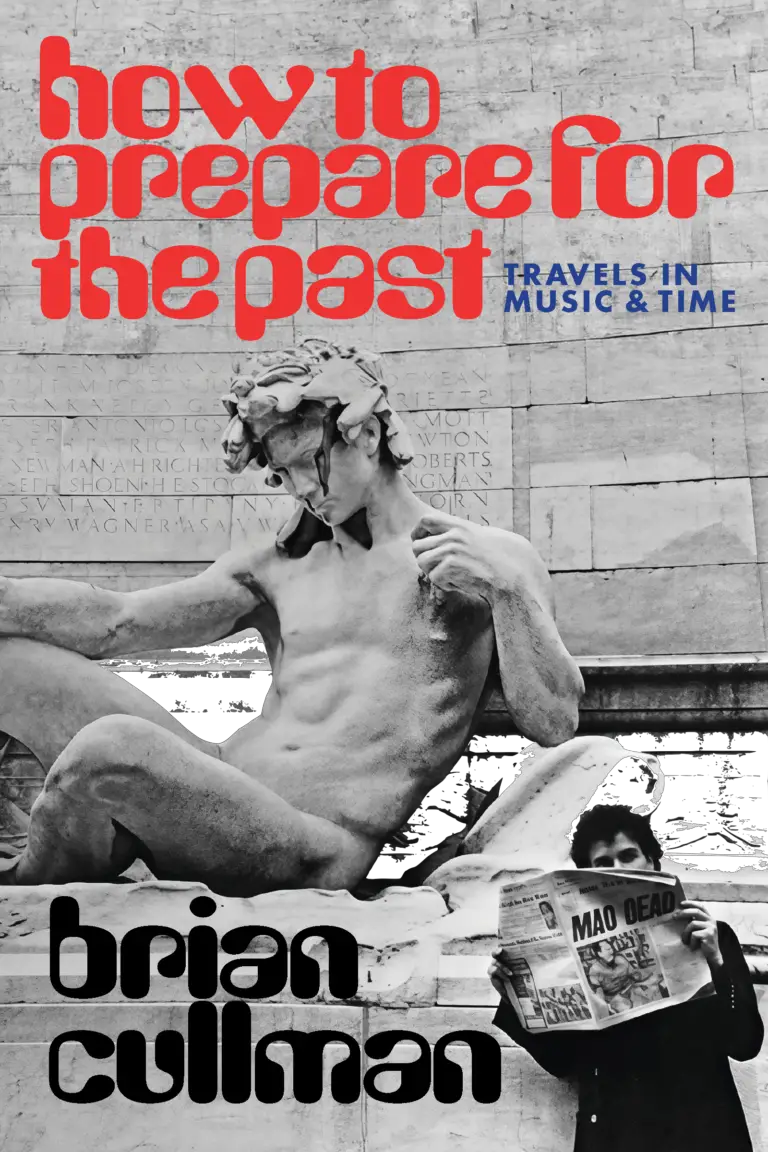
Cullman’s memories and adventures with this cast of noteworthy and often outlandish characters form the core of his entertaining new memoir, How to Prepare for the Past: Travels in Music & Time (Ze Books).
Brian Cullman’s meetings with these names are presented in 37 concise, vivid vignettes over just 250 pages. I quickly devoured these highly readable snippets of life, music, and travel within about 48 hours.
The first story describes being a fly on the wall during his father’s conversations with a friend, TV variety show impresario Ed Sullivan, as they get their shoes shined near Sullivan’s Broadway theater, the one where the Beatles launched their attack on America in February 1964. By this point, about 18 months after their debut, Sullivan laments how the once ultra-polite Brits have changed. “Now they think they’re bigger than God,” Ed says. “They’ll be lucky to play bowling alleys a couple of months from now.”
Another early chapter in the book chronicles his introduction to the rock world via Lillian Roxon, the Aussie who literally invented rock criticism with her 1969 book, Lillian Roxon’s Rock Encyclopedia. The teenage Cullman strikes up a friendship with Roxon after sending her a letter about the multitude of errors in her book. Through Roxon, he will get to play his music for the legendary publicist/manager Danny Fields, and meet not only Warhol and Dylan muse Edie Sedgwick, but also Roxon’s roommate, the writer Germaine Greer. This famous feminist and Roxon herself will share with him their memories of sleeping with rock stars, including Jimi Hendrix and his “clarinet cock.” Roxon will also engineer his break into rock journalism, which will take him to London, where he stumbles into a job as the UK editor of Crawdaddy, the upstart rock magazine. He will soon find himself an intimate in the orbit of producer Joe Boyd and his stable of artists, including John and Beverly Martyn, Fairport Convention’s ill-fated vocalist Sandy Denny, and Nick Drake.
Cullman devotes a good deal of this chapter to his dealings with Nick. He writes that Drake will appear “like a ghost” and be a man of few words. Cullman will also be present as Drake makes some of his very rare “awkward” live performances. The musician will also run off with the writer’s guitar to work on new songs, privately and quietly, in an adjoining room at the Martyn residence, which he often visits. Cullan observes, “He’s taken bits of John’s (Martyn) guitar style and brought in shadings of João Gilberto, the soft, floating chord changes of Jim Webb, the sweeping of Astral Weeks. He’d invented a genuine British blues form, standing right there on the corner of Ralph Vaughan Williams and Brownie McGee! And that voice, so smooth, so delicate, yet hard to shake.”
When he returns to New York City, Brian Cullman will become a friend and neighbor to legendary blues shouter Big Joe Turner. He will witness Big Joe’s astounding appetite as he regularly consumes 12 hot dogs in a sitting and his powerful voice, an instrument that will drown out his backing band sans microphone during his residency gigs at Tramps, NYC’s most important roots and blues club of the ‘80s. Big Joe and Cullman are often joined by songwriting great Doc Pomus of “Save the Last Dance for Me” fame. Like his lyrics, Doc often thinks and shares his observations about women. He says, “Women keep circling back to the chorus. They need to re-litigate that hand of poker they lost six months ago, that beautiful dress you didn’t notice… They need to turn it over and over like a diamond, see which way the light shines through it.”
Miles Davis, critic Lester Bangs, folk singer/songwriter Tim Hardin, Dr. John, Van Morrison, Chuck Berry, and the Beatles’ producer George Martin are all figures in Cullman’s rich life and book. There are also glimpses into Cullman’s life as a touring and recording musician, including memories of working with greats such as jazz bassist Gary Peacock and of his friendship with the ill-fated NYC guitar virtuoso Paul Presti. Cullman intersperses his music stories with a multi-mini chapter tale of a twisting romance, the delightfully titled “Ballerinas on Quaaludes.”
The longest offering in the memoir describes a trip to Morocco with producer Bill Laswell as he overcomes many obstacles – from a clusterfuck with his recording equipment at customs to internal conflicts among the musicians – all to capture the remarkable sounds of the Master Musicians of Jajouka. Cullman shares the intensity of the experience, both socially and musically. He calls it “the world’s best horn section jamming with an ambulance… a music of nuclear intensity,” something that another associate, jazz great Ornette Coleman, would model for his album, Dancing in Your Head. Cullman’s travels in Morocco are also recounted in chapters about a wild romantic adventure with Layla, a woman he meets on the streets of Fez, and with the author of The Sheltering Sky, Paul Bowles. Bowles served as the ambassador to all visiting Western writers and musicians in Morocco since the ‘60s, including the Rolling Stones and Allen Ginsberg.
A great way to enjoy this fine book would be to read it as you listen to the playlist put together by the author, accessible from the Ze Book website: https://www.zebooks.com/news/how-to-prepare-for-the-past-the-playlist-by-brian-cullman

Comments are closed.