


For Kingston-based author Tad Richards, the great New York jazz label, Prestige, has been an obsession. Years ago, he started a blog in which he analyzed all the recordings from this label from 1949 – 1972. These include some of the most legendary works by Thelonius Monk. Sonny Rollins, Miles Davis, MJQ, and many more.
Recently, Richards partnered with SUNY Books to create the first comprehensive history of this label, with a critique of its classics drawn from the blog, Listening to Prestige.
For the latest entry in our long-running New York Series, we turn the column over to Richards for an extensive interview about one of the more important, creative, and fiercely independent labels in the history of jazz music – a company that not only captured great moments in jazz’s modern movement, but which helped pioneer hard bop, soul jazz, and avant-garde jazz.
This book is an in-depth chronicle of the music created by this legendary label and its history; an outgrowth of a blog you started a while back. Tell us about the history of your web project and how it came to become a book, and the differences between the two.
The book came out of the blog, and the blog came out of a series of conversations with my oldest friend, the painter Peter Jones. We grew up together in the 50s, an incredible decade. We were exactly the right age to be there at the birth of rock and roll, and we grew from there to rhythm and blues to jazz.
Peter and I have never stopped caring passionately about music, and we never stopped talking about it. And in some of our conversations about those days, reconstructing our youthful passions, we remarked that Top Forty radio was a hit or miss proposition. Some great stuff, some yuck. But the jazz…it was all good.
Was it really? Or was this a rose-colored memory? That’s when I decided to test it out. I would listen to everything recorded on a typical label, in chronological order, and blog about it. I picked Prestige because it was somehow the label I felt the most rapport with. And I found that, yes… it was all good.
The blog entries about listening to the music sparked an interest in the history and the personalities who created this record label in this era. So, when Richard Carlin of SUNY Books suggested a history of Prestige. I said OK, but it’ll be the kind of book I write – it might not be what anyone else would write. He said to go for it.
So, what did I want to write? I had to figure that out as I got into it, and I realized more and more what I didn’t want to write. I didn’t want to write an exposé of the recording industry, or a socio-political study of the era, or an exploitation study, etc., etc. I wanted to write about the music and how an independent small-budget label was able to be an integral part, both mirroring and shaping, of two important eras of American music.
When Prestige was founded, it was the golden era of jazz independents, both in New York and on the West Coast, many run by jazz hobbyist/, lovers/fans. How did Bob Weinstock come to create the label, and who were his counterparts in the indie label scene? And how do you think he was different in his approach?
There weren’t that many independent jazz labels back in 1948. Blue Note was the great one. Dial had recorded Charlie Parker, but they’d more or less gone out of the jazz business. Dial was founded by Ross Russell, a hugely important figure for his recordings of Bird, but he was also sort of an intellectual dilettante whose interests kept shifting. Savoy also recorded Bird and other jazz musicians. It was owned by Herman Lubinsky, a character who was a human embodiment of the word “gone” and who followed the dollar signs into the rhythm-and-blues market but did record some important modern jazz. Blue Note was founded by Alfred Lion, a man deeply committed to jazz who adopted young Bob Weinstock as a protégé. Atlantic recorded some of the most important rhythm and blues of the era, but because of the passion of one of its founders, Nesuhi Ertegun, it had a steady commitment to modern jazz. Other labels, like Riverside and Vanguard, and later Impulse! and Milestone and Black Saint and many more, came later, led by people who were dedicated to the music.
The major labels had Benny Goodman, Duke Ellington, and Stan Kenton. They weren’t interested in new jazz musicians. If it weren’t for the independent labels, some of America’s greatest art would never have been recorded.
Here’s something I say in the book about Weinstock’s way of running a jazz label.
Prestige, with its laissez-faire attitude — let them play, let the public hear what they played — is the quintessence of [the 1950s jazz era]. Critics have charged that Bob Weinstock’s approach was the result of his being too cheap to pay for rehearsal time, and there’s some truth to that. But I don’t believe it’s the whole story. Weinstock started Prestige when he was nineteen years old — just a kid. Jazz as pure spontaneity is a fantasy. It was Jack Kerouac’s fantasy when he set out to write poetry as “spontaneous bop prosody.” And it was a kid’s fantasy when young Bob started his own record label. Few kids get to live out their fantasies, and the world is probably the poorer for it. Bob Weinstock did, and recorded jazz is the richer for it.
The evolution of jazz and Prestige was, in a way, connected to advances in technology, the move from 78rpm to 12-inch LPs, which allowed players to stretch out.
Prestige may have been the first label to realize this. Weinstock introduced the new idea to Miles before a session.
I said Miles, we’re going to stretch out.
He said, “You mean we’re just going to play?”
I said, “As long as you want, almost within reason.”
The first track they recorded that day, “Conception,” came in at just over four minutes, a little too long for a 78-rpm record, but not that much. Maybe they still didn’t trust this new idea compared. But the second cut, “out of the blue,” came in at six minutes and fifteen seconds. And now the doors were off. “Dig” was 7.5 minutes. Up until then, a recording session had been four tunes, each of them under three minutes, good for two 78 RPM records. By the time this session was through, they had enough for two LPs.
Even though it was an independent label without the deep pockets of a Columbia or Impulse!, Prestige issued some of the truly great recordings by jazz legends like Thelonious Monk, Modern Jazz Quartet, and Sonny Rollins. The latter recorded maybe his two best discs there. How was his relationship with the label, and why did it end?
All those artists really left Prestige for the same reason — more money. As Weinstock said, Prestige was sort of a farm team — it developed the talent, and then, when the artists had made names for themselves, they moved to a major label with bigger budgets and more distribution power. Sometimes there was more to it than that. The Modern Jazz Quartet never really fit into Weinstock’s loose jam-session philosophy, and, in fact, they weren’t the group Weinstock wanted. He had asked Milt Jackson to form a group with a bluesy hard bopper like Horace Silver, but Jackson insisted on John Lewis. And Sonny Rollins wasn’t the only one to make what are arguably his best records for Prestige. Look at the MJQ’s Django, perennially chosen by critics as one of the best jazz albums of all time, and Lewis’s title tune can legitimately be considered the most beautiful jazz melody ever written. Look at Mose Allison: Back Country Suite and Mose Allison Sings are always going to be touchstone albums. Or Yusef Lateef’s Eastern Sounds.
Back to your actual question. There wasn’t anything dramatic about Rollins’s departure from Prestige. He fulfilled his contract, solidified his position (shared with Coltrane) as the leading young tenor on the Jazz scene, and moved along. He freelanced for a while, then moved to RCA Victor, a major label that would have paid him much more. Then, with Impulse!, which was owned by ABC Paramount, and also paid a lot more. Finally, with Milestone, which was another independent but better-financed, paid higher royalties, and was more stable. Besides, by the time he got the Milestone, Prestige was defunct.
Phil Woods had an acrimonious parting – angry that, as his career was taking off, he was still tied contractually to Prestige. The dispute was played out quite publicly in the pages of Down Beat.
Prestige was the label through which Miles Davis recorded some of his most notable early records in the ‘50s. Can you tell us about some of the best and the quartet of albums he and his band banged out with what you called “the contractual marathon sessions”?
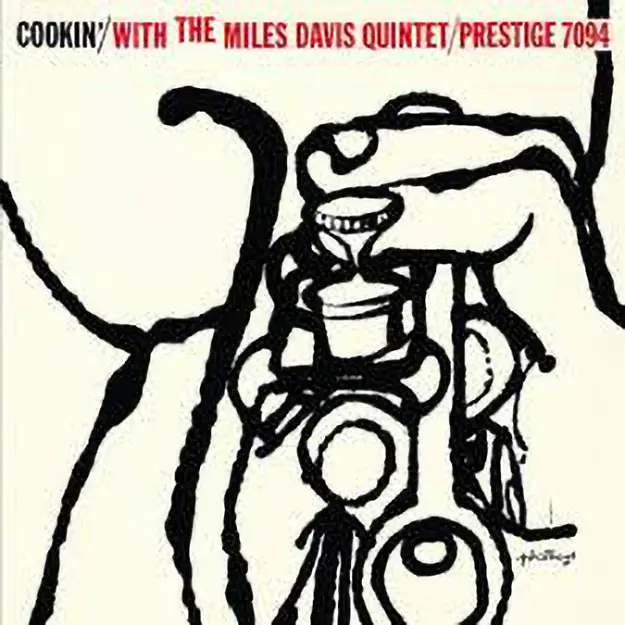
Yeah. They were all good – Cookin’, Relaxin’, Workin’, and Steamin’. Relaxin’ is the Broadway show tunes album, and it includes “I Could Write a Book,” the Rodgers and Hart song, which was played at Pat’s and my wedding because it’s such a beautiful tune, the way Miles plays it, and it summed up the way I felt about her. Almost all of the songs on all four albums are standards. They played basically the way they would play a set at a club, all tunes that they knew well, one after another, no retakes. It has that intimate feeling of jazz in a club. Not perfect but real.
And that gets into what really distinguishes Prestige. The jam session spontaneity, warts and all, is not necessarily valued in an era that prizes perfection and will go so far as to use autotune to achieve it.
Between two of the contractual marathon sessions, Miles and the quintet had recorded a session for Columbia. Their contract with Prestige allowed them to record, but Columbia couldn’t release anything until all Prestige’s contractual obligations had been satisfied.
The Columbia session was made with the same quintet but with lots of rehearsal, lots of retakes, lots of splicing together bits from one take to another to make the perfect take. The Prestige contract only prevented Columbia from releasing the album until all Prestige sessions were completed, not until all Prestige albums were released. As a result, the Columbia album, Round Midnight, was released around the same time as the Prestige albums.
And here’s where it gets interesting. As I said, today’s culture values perfection. Round Midnight, today, is considered one of Miles Davis’ greatest albums. The Prestige albums are considered great by many, but there’s always a little “but.” Many younger critics treat Prestige albums with a trace of condescension. They’re sloppy, they’re careless, they’re rushed.
But back in the day, critical perception was a little different. To some critics, the Prestige albums were jazz as it should be; Round Midnight was a little sterile.
The quintet came about because George Avakian told Miles that when he moved to Columbia, part of his success would involve having a brand, an identifiable group. But before that, Miles and Bob Weinstock had a different idea – to put Miles together with different musicians to challenge him in different ways. One particularly interesting session that came out of this is the Davis/Lee Konitz session of March 1951. Davis and Konitz had played together on the Birth of the Cool nonet sessions, but this is very different. No brilliant but mainstream arrangers like Gil Evans and Gerry Mulligan. Instead, it’s Konitz with his gang of Lennie Tristano acolytes — Sal Mosca, Billy Bauer. It’s a challenge to Miles, and even to the contemporary listener, its angular approaches still present a challenge. I’d hate not to have it as another side of this giant of modern music.
Weinstock also had the good sense to sign Miles’ sidemen like Red Garland and, of course, John Coltrane. What were some of their best works for Prestige, or what were some of the ones that maybe might have benefited from a little more forethought and rehearsal?
I kind of can’t buy the question. I wouldn’t change anything. The album that means most to me personally is the one that was originally released as John Coltrane with the Red Garland Trio, later released as Traneing In, because it’s the recording that first turned me on to jazz, standing in the middle of my dorm room at Bard in the middle of the night, transfixed, just staring at the radio that was emitting these sounds like nothing I’d ever heard before, that penetrated right into my core.
This moves a little away from Trane, but the record that’s dismissed by virtually every critic is a live album by Miles Davis called Live at the Barrel, a live album made in a club in St. Louis with a house band led by Jimmy Forrest, who’s best known as the composer of “Night Train.” Critics dismiss it as competent but uninspired playing and mediocre recording quality, but I love it. It’s jazz in the American night, a piece of living history.
And that’s how I feel about Coltrane’s Prestige albums. They’re a first step of a young musician making his own mark, and I wouldn’t change a note of them.
Weinstock also recorded some intriguing jazz novelties, like the harpist Dorothy Ashby. How did record come about? And who were some of the people that Weinstock leaned on for tips on who to sign?
Dorothy Ashby was more than just a novelty. Here are a few experts from my blog entry on her album with Frank Wess.
There’s a moment during “Bohemia After Dark” when Dorothy Ashby and Herman Wright are doing a harp-bass dialog, and then it’s Wright and Frank Wess doing a flute-bass dialog, and you’re not quite sure when the crossover occurred. That’s how well these musicians play together.
She was from Detroit, a jazz hotbed, and would continue to make it her home, although she toured and recorded widely. For five years in the 1960s, she and her husband, John Ashby, had a jazz radio show in Detroit, where they “talked about the new jazz releases, about the problems of jazz, and about the performers.”
She wasn’t just a specialty act–“Hey, let’s build an album around this chick who plays the harp.” She was in serious demand as a sidewoman, recording with jazz groups (Bobbi Humphrey, Wade Marcus, Stanley Turrentine, Sonny Criss, Gene Harris, Freddie Hubbard) and vocalists (Bill Withers, Minnie Riperton, Stevie Wonder, Billy Preston, Bobby Womack). She has been sampled by hip-hop artists.
Weinstock wasn’t much of a talent scout. He didn’t go out to clubs to find out what was going on. He did have a great ear for talent, and if it came to him, he would recognize it. When Phil Woods came to play on a Jimmy Raney session, Weinstock heard him and signed him on the spot.
As Weinstock moved out of the label’s producing end to concentrate on the business, his producers, starting with Edmond Edwards, took over that role. New producers, like Chris Albertson, Don Schlitten, and Bob Porter, brought in new talent. A good example is Albertson, who rediscovered blues and jazz guitarist/violinist Lonnie Johnson while Albertson was a DJ at a Philadelphia radio station and Johnson was working as a hotel janitor. He brought Johnson with him to Prestige and produced seven albums on the Bluesville subsidiary.
Over time, Prestige expanded with sub-labels catering to specific genres like blues and swing and trad jazz. What were some of the marquee records from these?
Well, we can start with Lonnie Johnson on Bluesville. The three big sub-labels were Bluesville, Swingville and Moodsville. Swingville recorded swing-era artists who were still active, with Coleman Hawkins being the most significant. The Swingville albums were great because he got guys who were still active and who had kept up with the times. They weren’t playing bebop – they had chosen not to go that way – but they weren’t just playing their old charts from these 30s, either. In addition to Hawkins, Swingville recorded Buddy Tate, PeeWee Russell, Buck Clayton, Bud Freeman, Rex Stewart, and others. And they were frequently paired with younger musicians like Red Garland and Tommy Flanagan. Jazz owes Bob Weinstock a debt for his whole catalog, of course, but a special debt for giving quality recording time to these musicians who were out of fashion but still had plenty to say.
Bluesville was interesting too, in that these older blues singers, who had often recorded under less-than-optimal conditions, were given the Rudy Van Gelder treatment, and some of the top sidemen who regularly worked with Prestige were included. Some of the well-known names were Gary Davis, Victoria Spivey, Roosevelt Sykes, Sonny Terry and Brownie McGhee, and Lightning Hopkins. Mildred Anderson was recorded with Eddie “Lockjaw” Davis and Shirley Scott, then with Al Sears. One who blew me away was a wonderful singer named Al Smith, who, unlike most of the others, had never recorded before – and never recorded again. He’s completely forgotten today. But those two albums are wonderful.
Moodsville was odd. People assumed it was set up to cash in on the craze for “mood music” that started with the wildly popular Jackie Gleason Presents Music for Lovers Only series, featuring the trumpet of Bobby Hackett with a lot of syrupy strings. But Chris Albertson, who produced several of them, has said, “When I produced a session, it was a Prestige session. Whether it came out on Prestige, Prestige Bluesville, or Prestige Swingville made no difference. I was never aware of there being any deliberate effort to alter the nature of the Moodsville albums from that of, say, somebody’s ballad album. If there ever was an instruction from Bob Weinstock to do so, it must have flown off my desk — a desk that had its share of memos!”
There was another label called Tru-Sound, which was started as a modern rhythm and blues label at a time when rhythm and blues had really been swallowed up by soul jazz. They put out some nice sides by King Curtis. And labels devoted to folk music, international music, and spoken word, which I really didn’t get into.
Later on, Prestige was a pioneer of two new genres: organ-driven soul jazz and avant-garde. Who were some of the artists and recordings that distinguished Prestige’s work in these areas?
Weinstock admits to missing the boat on Jimmy Smith but adds that he made up for it by signing the next ten organists to come around. They were all good, but my special favorite is Shirley Scott. She was so adventurous, finding every sound the Hammond B3 could make, while still keeping a funky groove. She recorded on her own and with Eddie “Lockjaw” Davis, and later Stanley Turrentine.
When soul jazz started to catch on, it offered a new career to many fine jazz musicians who had been relegated to the rhythm-and-blues ghetto. One was Willis Gator Tail Jackson, whose band included a young Jack McDuff, who would go on to jazz superstardom, and guitarist Bill Jennings, an amazing talent who isn’t remembered as he should be. Jackson made something like 20 albums for Prestige – Amiri Baraka wrote the liner notes for one of them. When Jack McDuff started his own band, it included – at different times – George Benson and Pat Martino.
Prestige and Blue Note were really the two great soul jazz labels. Prestige used to run ads in Down Beat for its soul jazz releases proclaiming themselves as the Soul Jazz Label – the critics hate us (not strictly true) but the people love us!
Ozzie Cadena produced a lot of the early soul jazz sessions for Prestige, and when he left, the two important producers in the soul field were Cal Lampley and Bob Porter. Lampley produced Prestige’s all-time biggest hit, Richard “Groove” Holmes’s “Misty.” Porter’s book, Soul Jazz: Jazz in the Black Community, 1945–1975, is the text on the soul jazz movement.
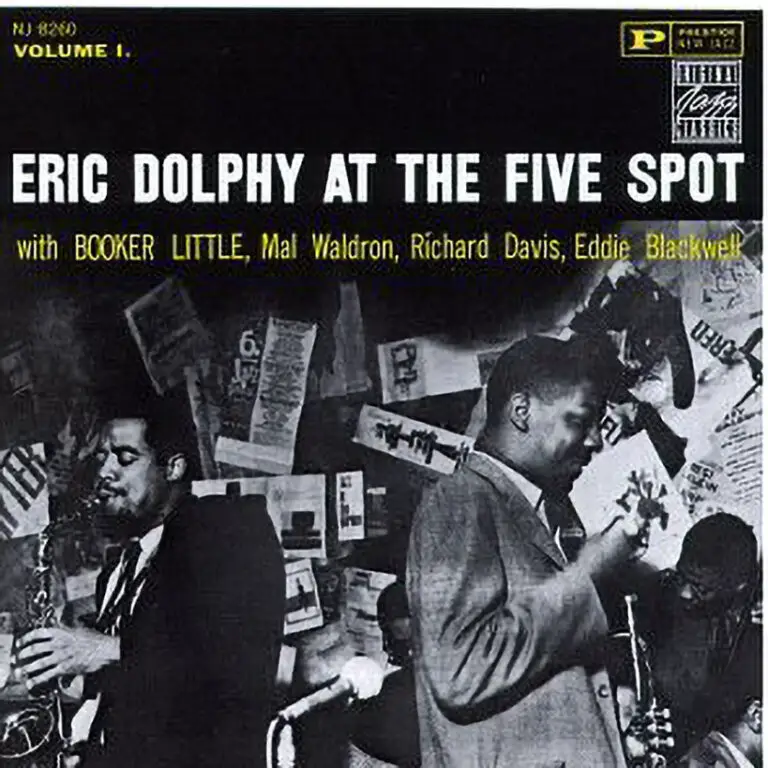
His biggest artist in the avant-garde field was unquestionably Eric Dolphy, who ranks right up there in importance with Trane and Ornette. Then there was Booker Ervin, the free-jazz player whom even free-jazz haters liked. He could get free and still have you tapping your toes. Dolphy recorded two albums with another important figure in the field, Booker Little. All three of these jazz greats led tragically short lives, but Little’s was the shortest. He died at 23 of complications from uremia.
Much of Prestige’s success, with both fans and the artists themselves, came down to the talents of engineer Rudy Van Gelder. What was so special about him?
I’m the wrong person to ask. You need someone with a background in sound engineering to explain that. And Van Gelder was notoriously secretive about his techniques. When Weinstock once asked him about it, Van Gelder curtly told him that he would give him the finished product, and it he liked it, that was all he needed to know.
Basically, Van Gelder’s goal – and he succeeded to a remarkable extent – was to make jazz musicians sound the way they really sounded.
There’s another amusing contribution Van Gelder made to recorded jazz. In one session, Weinstock was about to cut out some of the ad-libbed comments the musicians made before and after a take, and Van Gelder suggested, “Why not leave them in?” They’re part of history. So, Prestige became the first label to do that. And Van Gelder himself soon found himself on an album track, when Miles Davis, irritated by Monk’s gibes at him, called out, “Hey Rudy — leave this in … all of it!”
Prestige had a reputation as being, how shall we say, a shoestring budget label; it was also referred to as the junky label, not by you but by others. Why is this?
Heroin was the scourge of the 1950s, and it hit the jazz community hard; every label had some addicts recording for them. Prestige had more. There were terrible allegations, one being that Weinstock deliberately hired junkies and paid them in heroin. I don’t know that there’s any evidence of that, and it’s hard to believe, but it was another time, another place, and I just don’t know. Weinstock said in the late 50s, in a Down Beat interview, that he thought the heroin era was ending, and he was very glad of it.
Miles Davis, in his autobiography, credits Weinstock with taking a chance on him when no one else would.
For someone new to Prestige, what are the five albums from the label that you think are must-haves for jazz fans, newbies, and the true devotees?
I’ll start with the big ones.
Thelonious Monk Blows for LP = Monk made 5 10-inch albums for Prestige, and it could be any of them. I chose this because I like the title and because it was the first Monk session to take advantage of the LP format. And because it has a cool story associated with it. There are only three tunes on it, all Monk originals: “Friday the Thirteenth” (10:32), “Let’s Call This” (5:05), and “Think of One” (5:47). Ira Gitler supervised the recording and needed titles for the tunes. Monk gave him “Friday the Thirteenth” for the first one, for the date of the session. Gitler asked for a title for the second one, and Monk said, “Let’s call this…” and then drifted away and never came back to finish the sentence. He played another, Gitler asked for a title, and Monk tossed it back at him — “Think of one.” Hence….
MJQ, Django. I’ve talked about that one already, but it’s a must have for a basic library.
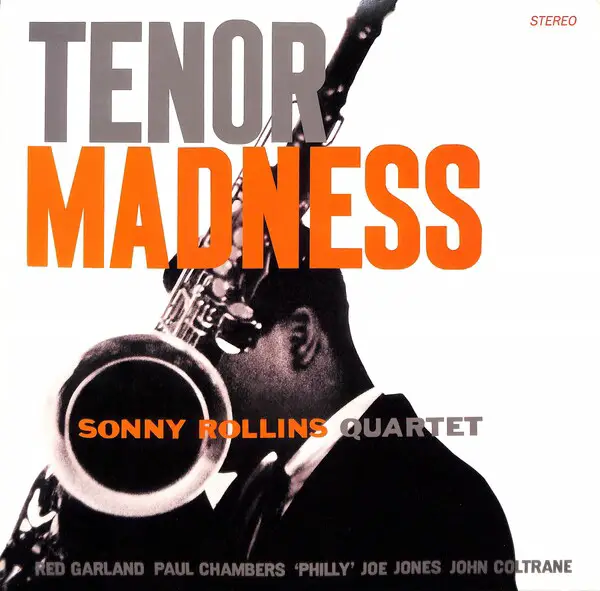
Sonny Rollins, Tenor Madness. It could be Saxophone Colossus, but I’ll choose this one for the title cut, the only time Rollins and Coltrane played together.
Miles Davis – what the hell, just find a box set of all of the Contractual Marathon sessions.
John Coltrane, Traneing In. For the reasons stated above. It’s a great album, and it’s the reason I love jazz.
That’s the big five. Now five more that aren’t quite as obvious.
Mose Allison, Back Country Suite. After Trane drew me into jazz, I had a lot of catching up to do. Bird and Diz, Monk, Gerry Mulligan…and a new artist. Someone I could be one of the first to discover. And I still go back and listen to this album. It’s more Mose as a composer/pianist, but the two vocal tracks are also wonderful.
King Pleasure Sings/Annie Ross Sings. Great vocal jazz. King Pleasure’s big ones are “Moody’s Mood for Love” and “Parker’s Mood.” Ross, of course, is “Twisted,” but also Farmer’s Market.” And there’s an original composition, not lyrics set to a jazz solo, “The Time was Right.” It’s a beautiful song; it should be a jazz standard. But no one else has ever recorded it.
Moondog. I only knew him as the colorful New York character with the Viking helmet, standing in front of Carnegie Hall. I didn’t know until I heard this that he was one of our great avant-garde composers. When Alan Freed came to New York calling himself Moondog, Louis Hardin sued for the exclusive right to use his adopted name, and in the court case, both Benny Goodman and Arturo Toscanini testified to his importance as a composer.
Eric Dolphy/Booker Little, At the Five Spot. Two live albums, recorded in July 1961. Prestige released very few live albums; we’re lucky we have these. Little died in October 1961.
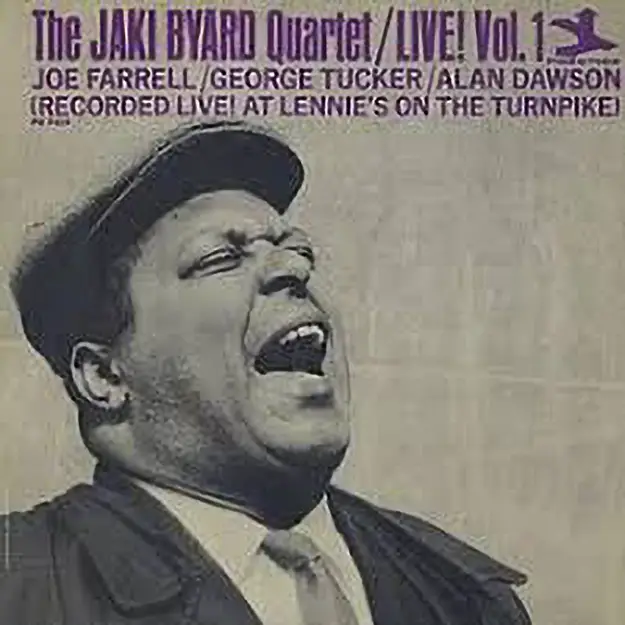
Jaki Byard – Live! Recorded at Lennie’s on the Turnpike. This incredible talent is almost forgotten today. Contemporary lists of the hundred and something greatest jazz pianists don’t mention him at all. And that’s crazy. This was an exceptional talent, one of a kind. Choosing a single album was difficult because he had such a wide stylistic range. I’ll quote a little from my blog entry:
I’ve talked from time to time about swing-to-bop, in writing about the early days of Prestige, and artists like Zoot Sims. It may be time to consider a new kind of transitional music — perhaps we should call it straight-ahead-to-free. I don’t know what else to call this marvelous live album by Jaki Byard, except perhaps to add that its genesis seems to blossom from Charles Mingus and Earl Hines.
(Then I quote Ira Gitler) “ …the people at Lennie’s were completely taken with Byard’s ability to capture the entire history of jazz piano playing, (As he has made clear before, Jaki does not fool around in the various styles he is capable of adopting. He does not parody but instead transmits the “feeling” of the greats that he is able to embody as well.) …Don states, “he runs the gamut from Scott Joplin, James P., Fats, Basie, Duke, to Garner, Bud, Bill Evans, Monk…” He also does the things that Brubeck and Cecil Taylor each try to do but either fall short or don’t know when to stop.”
Check out this album and find and listen to everything else Jaki Byard ever recorded.

Comments are closed.