


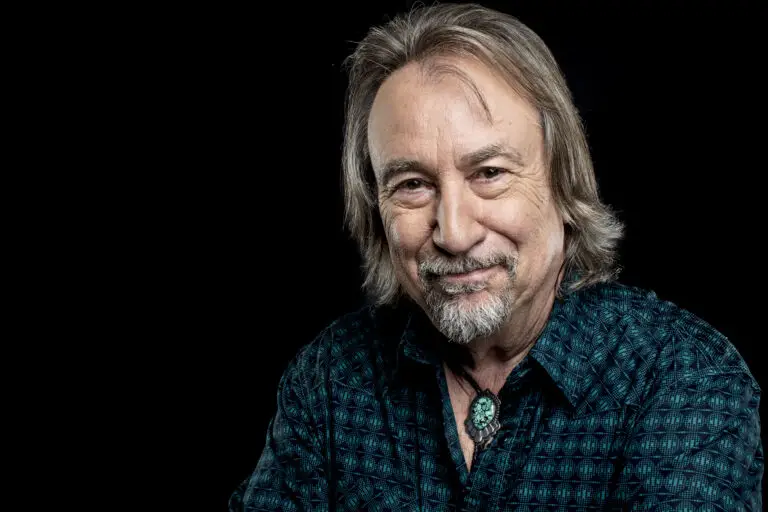
An undisputed expert in the fine art of making hit music, Jim Messina’s legacy of musical genius spans five decades, including three supergroups, a vibrant solo career, and scores of producing and engineering credits. On March 14 at 8 pm, the man who helped pioneer country rock with Buffalo Springfield and Poco, and who then enjoyed one of the hottest streaks of hits in the ‘70s with Loggins and Messina, will return again to the Bethel Woods Performing Arts Center. Jim and his band of top-flight musicians will present a career-spanning performance sure to delight both his longtime fans and a new generation of music lovers enamored with the Americana-flavored sounds he helped popularize.
While serving as producer and audio engineer for Rock & Roll Hall of Famers Buffalo Springfield, Messina joined the band as its bass player. When “the Springfield” disbanded in 1968, Jim and fellow bandmate Richie Furay went on to form Poco. With Jim on lead guitar, Poco defined a new musical genre, country rock, with critically acclaimed albums, including their debut, Pickin’ Up the Pieces (1968), and later Legacy, their 1989 original band reunion collection that spawned two unexpected Top 40 hits, including “Call It Love.”
But after three successful albums with Poco and before their later reunion, Jim was ready for a change and left the band to return to his first passion: producing music. He signed with Columbia Records and, in November 1970, was asked to produce an unknown singer-songwriter, Kenny Loggins. While helping Kenny get ready for recording and touring, the two discovered how well they worked together, and Jim agreed to sit in on Kenny’s first album. This hugely successful collection, Kenny Loggins with Jim Messina Sittin’ In, was released in November of 1971, and an accidental hit-making juggernaut was formed. Over the next seven years, Loggins and Messina released eight hit albums, had scores of hit songs, and sold over 16 million albums. They had become one of rock’s most successful recording duos before going their separate ways.
After a series of celebrated solo acoustic tours, Jim formed a band made of acclaimed musicians who have played with him at various points in his career. With his new band, The Road Runners, Jim released his latest live album, Here, There & Everywhere. Touring the country and playing sold-out shows, Jim says that he’s enjoying discovering who he is, where he’s been, and, most significantly, where he’s going.
How does Jim feel about his return to Bethel Woods and the role he played in country rock and the bands that he has influenced? NYS Music got the answers in the following exclusive interview.
I know you have played Bethel Woods before, so how does it feel to play now at the site of the original Woodstock fest? Were you interested in playing the original festival with Poco, which was then a going concern?
Jim Messina: I find it interesting because, for me, when Woodstock was happening, I was in Poco, and we were asked to perform, but our dumb manager said, “Well, we already have another booking for them.” So, we missed the boat on that one. When I’m here, I like to go back through the museum and look at the way people were, how they dressed, the cars they were driving…the vibe was very ‘60’s. Bottomline, we were very disappointed that we could not perform at Woodstock.
The show. Will it be a career-spanning playlist? What tunes might people look forward to from the band at this show?
Jim Messina: It’s going to be a special set that we have been working on. We will be adding some songs from the Buffalo Springfield that I wrote and sang. One is called “Carefree Country Day” and another is called “Kind Woman.” That was one I produced with the Buffalo Springfield, originally sung by Richie Furay, and I was playing bass and guitar in those days. I am going to bring those out as part of the set. We are also adding “Call It Love,” which we recorded in 1989 in Poco. Rusty Young sang that song, and, of course, he has passed at this point, but a lot of people have asked about it and whether I would consider doing it. I haven’t in the past, only because it was Rusty’s song, even though I co-wrote it, but I have decided that it’s not about the people, it’s about the music. It’s about Poco and the music people love and enjoy, so we have worked up the arrangement as close as we can to the original.
Also, a fun thing I have been wanting to do was from Loggins and Messina’s Full Sail album. I had a couple of songs on it, I call it “the island set.” It was “Coming To You,” “Lahaina” and “Vahevala,” so I put those songs into a medley, and they go from one to the other. That’s going to be new to the set. I am also going to add a song called “Travelin’ Blues,” which many people have been asking for.
Also, I’m working on a song I didn’t write but remember loving as a kid, called “Draggin’ The Line” by Tommy James & the Shondells. We have a very interesting and exciting arrangement that goes a little beyond what Tommy originally did. I became worried and contacted his manager, asked him to listen to it, and made sure he was happy with it. I’m not rewriting it; I just wanted to confirm it was okay to perform it this way. He listened and loved it. So, it’s going to be a fun show. We’re all a bit nervous because we’re playing new songs and new arrangements, so there will be that edge to things.
I’d love to hear your feelings about being a creator of country rock, and maybe your thoughts on some of the bands that have name-checked Springfield and Poco as influences.
Jim Messina: I think it was by happenstance that that happened. Of course, as a kid, I always listened to country music, and I built a studio with Mike Derough back in the ’60s. The people who asked us to build it were from Shreveport, Louisiana. Their friends and the people they brought in to visit the studio the first time were Roger Miller, Dorsey Burnette, James Burton, Joe Osborne, and Keith Allison.
I really loved rockabilly music, and to me, rockabilly was what influenced me a lot, so fast forward, we start getting into the ‘60’s, it was very natural for me to want to go from folk music over to folk rock to country rock because the influences were there both for Richie Furay and me. He had written songs like “Kind Woman,” “A Child’s Claim To Fame,” and we had James Burton play dobro on it. The stage was set to make a move, and the coinage of country rock was what was needed. I think it’s something I loved, and I‘m glad that other people did, and that we were able to influence them into that style of music.
Country rock was more of an edge, more about the generation of the ‘60’s, of us, and writing music that was less commercial from the standpoint of drinking beer or whiskey and smoking cigarettes, to talking about real emotions and feelings in the music. I think that’s where the difference was between country music and country rock music. We were thinking more emotionally in the lyrics we were writing; they were more personal.
Who might you like from the current crop of bands and artists influenced by your work?
Jim Messina: I try to listen to the radio, which, for me, is Sirius XM. I jump around and listen to a lot of stuff, and there are some very, very talented singers in country music. There are so many artists who are so good, and I am just a listener. I used to love Nickel Creek. I thought they were a fantastic band. The Punch Brothers were very interesting to me; they had some great music. Being out there myself with a band, it’s hard to keep that momentum going in many ways because there are so many different artists and bands vying for the same gigs and engagements, and now it’s all about streaming, so it’s hard to get a fix on anything cause things are moving so quickly. So, I know they are out there, I’m just spending so much time keeping my music going that I seldom stop and say: “Who am I missing out there?”
Bethel Woods offers tickets for the concerts only or with a pre-show dinner. Info here.

Comments are closed.