


Contemporary country lyricists like their trucks, their dogs, and their American domestic beers.
Their counterparts in the bluegrass genre prefer the open road, a train whistle blowing, and the kind of forlorn homesick blues that can only really be described as “high and lonesome.”
Then there’s progressive bluegrass: the prog ’grass of 2026 is a more potent strain altogether; it continues the traditions of Bill Monroe and the Stanley Brothers while also nodding to the “new grass” stylings of legends like Sam Bush and Tim O’Brien. The sound is a little less lonesome, a lot more high, often evolving, and usually crossing over into the jamband scene. Think Greensky Bluegress. Think YMSB. Think Kitchen Dwellers. And of course, think BMFS.
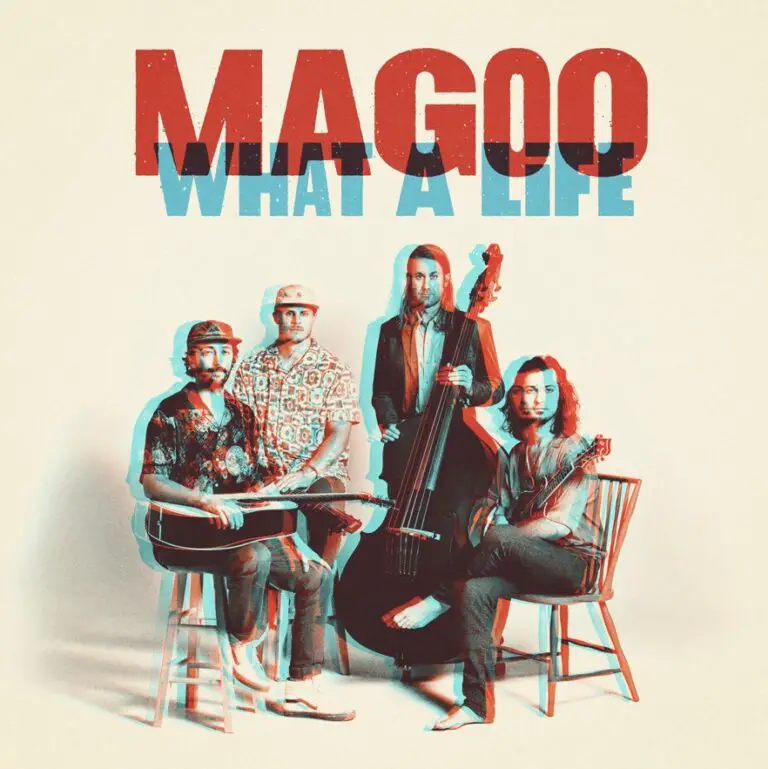
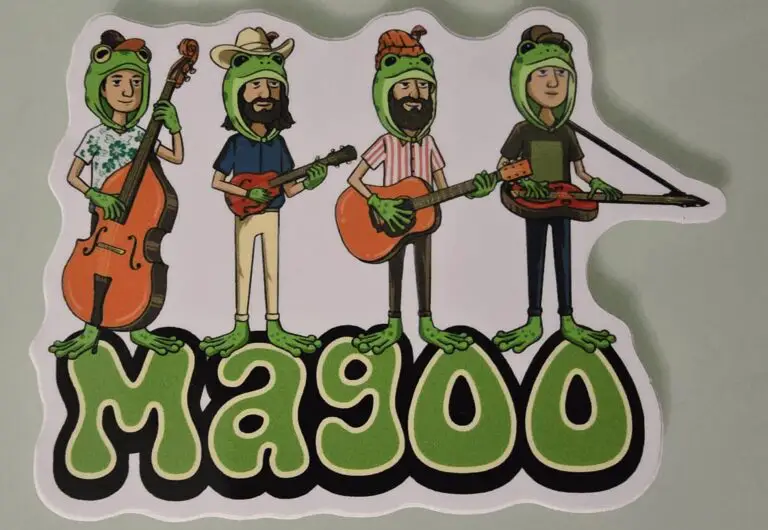
Add to that list Denver, Colorado’s Magoo who have been making waves in both bluegrass and jam circles with their energetic live shows. Frequently in support of Kitchen Dwellers, Magoo has also been making a name for themselves on the top of the marquee (on February 21, Magoo performed a sold out show at Third Man Records’s Blue Room in Nashville).
Now the quartet has a solid debut album, What a Life that cements the group’s rising reputation as a distinct voice coming into its own.
What a Life was released on February 27 to streaming services and also as a vinyl record, available in several variants. The album was mastered by David Glasser and features excellent fidelity and stereo separation.
Magoo may hail from the Rockies, but there’s a strong Upstate, NY connection too: guitarist Erik Hill grew up near Albany, went to SUNY New Paltz, and used to play with members of Annie in the Water in The Assortment of Crayons, before moving west. Hill is joined in Magoo by Dylan Flynn (dobro), Courtlyn Bills (mandolin), and A. Denton Turner (upright bass).
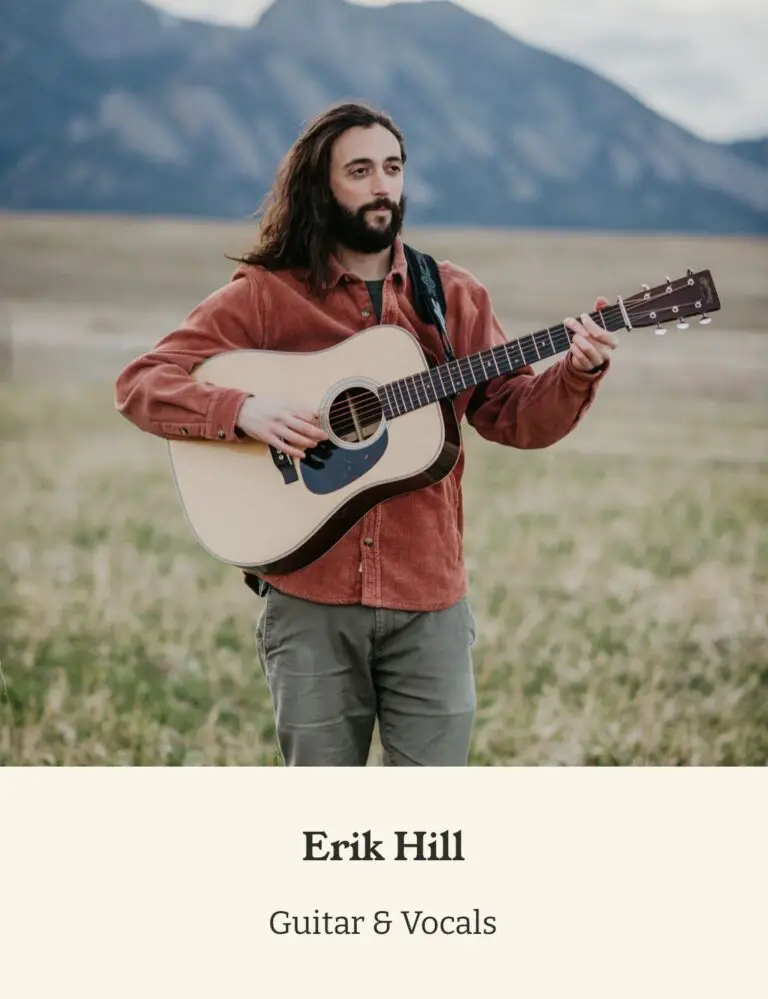
To my ears, it’s Flynn’s presence on dobro that sets Magoo apart from other bluegrass outfits instrumentally. In combination with Hill’s deft flatpicking, Flynn’s work with the slide creates call-and-response bliss (see “The Road”). And frequently it’s mandolinist Bills who is playing rhythmic rolls usually reserved for a banjo instead of always defaulting to a bluegrass chop or bark.
Hill, Flynn, and Bills all sing well, as evidenced in the three-part harmony on album opener “Ohio Blues”, but it’s really the instrumental pyrotechnics that make this album special. Particularly on those songs about trains and the open road, the group reaches some pretty special peaks in them-there Rockies. “Can’t You Here That Train” is a great example of the old tradition meeting a new way. The uptempo number starts in relatively predictable verse-chorus form before erupting into both acoustic and unexpected effects-laden solos. “Riding Trains” does something similar. It takes track-side iconography in the lyrics and fuses it with psychedelic solos by Flynn and Hill who are something of a bluegrass version of the Allman Brothers’ Duane and Dickey.
Like many bluegrass bands, Magoo’s record makes exceptional road trip music, and there’s no shortage of open road ragers on What a Life. Album closer “The Road’s Been Good To Me” is pure uptempo major-key, giving-thanks bluegrass party music that makes you want to roll down all four windows. If I had any complaints about this very strong debut it would be that things get a little too mid-tempo and polished at times. I appreciated that Magoo stepped on the accelerator at the end.
My favorite cut is the minor-key (and aptly titled) “The Road” which has the swagger of a Western gunslinger in its melody and lyrics about “lonesome whistles”, “freight trains” and haunting memories that are pure Americana. This track also features my favorite extended jam on the album and I can’t wait to see what these guys do to this one during a live performance.
On “Angel of Telluride”, the boys are joined by bluegrass icon Sam Bush who adds some texture on fiddle and vocal harmonies (and a combination of gravitas and a stamp-of-approval to the proceedings). The love song’s lyrics are as much about the devotion to an angelic woman as they are of the Colorado landscape, and the music of The Grateful Dead and Tim O’Brien who are both alluded to in the lyrics. Of course, Telluride is also the land of bluegrass festivals, and I have a hunch that Magoo may well be the bluegrass festival darlings of the summer of 2026.
While much of the band’s current tour stays on the West Coast, New York fans have the option of traveling to see the group on Mid-Atlantic dates in May or going north to the Jeezum Crow Festival in Jay, VT this July. Magoo will finally hit a New York State stage in September as part of Silver Bay’s Mountain Music Festival, but I’m not sure I want to wait that long.
