


Jakub Polaczyk, co-director of the John Paul II Friendship Center in Manhattan, part of the Polish and Slavic Center, is a Polish-born composer with deep connections not only to Poland, but also to America, both of which are celebrated in different ways through his compositions.
Born in Krakow – near Lviv, which Polaczyk notes is a notable area in western Ukraine for musicians and artists – and currently based in Astoria, Polaczyk is an award-winning pianist and composer, as well as a cultural ambassador via music that bridges Polish heritage and contemporary innovation.
Jakub Polaczyk
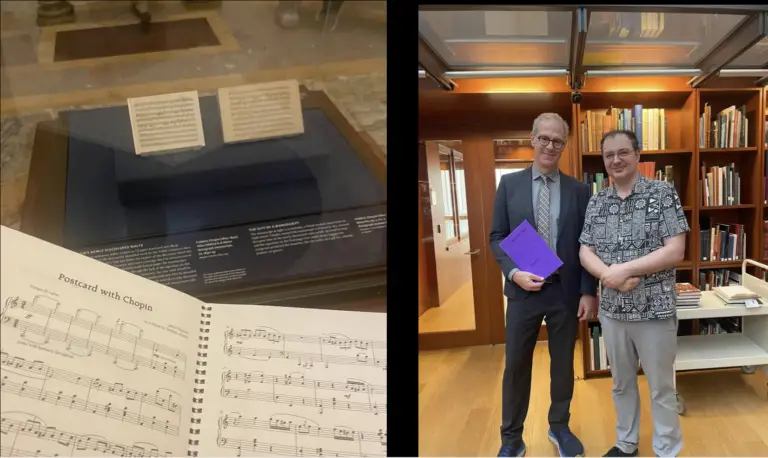
Arguably the most famous Polish composer is Frédéric Chopin, who created more than 200 works during four decades of life. Polaczyk has not only a native connection to Chopin, but recently found himself collaborating with the deceased composer, thanks to a piece of lost music that was discovered in the Morgan Library and Museum in NYC in 2024.
How did some of Chopin’s work end up in New York? More than likely, Polaczyk explained, was from a private collection was donated to the Morgan Library, perhaps around 2018-19, and when found, would bridge a gap of nearly two centuries between two Polish countrymen.
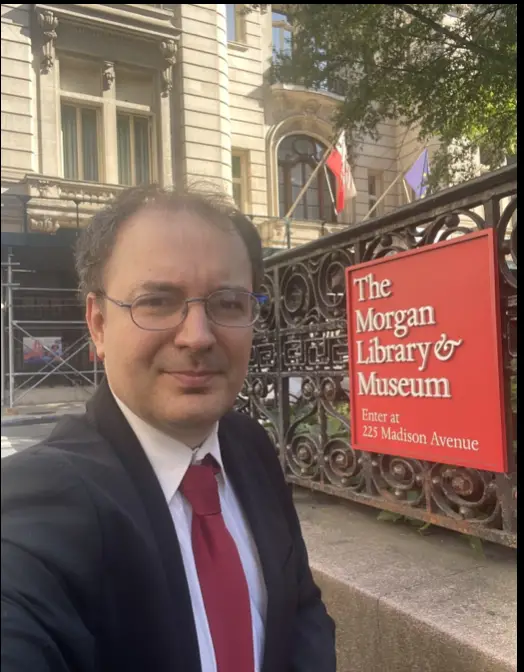
Having served as Vice President of New York Dance and Arts Innovations (NYDAI) and directed the International Chopin and Friends Festival in NYC (2020–2023), Polaczyk readily admits “Chopin is close to my heart.” It was in 2024 that a curator at the Morgan Library “found a tiny sheet of paper that was from Chopin, which led to investigation to verify authenticity.” Once this was verified, the Polish Consulate was in contact with Jakub, but the piece was short and did not have the exact form he would expect, but did possess the sound and structure of Chopin, with some contrary elements that did not exist as Polaczyk would have expected to find.
Using the small composition from Chopin, Polaczyk created his own introduction to the music, using the Chopin style to complete the brief work, which would later be titled “Postcard with Chopin.”
Premiering at the Polish Consulate in Manhattan in 2024, “Postcard with Chopin” is published by Donemus and has been offered to the Morgan Library for preservation, a unique piece of work that was started some 200 years ago more than 4,000 miles away, created by two Polish composers separated by time.
250th Anniversary of America and Thaddeus (Tadeusz) Kosciuszko
Polaczyk moved to Astoria in 2014, thanks to a Carnegie Mellon scholarship, and following a year in Kentucky, he met his wife and moved to New York, briefly to New Jersey, then back to Astoria recently. In addition to teaching at the New York Conservatory of Music, he is the co-director of John Paul II Friendship Center, a community center in the Ukrainian Village sponsored by the Polish-Slavic Center and the location of the last Polish church in Manhattan – St. Stanislaus, surrounded by the scattered remains of the Polish Village in NYC, now home to many Ukrainians as well as Poles.
In discussing one of the most famous Polish composers, our conversation turned to two figures from American history that hailed from Poland and served key positions during the American Revolution.
Both Kosciuszko and Casimir Pulaski are well known in America, especially in New York and Chicago, with Polaczyk writing “Act for Thaddeus Kosciuszko” for the 200th anniversary of his death in 2017. This national hero of Poland and the United States was not only freedom fighter and military leader, but an advocate for the rights of European serfs, as well as African Slaves, Native Americans, Jews, women and other disenfranchised social groups across two continents, as well as what he is most known for, being a superior military engineer. Polaczyk is currently working on a chamber opera based on Pulaski Pulaski, but not one that he appears in; rather, the story begins on the Pulaski Bridge that connects Greenpoint in Brooklyn to Long Island City in Queens, the bridge serving as inspiration, with the ‘Pulaski Bridge’ movement named for a bridge he passes every day.
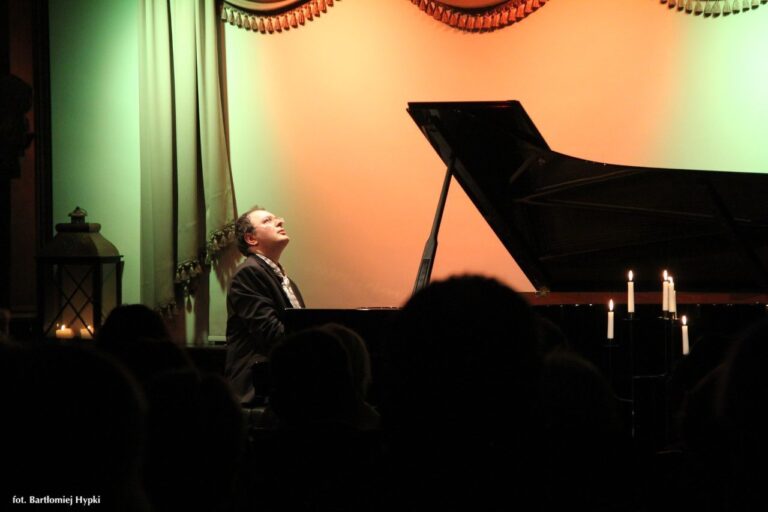
While they are both known as amazing generals, Polaczyk shares that Kosciuszko is known more in America than in Poland, where some monuments exist but not as many as in America (and likely no Twin Bridges). This is due in part to the large number of Polish-American foundations that have supported Polish-American works of art and music compositions. While he is surely important for Polish history, his bridges between Poland and the United States are most notable – while there are competitions in Poland in his honor, his battles and importance are well known in America, but fewer places are named for him in his home country.
There is of course Pulaski, who is a trademark of the Polish-American connection going back two and a half centuries, who saved General Washington and raised a cavalry that proved pivotal in the colonial effort for independence. Whether a bridge, skyway or village in New York, Casimir Pulaski is celebrated on the first Sunday of October, starting on 5th avenue around the Polish Consulate, a location that also factors into Polaczyk’s opera.
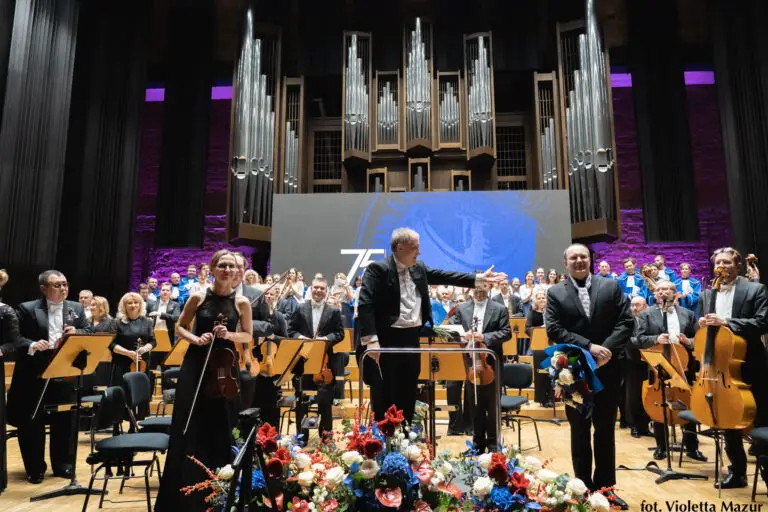
The Ojibbeway
A recent piece that pays tribute to North Americans, “Ojibbeway” is inspired by the work of Anton Leopold Dvořák, a Czech composer who wrote in New York City a pieces influenced by the music of Native Americans, whom he was fascinated by. Jakub sought to write something inspired along the same lines, which led Polaczyk to go to the National Museum of the American Indian. There he found drawings by George Catlin, a white painter from New Jersey who drew paintings of Native Americans, and seeing some drawings, he liked the perspective of Catlin.
Writing some pieces with the poetry of Native Americans inspiring his work, as well as Pow-Wows serving as inspiration and having a similar rhythm and sound to native Polish music, the result pays tribute through his mother tongue to the Ojibwe (Chippewa) tribe, using flute and piano, accordion winning The American Prize for Chamber Composition in 2020.
Year of the Horse
Speaking just before Chinese New Year, Polaczyk mentioned a new piece, “American Blue Horses,” inspired by the incoming ‘Year of the Horse.’This piece is inspired by the opening motif of the New World Symphony by Antonín Dvořák. It incorporates bold, horse-like dotted rhythms that evoke movement and momentum, while also drawing visual and emotional inspiration from the Blue Horses paintings by Franz Marc. Piece was written last year for the cinematographic piano music Festival in Antwerp, Belgium.
With his wife born in China and growing up in America, the piece for strings and piano aligns with the Chinese astrology of the year: agreeable, intelligent, decisive and confident.
Coming up for Polaczyk over the next few months is a performance in Manhattan, a lecture in California and International Music Days in Romania.
February 26 – Di Menna, Manhattan. Cosas que pudieron ser (2011), in memory of John Cage and John Lennon to the text of J. Borges. Tickets here.
March 10 – Lecture at the University of California Santa Barbara
May 28 – International Music Days in Bucharest, representing Poland

Comments are closed.