


On Saturday, February 20th, (le) poisson rouge on Bleecker Street was packed for a sold-out performance by Drink the Sea, a group whose résumé alone suggests this might be a side project but whose live presence immediately contradicts that assumption.
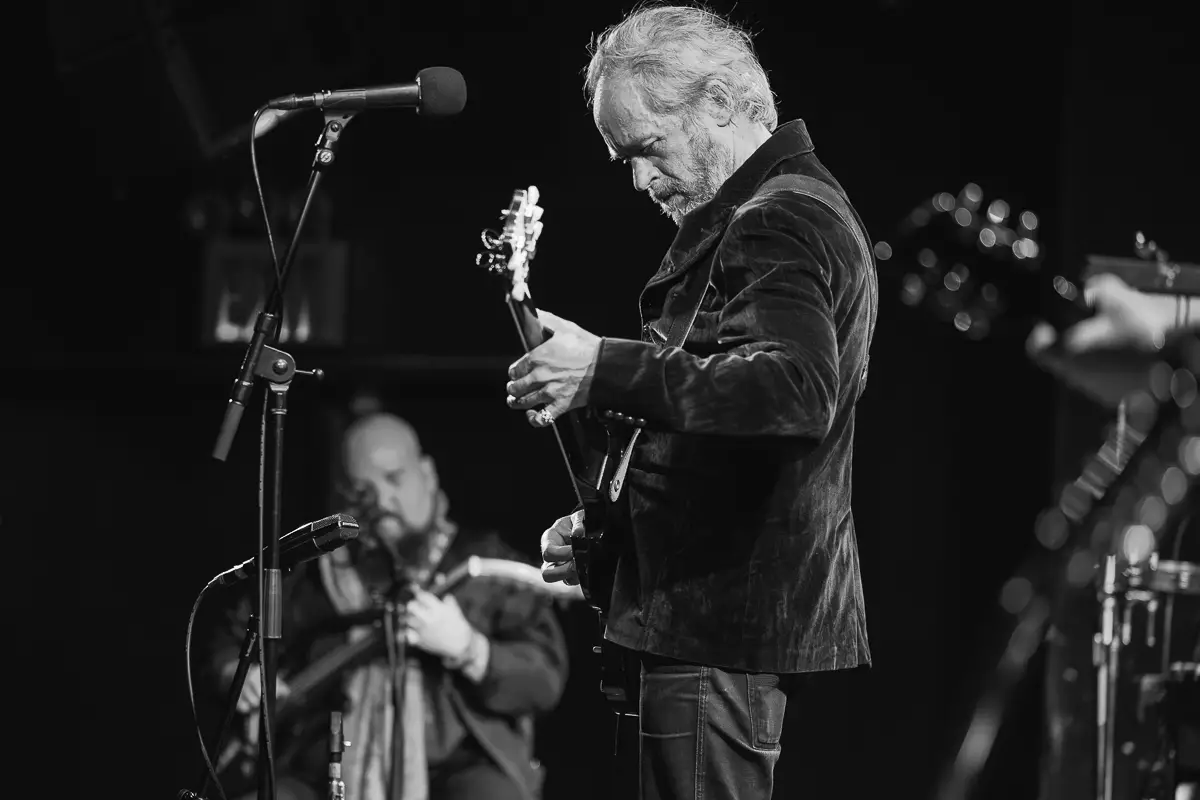


Formed as a creative outlet for four deeply accomplished musicians—Barrett Martin (Screaming Trees, Mad Season), Peter Buck (R.E.M.), Alain Johannes (Eleven, Queens of the Stone Age, Them Crooked Vultures) and Duke Garwood (longtime collaborator of Screaming Trees singer, Mark Lanegan)—the project easily could have existed as a loose side venture. Instead, it felt unmistakably like a band: coherent, responsive and grounded in shared musical instinct rather than relying on pedigree.
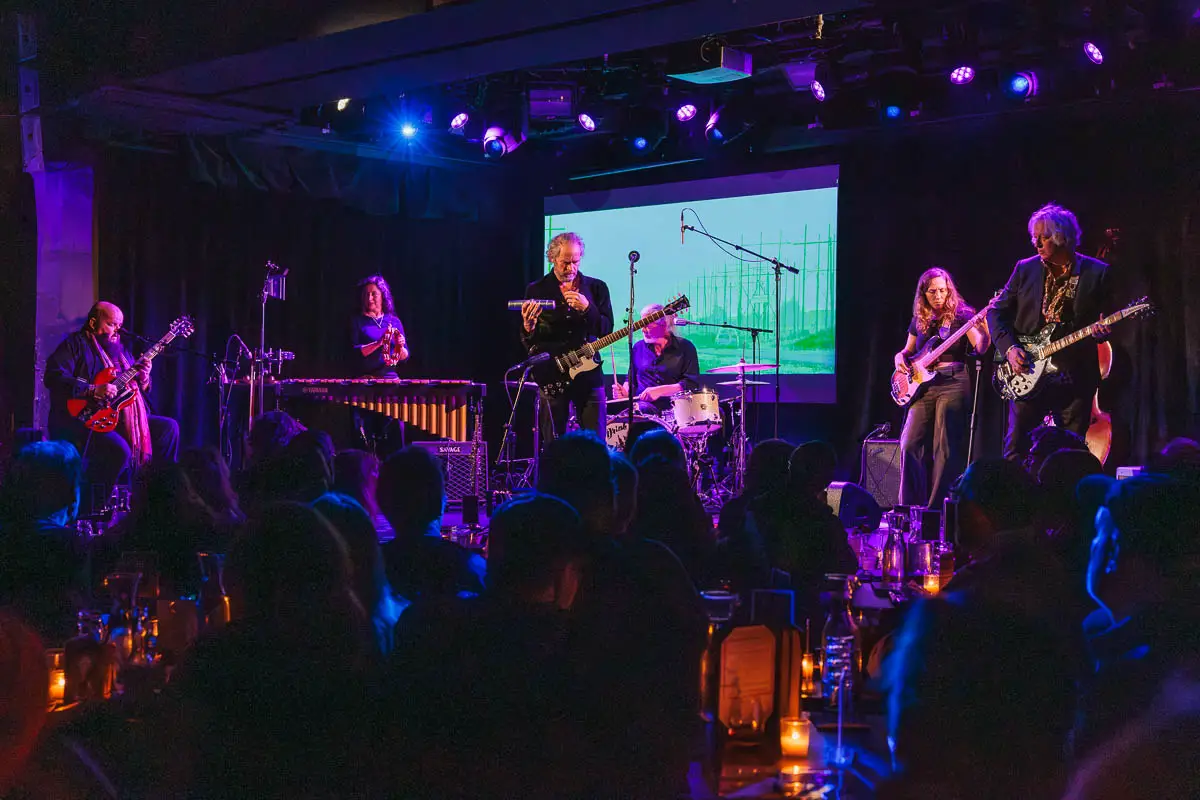
Recorded across Joshua Tree, Brazil, Chile, Spain, and Iceland, the material represents a geographic diversity that is audible. Latin rhythmic phrasing dissolves into Iberian tonal color, which in turn gives way to riffs suggestive of Middle Eastern traditions. Martin described their time in São Paulo as “a very creative period,” and the performance bore that out: this was music shaped by movement, not confinement.
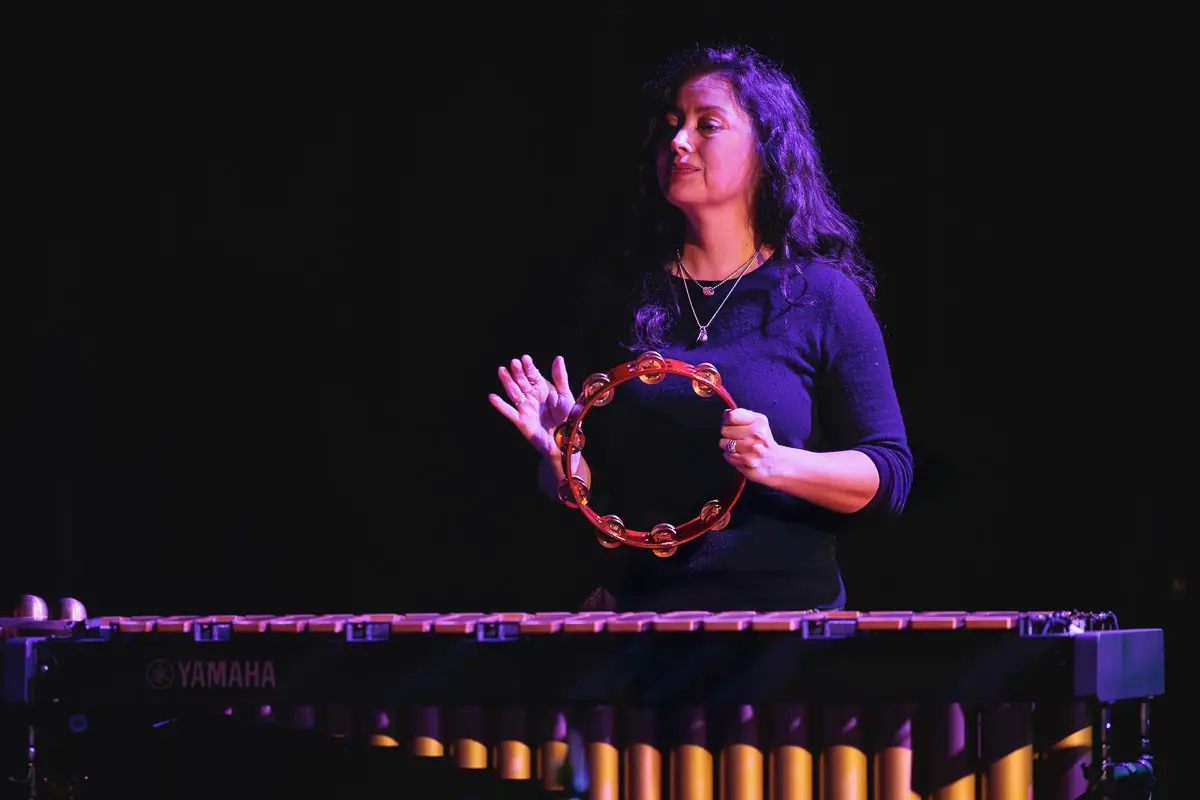
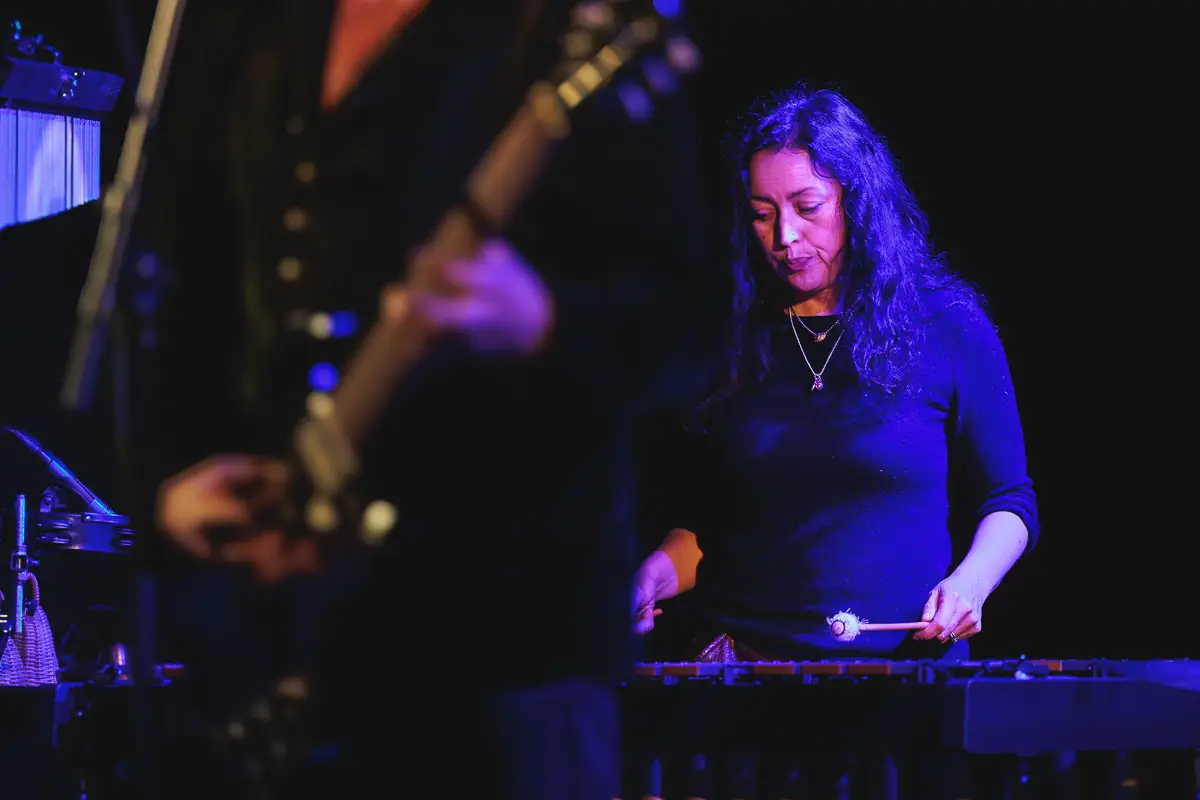
Those sessions produced Drink the Sea I and II, now being performed live together for the first time with percussionist Lisette Garcia and Seattle bassist Abbey Blackwell. The fact this was their debut tour added a subtle sense of risk and discovery: nothing felt routine because the material hadn’t yet settled into familiarity.
The musicians’ histories intersect through decades of collaborations spanning R.E.M., Mad Season, Queens of the Stone Age, the Seattle music scene and the broader alternative rock underground. That sense of connection carries extra resonance today, February 22nd, the anniversary of the death of Mark Lanegan in 2022. He was in some ways the link among these artists long before this project existed. Yet for all that shared lineage, the striking thing live was not similarity but contrast; each player’s musical identity remained intact and sharply distinct.
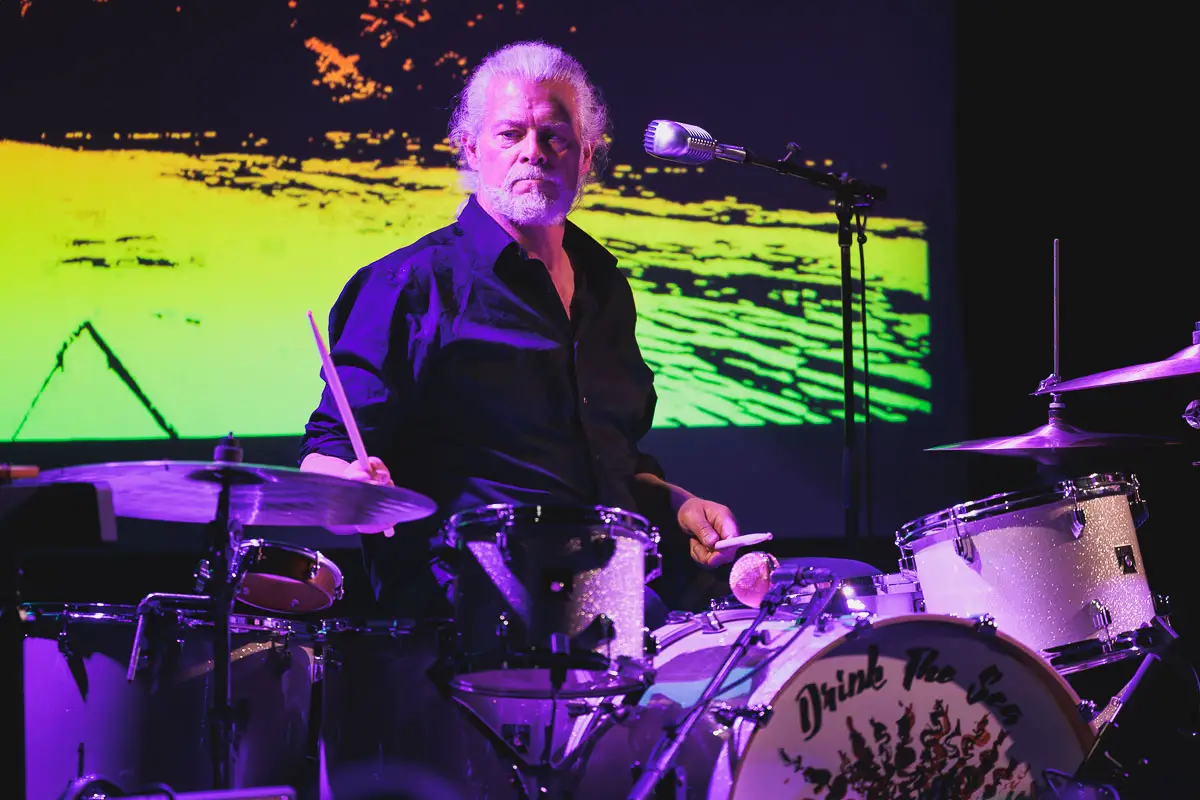
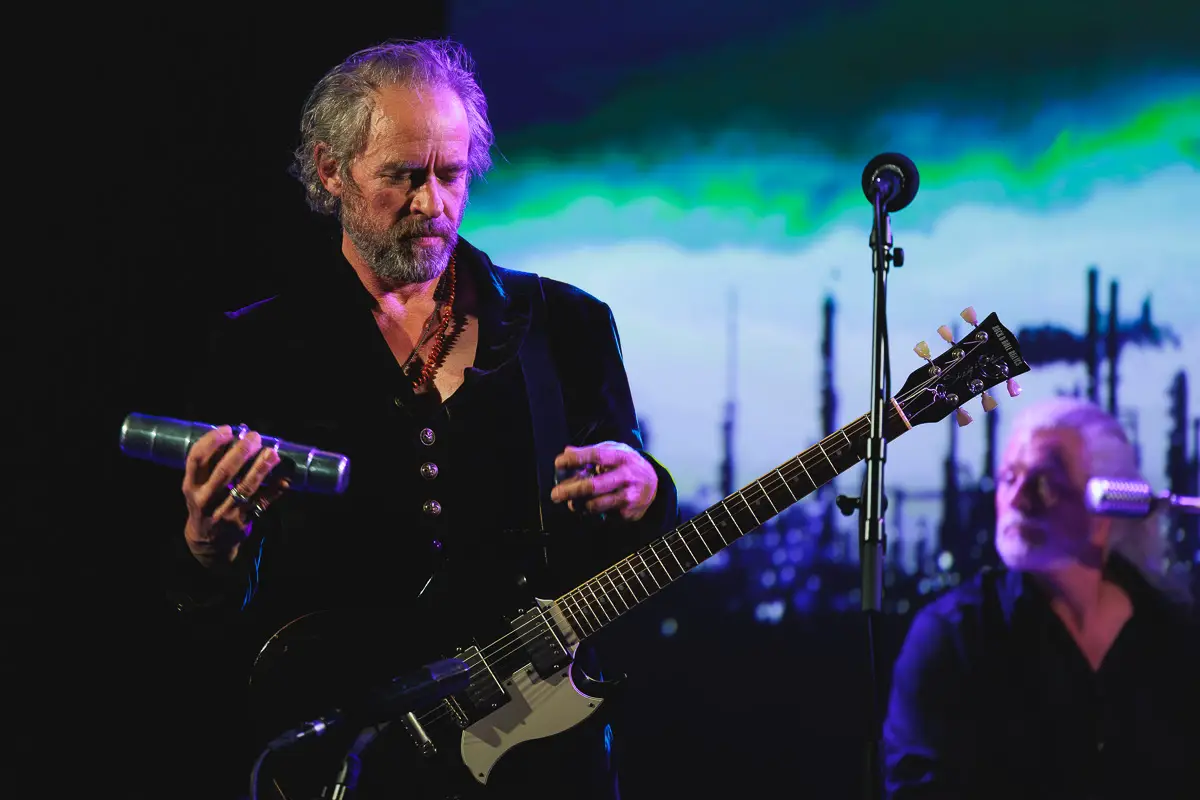
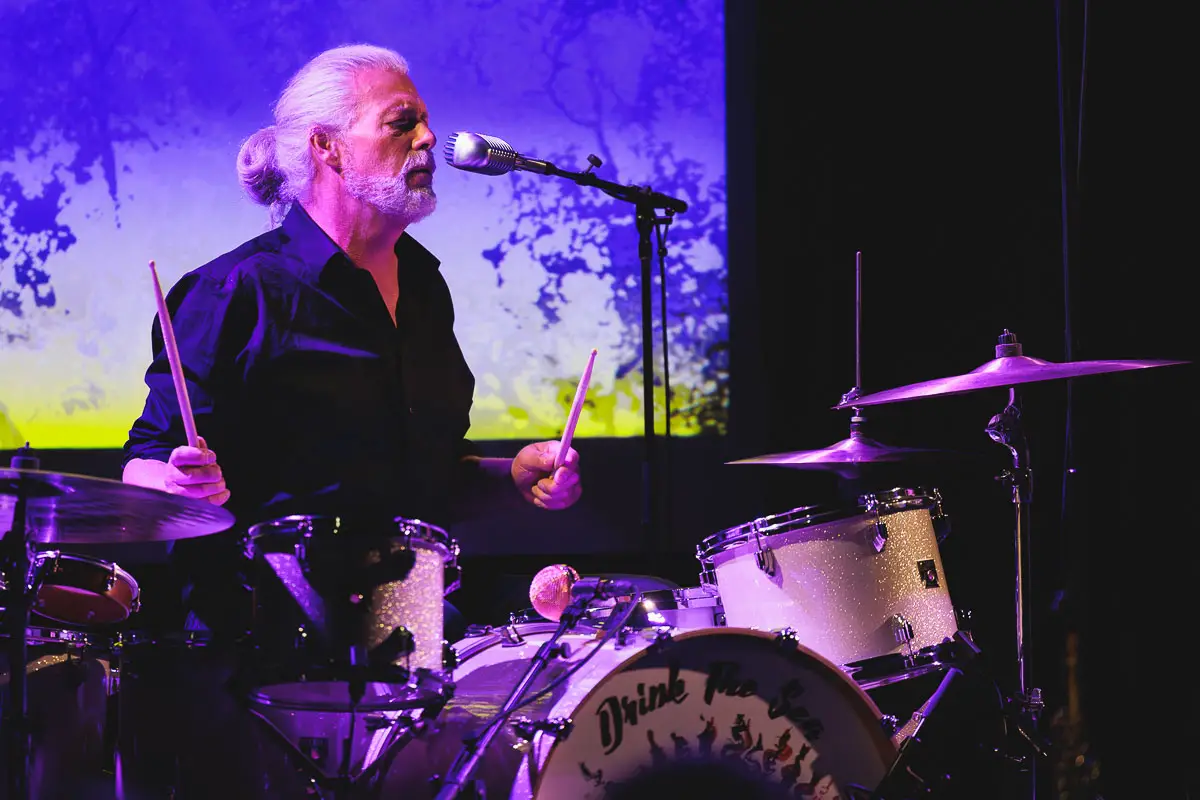
Visuals accompanied every piece—short films by filmmaker Tad Fettig (National Geographic, Greenpeace/PBS)—but rather than serving as decorative backdrop, they deepened the music’s meaning. Urban motion sequences and elemental imagery of water and nature functioned as extensions of tone, reinforcing the performance’s cinematic quality.
The setlist was ambitious by design, drawing from all 22 tracks across the band’s two albums along with selections from the members’ catalogs, including “Long Gone Day” (Mad Season), “The One I Love” (R.E.M.), “Making a Cross” (Desert Sessions) and “Hanging Tree” (Queens of the Stone Age).
Part of what makes everything so cohesive is the group’s collaborative writing process. Songs emerge from shared musical frameworks, with lyrics typically shaped by whoever takes lead vocals. Even without a single narrative voice, the material feels unified, creating worlds rather than telling individual stories.
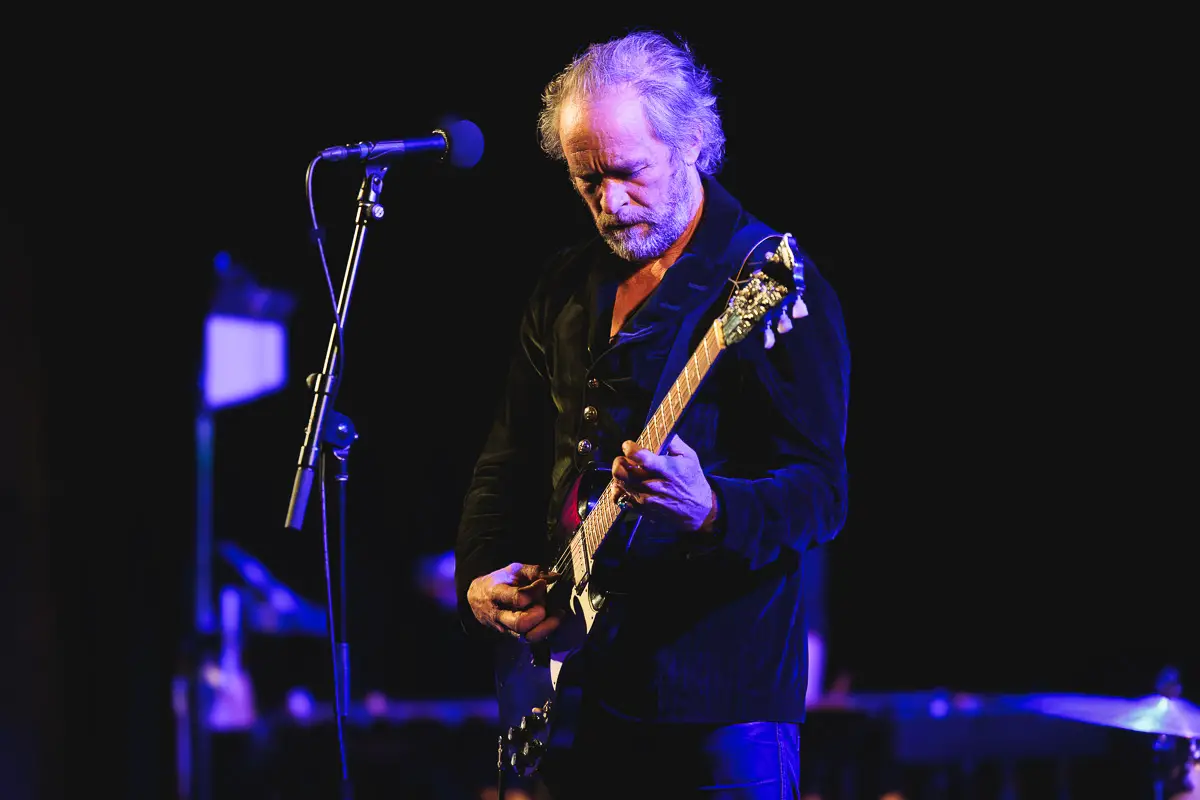
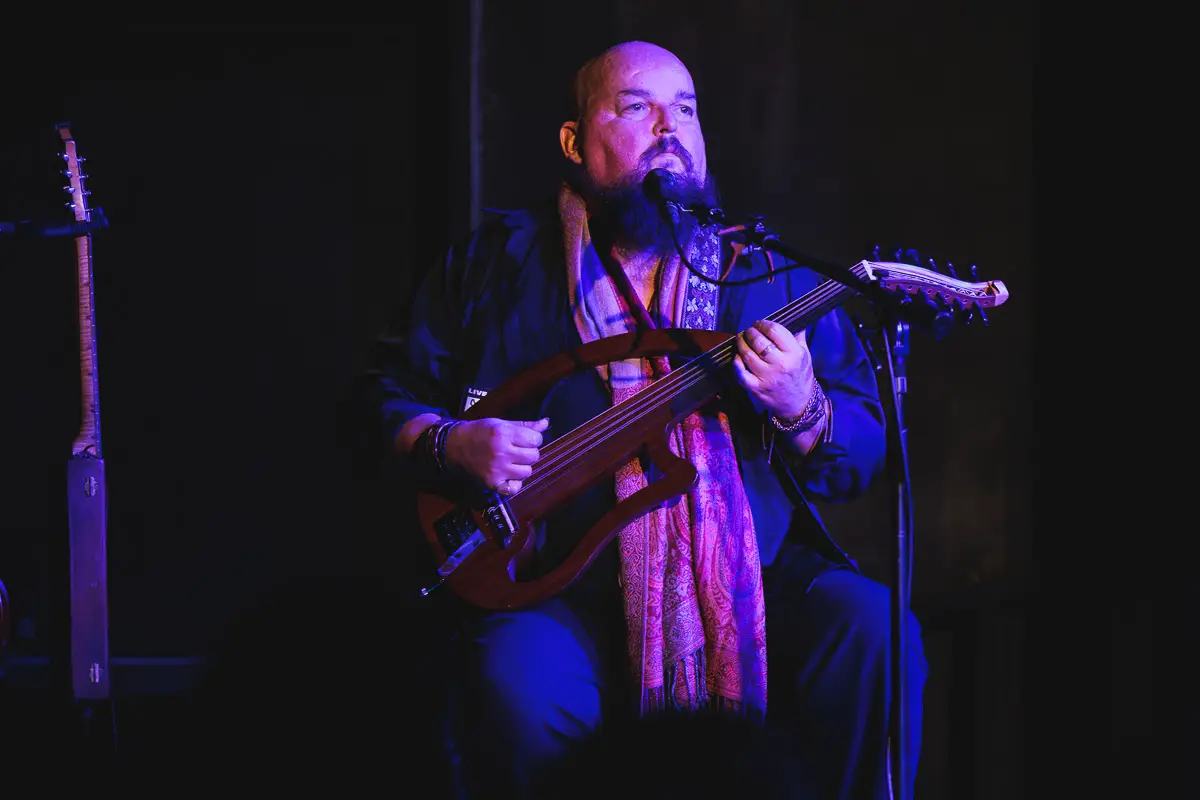
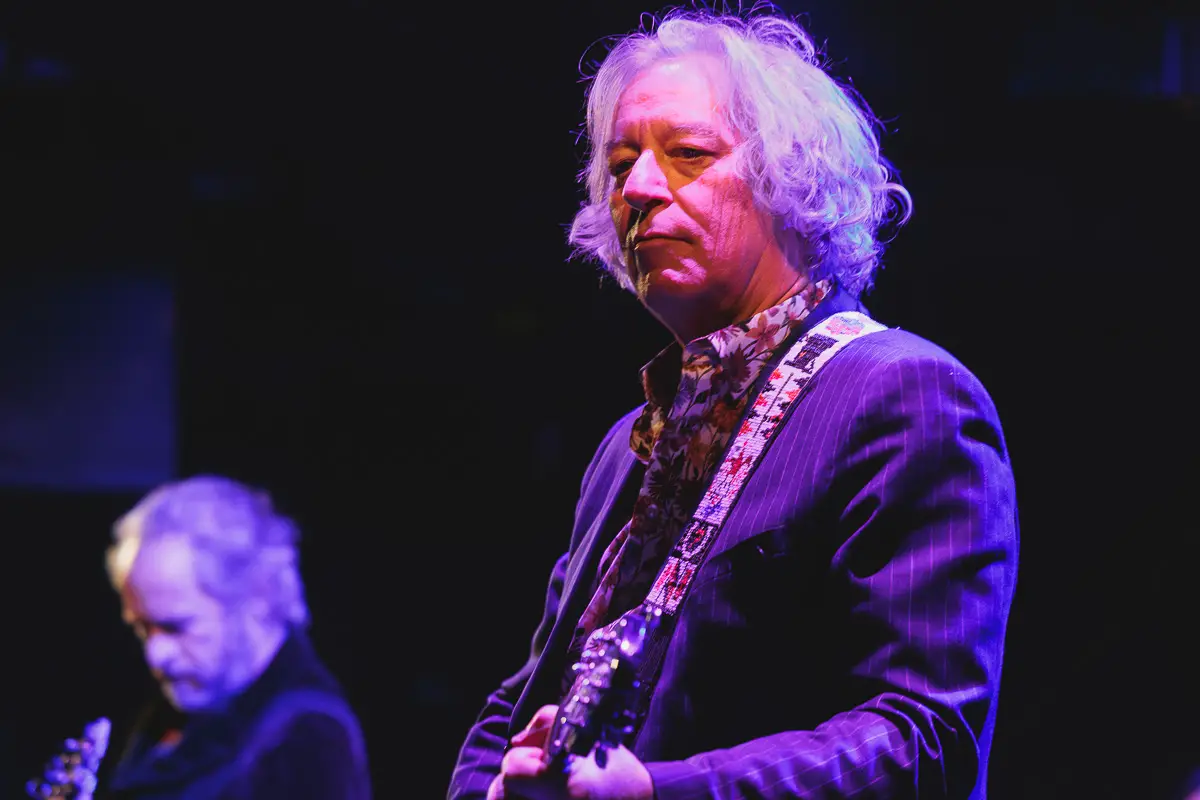
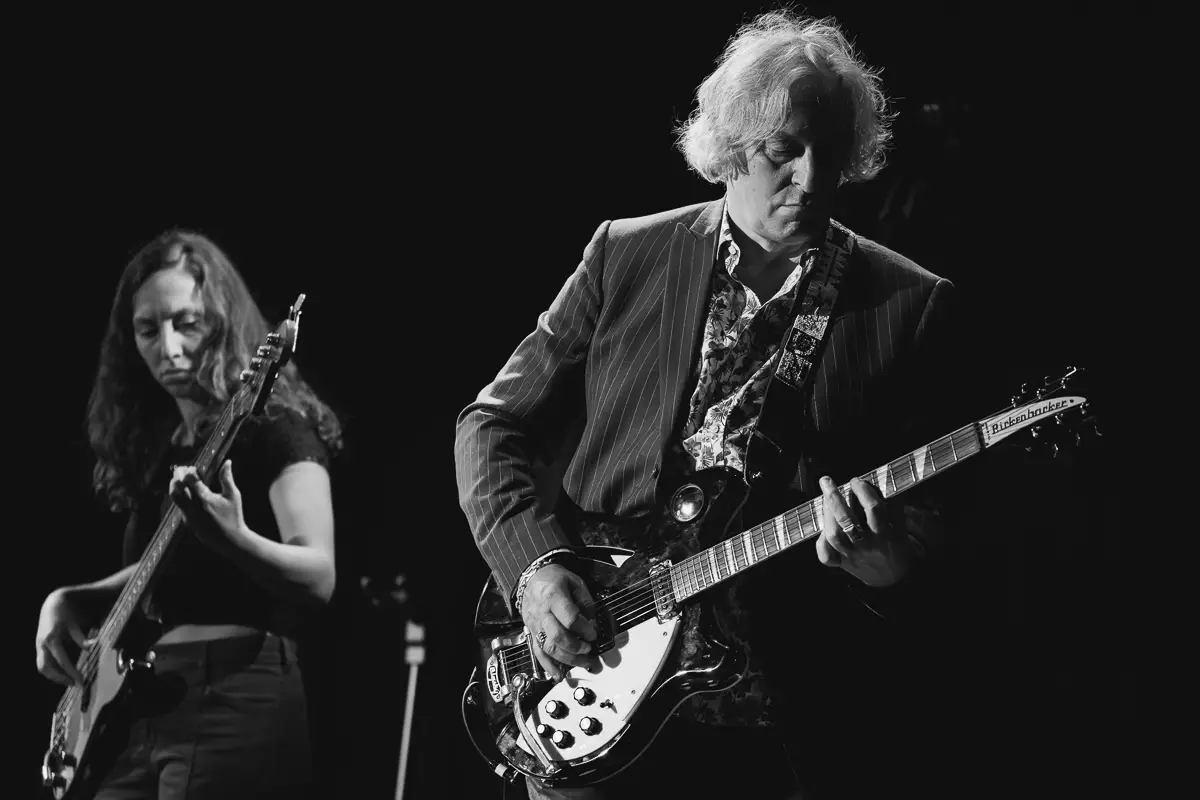
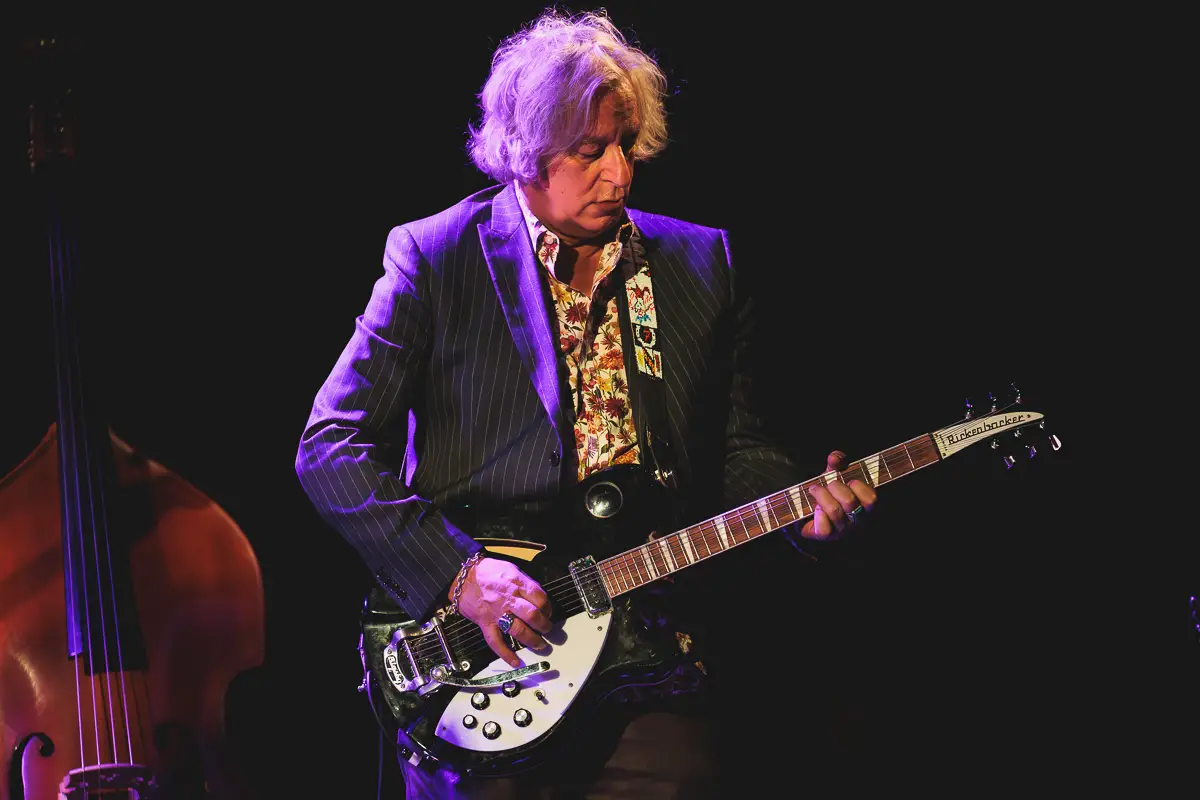
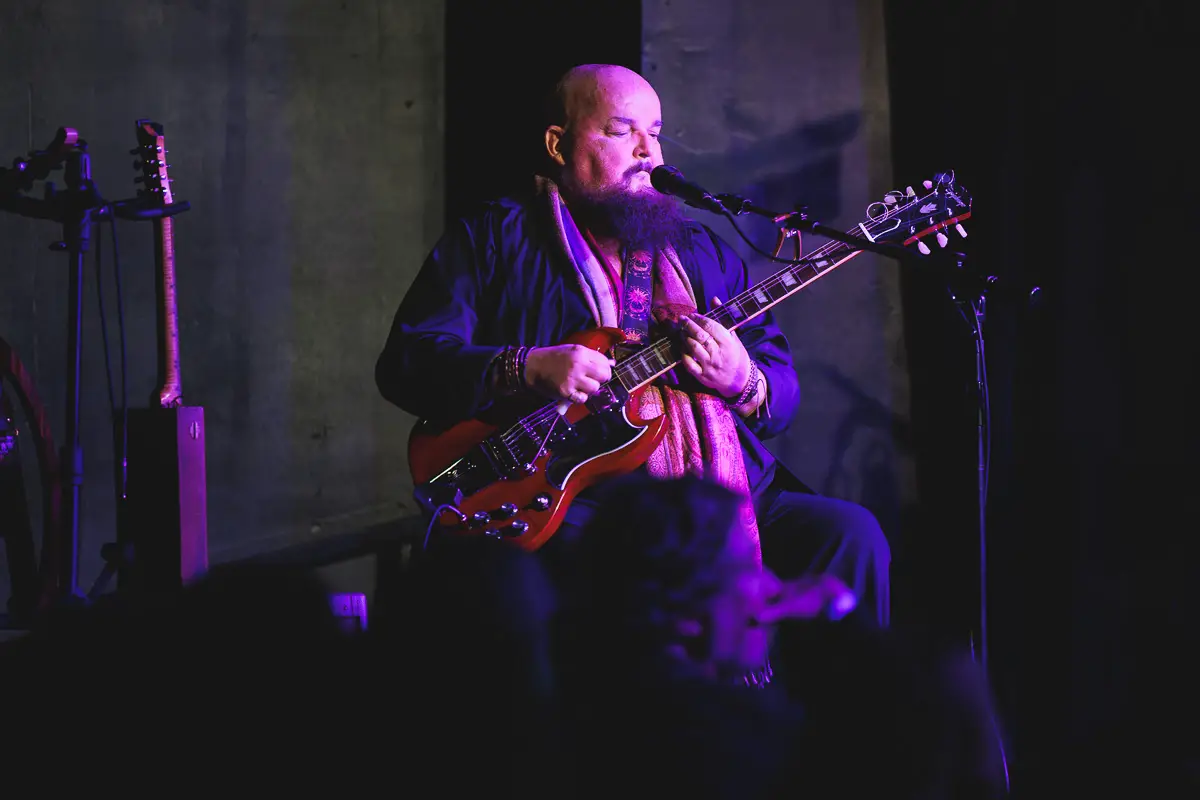
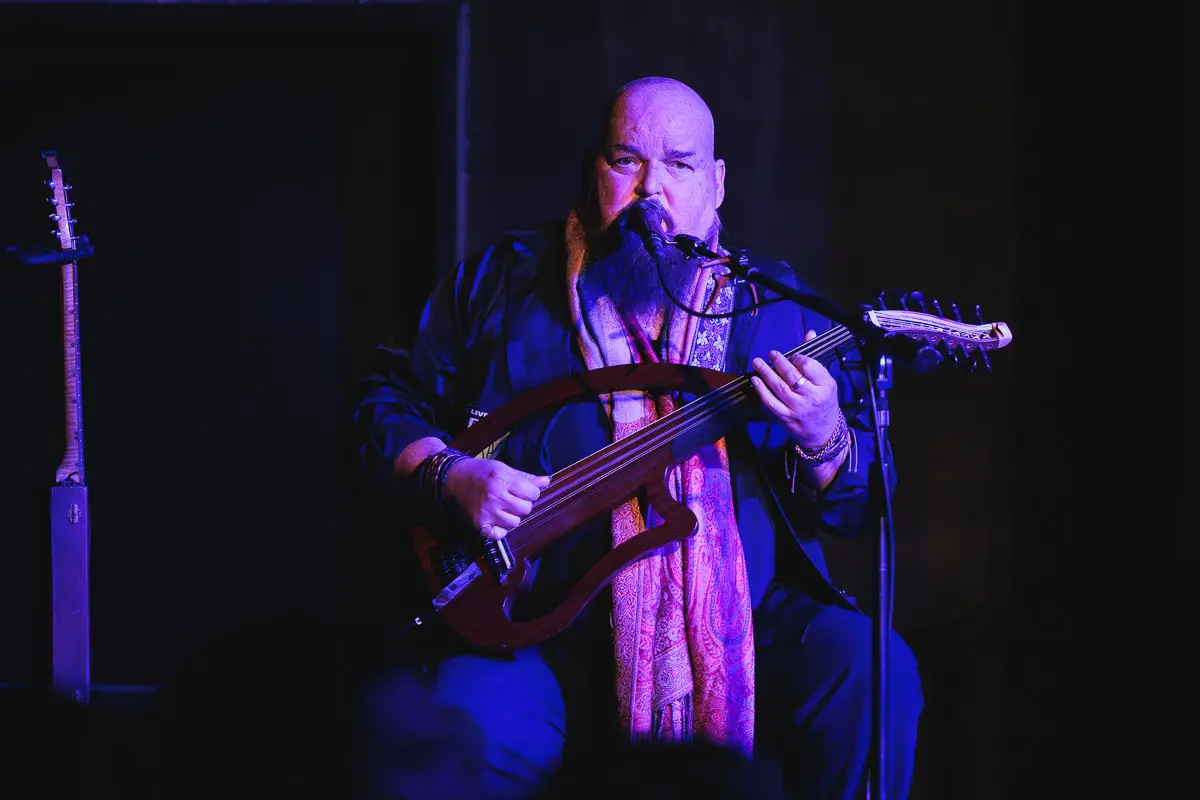
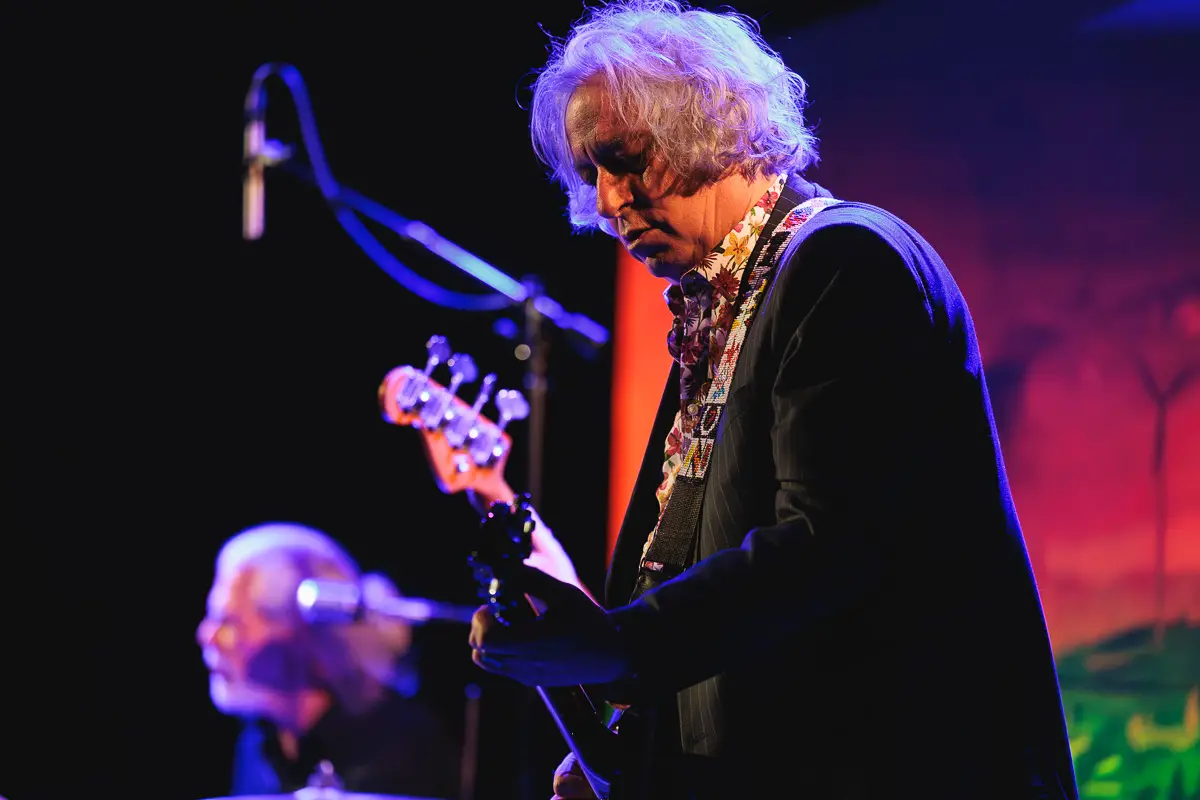
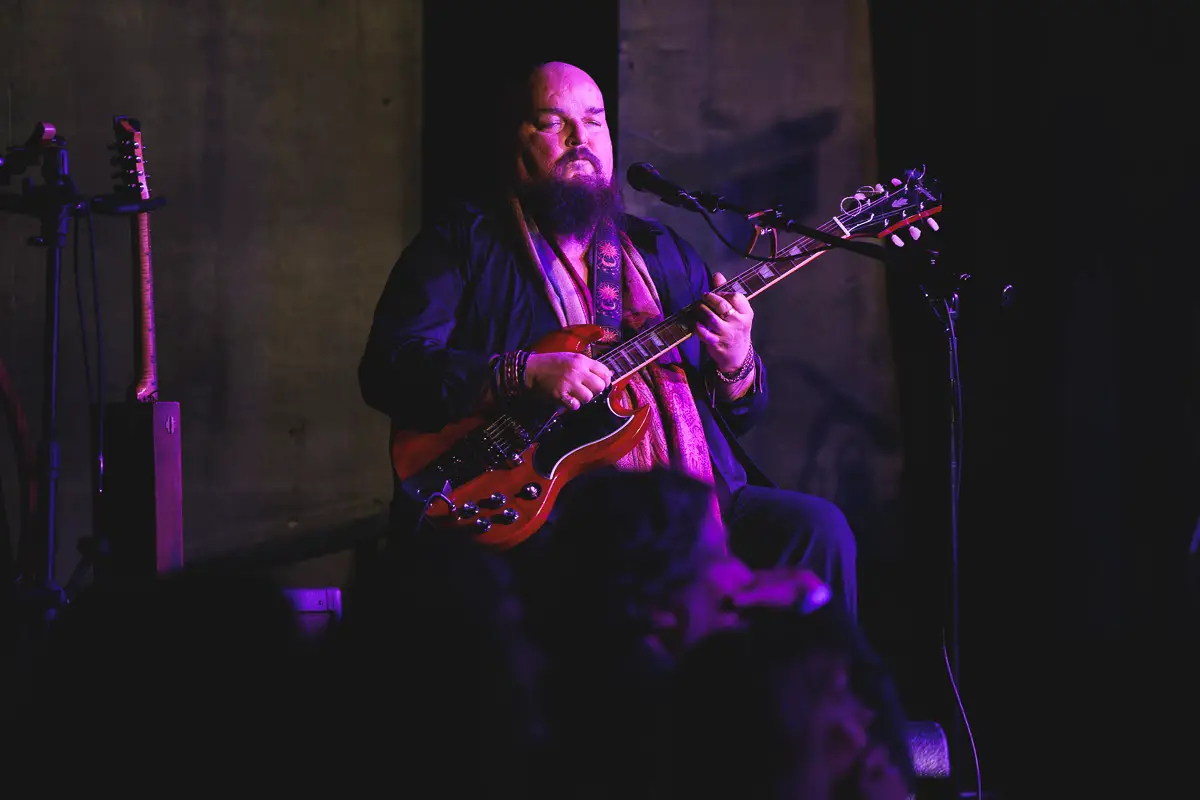
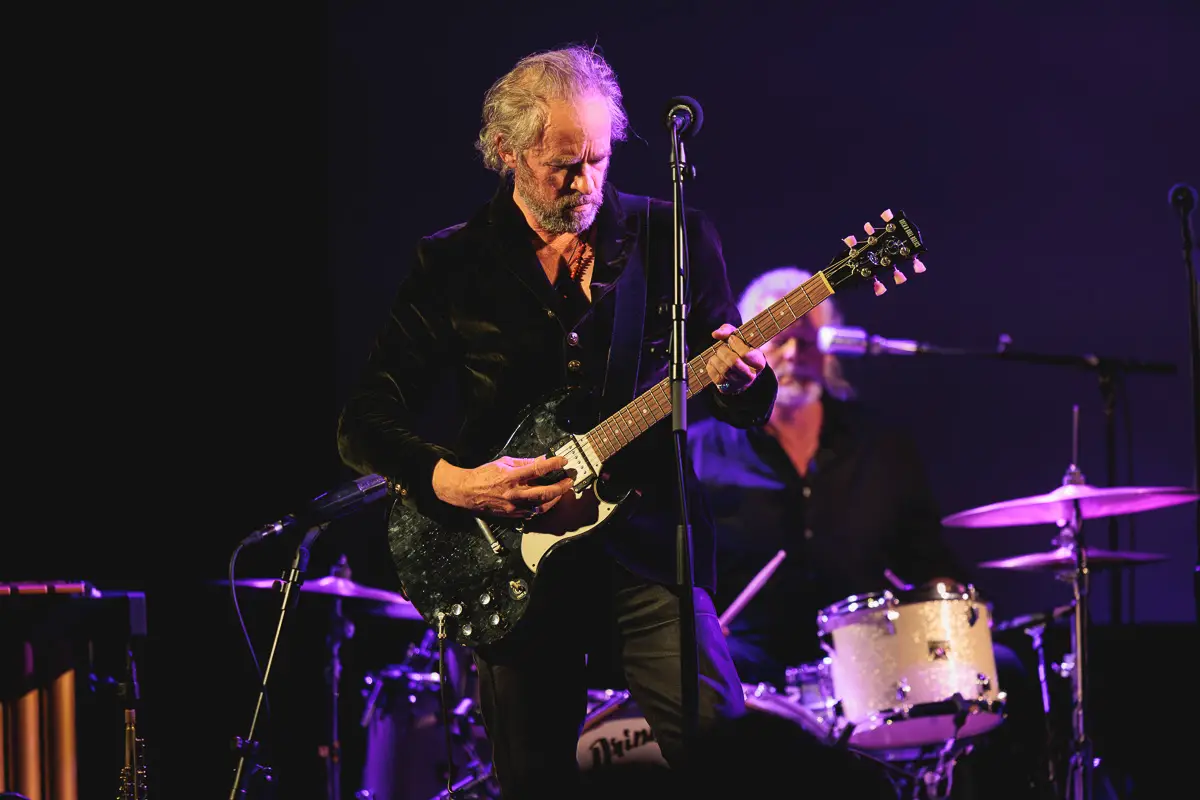
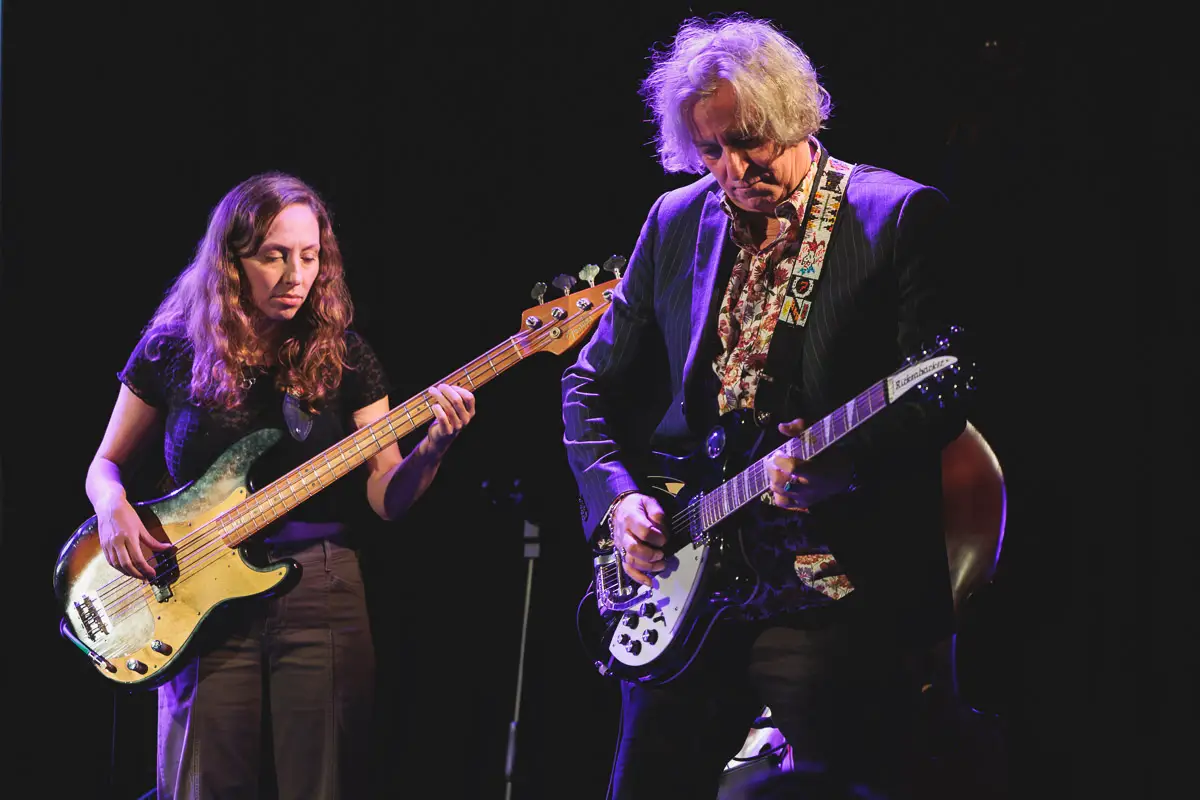
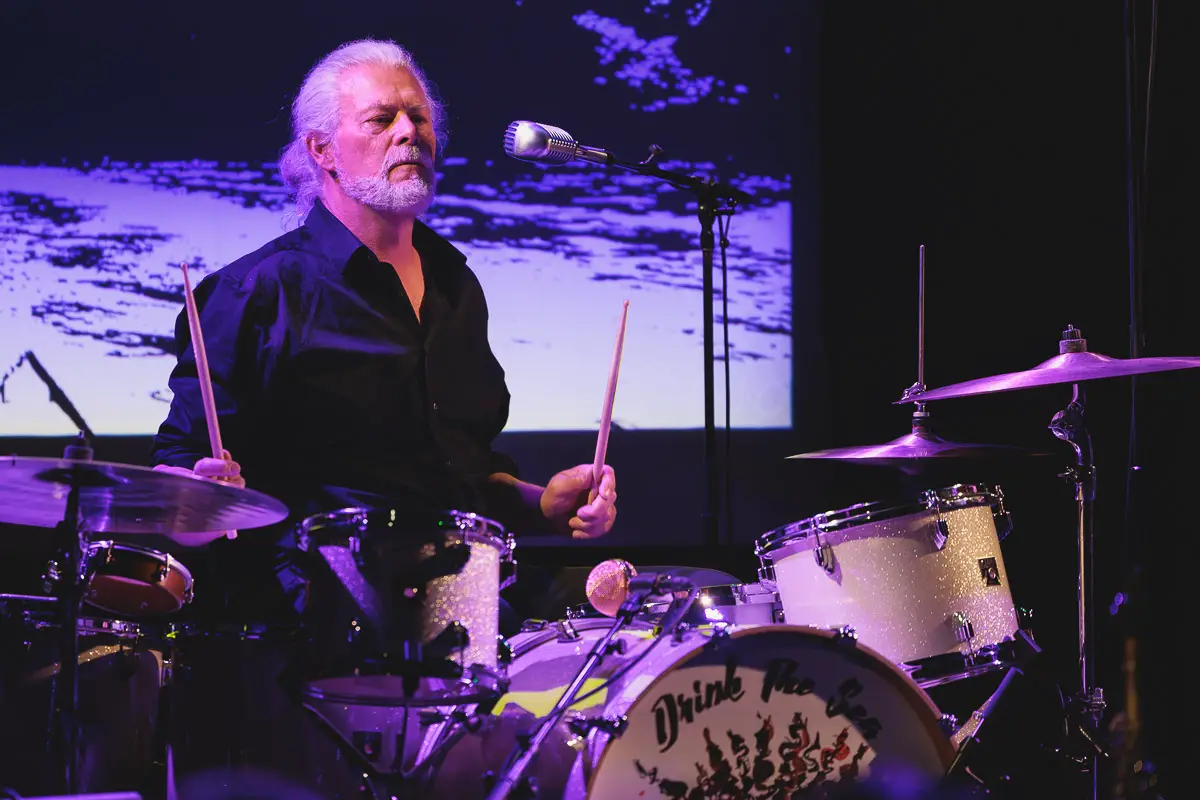
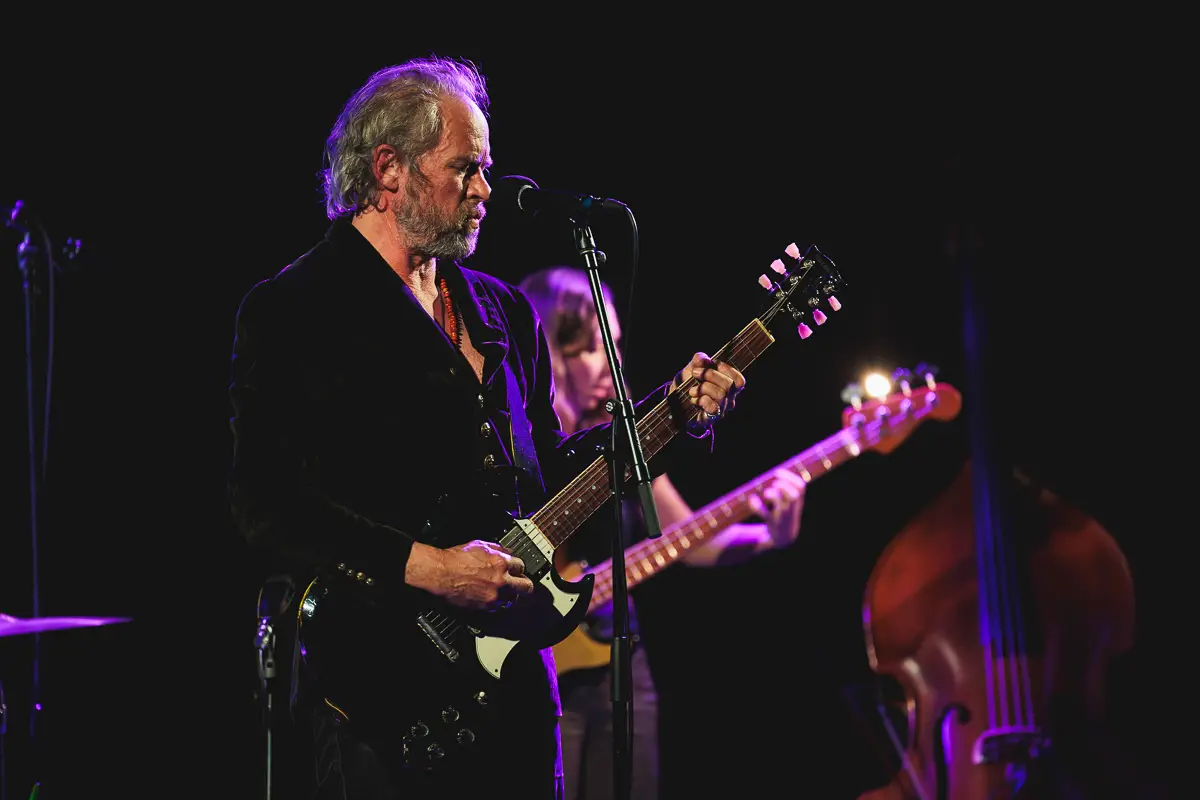
Instrumentation played a major role in shaping the immersive sound. Garwood handled lead vocals on most of the songs, his smoky tone occasionally giving way to soprano saxophone lines that shifted the emotional register without breaking momentum. Johannes rotated between an Epiphone SG, an electric oud, and, for much of the evening, a cigar box guitar. Buck alternated between a 12-string Epiphone Riviera and a Rickenbacker 360 with Bigsby vibrato. Blackwell began on electric bass before switching to an upright mid-set. Meanwhile, Martin and Garcia expanded the sonic palette with globally inspired percussion and textures: drums, vibraphone (sometimes bowed to create an eerie, voice-like tone), tambourine, shakers, chimes, kalimba and more. At one point, they even asked the audience to clap to the beat.
The room went still at the opening of “Long Gone Day,” written by Martin and Mike McCready (Pearl Jam) for Mad Season, the side project they formed with Layne Staley (Alice in Chains) and John Baker Saunders (The Walkabouts). Martin shared that the song was written in a single day and was only performed once with Chris Cornell, who stepped in for Staley after his death, a detail that hung quietly in the room.
One of the night’s other standout moments was when Johannes took over lead vocals on “The One I Love.” Michael Stipe’s delivery, with his unique ironic and emotionally distant tone, is so ingrained in the song’s DNA that hearing someone else front it could have been felt off, but Johannes’ darker, warmer voice brought it emotional depth and he made it his own version.
Before “Hanging Tree,” Johannes noted that they would play the original Desert Sessions demo arrangement with the distinctive minor/major chord change that was later replaced by a power chord in the version recorded for Queens of the Stone Age Songs for the Deaf (2002). It was a subtle detail, but one that signaled that this was a performance for listeners playing close attention.
What ultimately defined the night wasn’t the pedigree of the performances onstage, but the absence of ego. No one reached for spotlight moments. Instead, they listened, adjusted and shaped the music together in real time.
The U.S. leg wrapped the following evening in Boston. If this performance established anything, it’s that Drink the Sea isn’t a side project but a functioning band with its own identity.
Setlist: Shaking for the Snakes, Saturn Calling, Outside Again, Pour Your Glow On, Sacred Tree, Bembe for Two, Sip of the Juice, Embers, Where We Belong, Paredes, House of Flowers, The Strangest Season, Spirit Away, Midnight Starlight, Mouth of the Whale, Aching Harbor, Long Gone Day (Mad Season), Meteors, Butterfly, Rose Crested Sky, Sweet as a Nut, Land of Spirits, Tuareg Asteroid, The One I Love (R.E.M.), Making a Cross (Desert Sessions), Hanging Tree (Queens of the Stone Age).

Comments are closed.