


In the annals of musical mythology, Jelly Roll Morton is one of those oft elusive yet larger-than-life legends.
Though not a household name in modern times, Morton is credited as the first true jazz composer. Morton himself famously declared that he was the true creator of jazz, though many have disputed that claim.
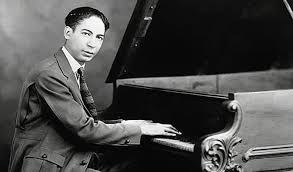
While it is often difficult to separate fact from fiction from Morton’s laundry list of accomplishments, his influence on jazz music is simply undeniable. His upward rise from the small slums of New Orleans to his tragic downfall later in life make Morton’s story a truly unforgettable one.
Early Years
When it comes to Jelly Roll Morton, the facts are immediately fuzzy. Having no official birth certificate, various sources say he was born anywhere between 1884 and 1890. His first name was Ferdinand and his last name was anything from LaMothe, Lemott or LaMenthe. But with certainty, he was born in New Orleans.
Morton first picked up the guitar before finding his true place with a piano around the ages of 8-10 years old. His family dabbled in music but, according to Morton, they never took it seriously enough and viewed musicians as lazy.
He famously got his start playing in the brothels of the New Orleans neighborhood known as Storyville. His moniker, Jelly Roll, was a common sexual term in the early twentieth century. Morton’s massive ego was well-matched by his surroundings; Morton was well-known as a gambler, womanizer and hustler of all kinds.

But the undeniable vigor of his music was what brought him to new heights. Throughout his career, he toured the country as a band leader, a solo pianist and worked on a number of vaudeville and minstrel shows.
The Founder of Jazz
Morton’s combination of ragtime, blues and classical music led him to develop the unique style he considered jazz music.
His music had the unique rhythmic flair of the “Spanish Tinge,” inspired by Caribbean music. Additionally, he worked in his own Creole influences from New Orleans, as well as African American folk music. While Morton was not the only one experimenting with this fusion of sounds at the time, he was indubitably one of the founding figures in this early evolution of jazz.
To Morton, jazz was less of a genre and more of a “style.” To this effect, he claimed any song could be transformed to be played in the “style of jazz.”
What set Morton apart from predecessors and peers is that he was the first to write down his arrangements. While jazz was and largely still is rooted in the idea of improvisation, Morton’s notation of compositions helped create the idea of jazz standards, i.e. a well-known repertoire of songs that are passed down and performed by a variety of musicians. To this effect, Morton is widely regarded as the first true jazz composer and arranger.
Morton’s own songs, “Black Bottom Stomp,” “King Porter Stomp” and “Original Jelly Roll Blues,” have continued to be two well known jazz standards to this day. “The Jelly Roll Blues” in particular is credited by many as the first published jazz composition in history, with sheet music published in 1915.
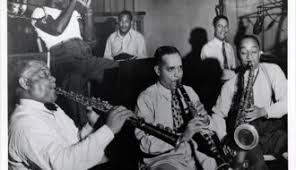
Many of his most popular recordings were performed with a small group of freelance musicians known collectively as the Red Hot Peppers.
In 1928, Morton moved to Harlem during the heart of the Harlem Renaissance. Here, he recorded extensively for Victor Records. And in a time where Black art was being celebrated and viewed with a new level of sophistication, Morton’s compositions helped formalize jazz and lent a new level of credibility to the genre.
Morton was not shy about his accomplishments in the genre and wanted to make his contributions known heavily. He boldly claimed to have invented jazz as early as 1902.
Towards the end of his life in 1938, he penned a response to the claim that W.C. Handy was jazz’s true founding father, “By this announcement you have done me a great injustice, and you have also misled many of your fans,” he wrote.
He continued later on saying, “I may be the only perfect specimen today in jazz that’s living. I guess I am 100 years ahead of my time.”
This intense need for recognition could in part be attributed to the fact that Morton himself did not secure copyrights on all his original works, meaning he often did not receive his dues when other artists recorded and performed his material.
“They’re stealing my music and they don’t even play it right,” he once complained.
The Downfall of Jelly Roll Morton
Starting in the mid 1930’s, Morton moved to Washington D.C. His career had been in shambles for a while as his style of playing had fallen out of favor with the general public and also due to the deline of the recording industry during the Great Depression.
As new jazz artists swept up the scene, Morton found himself largely forgotten. He suffered from both poverty and illness during this time.
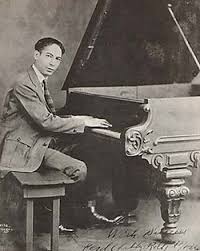
It was during these years in D.C. that Morton performed at a saloon called the Jungle Inn ann was stabbed in a brawl by the friend of the club owner. A nearby “whites-only” hospital refused to treat him, as the city still had racially segregated facilities at the time. Although he survived the attack, his wife would attribute the long term damage to his eventual death.
In 1938, Morton was interviewed by ethnomusicologist Alan Lomax for The Library of Congress. Lomax had stumbled upon Morton during his Jungle Inn residency and was intrigued by his sound and story.
The resulting 8 hour oral interview represents a rich history from a period of jazz that is much forgotten. Although his bravado has seemed to be his lasting legacy, these recordings fundamentally prove Morton was more than just talk.
Sadly, Morton was continually in poor health following his attack in 1938. He died in the hospital on July 10, 1941.
Posthumously, he was inducted into the Rock and Roll Hall of Fame in 1998. He also was remembered in the Tony award-winning Broadway musical titled Jelly’s Last Jam, in 1992. The story centers around Morton entering the afterlife and reflecting on his complicated life and career.
On reflection, Morton’s story resembles that of the boy who cried wolf. While many of his claims to fame are true, his well-known proclivity for exaggeration called his own accomplishments into questions.
The fact is that no one man could have invented jazz by themselves. The complex genre is the result of a wide-range of influences and ideas. While not the sole inventor, Jelly Roll Morton is undoubtedly one of the most influential figures in the creation of the genre and deserves credit where credit is due.

Comments are closed.